



 Why Early Seal Troubleshooting Matters
Reliable rotating equipment drives operational profitability. Though small, mechanical seals dictate the maintenance cycles of expensive centrifugal pumps and mixers. Recognizing early seal degradation allows facilities to shift from reactive maintenance to a predictable, proactive strategy.
Ignoring early warning signs allows minor wear to escalate into catastrophic pump failure, destroying seal faces and damaging shafts, bearings, and impellers. Mastering mechanical seal troubleshooting is critical for optimizing maintenance, repair, and operations (MRO) budgets.
Structured troubleshooting requires alignment between equipment operators and procurement teams. Understanding the stakes of early failure helps buyers and distributors ensure the right inventory is stocked before an emergency shutdown occurs.
Cost of unexpected seal failure
Unexpected blowouts carry financial penalties far beyond replacement costs. Emergency failures trigger expedited shipping, premium overtime labor, and potential hazardous material cleanup. Catastrophic failures often destroy adjacent hardware, turning a simple replacement into a comprehensive pump overhaul.
Impact on uptime and procurement spend
Unpredictable seal lifespans disrupt inventory management and MRO budgets. Sudden failures force buyers into spot-purchasing at unfavorable margins instead of leveraging contracted pricing. Operationally, unplanned downtime halts production lines, causing missed deliveries, stalled processes, and supply chain revenue leakage.
Teams that should act on early warning signs
Effective monitoring is cross-functional. Operators and technicians log visual and auditory anomalies during routine rounds. Reliability engineers analyze these logs for failure trends, while procurement uses the data to adjust minimum order quantities (MOQs) and lead times with suppliers.
Early Warning Signs to Inspect First
Identifying issues before shutdowns relies on structured visual and auditory inspections. Though hidden within the pump housing, a seal's health manifests externally. Training staff to recognize these symptoms effectively extends equipment mean time between failures (MTBF).
In noisy industrial environments, subtle changes are easily overlooked. Establishing an operational baseline is crucial; operators must know how a healthy pump sounds and looks to spot deviations. Early detection saves money and provides data for root cause analysis.
Prompt documentation of distress signs is essential. Recording exact leakage or noise characteristics helps suppliers determine if the issue stems from material incompatibility, poor installation, or shifting process conditions.
Leakage beyond normal weeping
Mechanical seals rely on a microscopic fluid film for lubrication, making nearly invisible vapor emissions normal. However, visible dripping, pooling fluid, or crystalline buildup indicates compromised primary sealing faces or degraded secondary O-rings.
Unusual noise from the seal area
Auditory cues often precede visible leakage. A high-pitched squeal indicates dry running, meaning the lubricating fluid film has vaporized. Conversely, popping or crackling points to fluid flashing—where liquid boils between seal faces due to excessive heat or inadequate pressure.
Inspection checklist: symptom, cause, action
Maintenance teams should use a standardized checklist to categorize findings and trigger appropriate procurement or repair actions.
| Observed Symptom | Probable Cause | Recommended Action |
|---|---|---|
| Steady dripping | Worn faces or damaged O-ring | Order replacement kit; schedule downtime |
| High-pitched squeal | Dry running / lack of lubrication | Check flush plan; verify suction pressure |
| Black dust near gland | Carbon face disintegration | Shut down immediately; replace seal |
| Crystalline deposits | Fluid evaporating at faces | Clean area; check cooling/quench system |
Signs of Escalating Seal Stress
Ignored warning signs lead to escalating stress and exponential degradation. Physical forces exceed design limits, causing irreversible material deformation. Monitoring environmental factors around the seal chamber is critical to catch this escalation.
Heat and kinetic energy are primary destructive forces. As seal faces lose alignment or lubrication, friction increases rapidly. This generates localized heat that standard flush plans cannot dissipate, causing thermal distortion of the lapped seal faces.
Distinguishing between temporary process fluctuations and chronic mechanical issues is vital. If stress stems from permanent operating parameter changes, replacing the seal with an identical unit guarantees another rapid failure.
Abnormal seal chamber temperature
A significant temperature rise in the seal gland or flush return line is a major red flag. This indicates excessive face friction caused by inadequate cooling, fluid flashing, or abrasive particulates. Left unchecked, elevated temperatures permanently harden and crack elastomeric O-rings.
Increased vibration and shaft movement
Seals accommodate microscopic shaft deflections, but excessive vibration destroys them. Elevated radial or axial movement suggests bearing wear, shaft misalignment, or pump cavitation. The seal often fails first, acting as a sacrificial fuse for larger mechanical imbalances.
Temporary upset vs recurring trend
Operators must determine if stress aligns with specific events, like temporary valve closures or startup viscosity changes. If symptoms disappear under normal conditions, the seal may survive. However, persistent elevated temperatures and vibrations indicate permanent damage requiring replacement.
How to Assess Visible Seal Damage
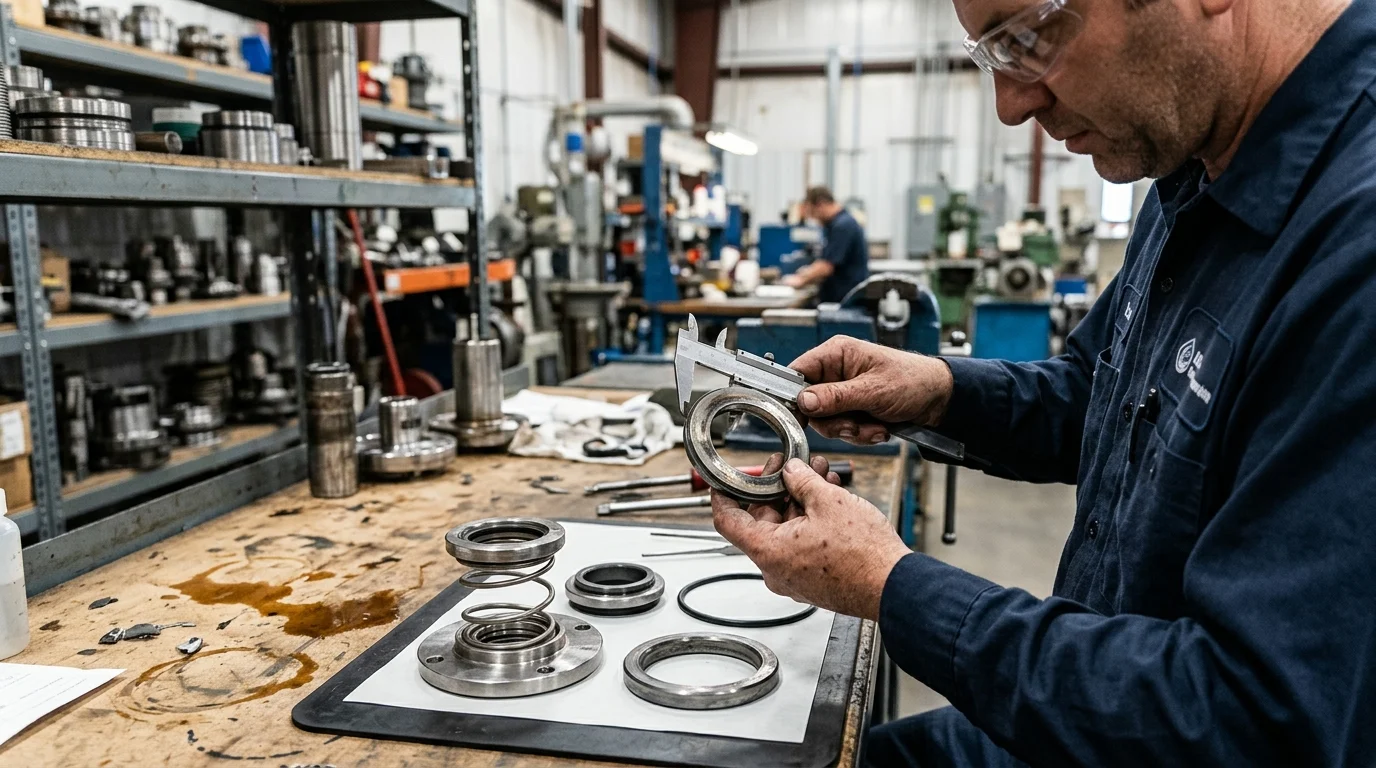
Visual inspection of a removed seal provides a roadmap for preventing future issues. Teardown analysis should occur in a clean environment, examining the primary ring, mating ring, springs, and elastomers before cleaning.
The physical condition of seal faces and secondary components reveals the pump's operating environment. Wear patterns, fractures, and chemical degradation provide evidence of failure modes, helping reliability engineers upgrade specifications for better longevity.
Documenting damaged components bridges the communication gap between the plant and manufacturer. By capturing failure modes, buyers can work with GW SEAL to engineer robust sealing solutions tailored to specific applications.
Scoring, discoloration, deposits, and cracks
Deep concentric grooving (scoring) indicates abrasive particles. Blue or brown discoloration on metal points to severe thermal distress. Radial cracks (heat checking) confirm rapid heating and cooling cycles, usually from intermittent dry running.
What damage reveals about materials and installation
Swollen, sticky, or brittle O-rings suggest chemical incompatibility or excessive temperatures. Asymmetrical wear tracks indicate improper installation, such as uneven gland bolt tightening or severe shaft misalignment, preventing faces from mating flat.
How to document findings for supplier review
Before cleaning, technicians should photograph seal faces, O-rings, and drive mechanisms. Combined with logs of operating temperature, pressure, and fluid type, these form a failure report. This data ensures accurate root cause analysis and better material recommendations from suppliers.
What to Do When Failure Signs Appear
When failure signs appear, personnel must execute a predefined response plan to mitigate damage and secure inventory. Indecision leads to catastrophic failures. Swift, coordinated action between operations and procurement is essential.
The first priority is facility safety and pump integrity. Depending on symptom severity and fluid hazards, the pump may require immediate isolation. Simultaneously, MRO purchasing must source components to minimize downtime.
Choosing between minor repair or full replacement depends on parts availability and internal damage. Streamlined communication with a trusted supplier ensures the right parts arrive exactly when needed.
Immediate response and operating checks
If leakage or squealing occurs, operators must verify that flush, quench, and cooling systems flow at the correct pressure. If symptoms persist despite functioning support systems, schedule a controlled shutdown. Running a compromised seal to destruction multiplies repair costs.
Repair kit vs full replacement
For minor issues isolated to degraded elastomers, an O-ring and spring repair kit is cost-effective. However, if primary faces are scored, heat-checked, or chipped, complete replacement is mandatory. Salvaging damaged faces without factory lapping causes immediate leakage.
Supplier data needed for fast support
To expedite procurement, buyers must provide precise data: original seal part number, shaft diameter, pump model, and process conditions (fluid, temperature, pressure). Whether sourcing standard components or a specialized wilo pump seal, accurate data prevents incompatible installations.
How to Prevent Repeat Seal Failures
Long-term reliability requires addressing the fundamental causes of seal degradation. True prevention ensures equipment matches its operating environment through upgraded materials, refined installation protocols, and strict fluid control.
Procurement teams aid prevention by prioritizing lifecycle value over initial price. Investing in higher-grade materials or custom designs extends MTBF and reduces annualized ownership costs. Partnering with manufacturers delivering engineered solutions provides a strategic advantage.
Installation and environmental controls must meet strict standards. Advanced seals fail prematurely if installed with contaminated tools or subjected to system shocks. Continuous education and procedural adherence are foundational to failure prevention.
Select the right seal materials and design
Chemical and thermal compatibility is paramount. Buyers and engineers must select optimal face combinations, like silicon carbide against carbon for general use. Sourcing oem mechanical seals tailored to plant fluid dynamics prevents premature chemical and abrasive wear.
Improve installation and operating conditions
Improper installation causes many premature failures. Maintenance must use calibrated tools, adhere to torque specifications, and ensure a clean seal chamber. Operationally, preventing cavitation, ensuring shaft alignment, and maintaining flush flow eliminates primary environmental stressors.
Build preventive inspection routines
Facilities must institutionalize monitoring of early warning signs. Incorporating checks into digital inspection routes helps build trend lines. Tracking microscopic changes in leakage or vibration allows plants to predict seal lifespans and schedule planned replacements.
Case Study: Cost Avoidance from Early Action
The benefits of early troubleshooting are best illustrated in real-world applications, where proactive monitoring yields measurable savings. In high-stakes manufacturing, the difference between planned weekend maintenance and an unplanned breakdown is often tens of thousands of dollars.
A recent scenario at a chemical facility demonstrates the value of aligning operator vigilance with agile procurement. By catching a microscopic deviation, the plant avoided a cascading failure on its primary production line.
Mechanical seals rarely fail without warning; they communicate distress through subtle physical changes. Recognizing these changes alongside a responsive supply chain partner ensures industrial reliability.
Plant background and failure risk
A chemical plant relied on a critical solvent transfer pump feeding its main reactor. Handling highly volatile solvent, the pump used a specialized seal. Catastrophic failure risked hazardous chemical release and immediate production halts.
Warning signs and response steps
During a routine inspection, an operator noticed a minor anomaly: the seal wept three drops per minute with a slight temperature increase. The operator logged the issue, and procurement contacted the supplier. Expedited replacement parts arrived the same day.
Downtime avoided and savings achieved
With parts secured, the plant scheduled a controlled replacement during a weekend maintenance window. Teardown revealed severe heat checking, indicating an imminent blowout. Early action avoided an 8-hour unplanned shutdown, saving approximately $50,000 in downtime costs.
Key Takeaways and FAQ
Mastering troubleshooting requires continuous education, procedural discipline, and strong vendor partnerships. Focusing on early distress indicators helps industrial buyers and maintenance managers control uptime and reduce emergency procurement expenditures.
Proactive maintenance relies on standardizing inspection protocols. Facilities investing in operator training and rigorous quality control over replacement parts consistently outperform competitors relying on reactive repair.
To support MRO teams and procurement professionals, we compiled frequent questions regarding seal health, inspection frequencies, and vendor support.
Top warning signs to monitor
Critical warning signs include visual leakage beyond microscopic vapor, high-pitched squealing or popping, localized temperature spikes, and elevated vibration. Documenting these symptoms immediately prevents catastrophic failure.
Why trend-based inspection works
Trend-based inspection transitions maintenance to data-driven science. Recording minor changes in temperature and weep rates helps forecast remaining lifespan. This allows procurement to order parts via standard shipping and schedule non-peak labor, optimizing the MRO budget.
Common questions from maintenance teams
Q: How often should I inspect my mechanical seals?
A: For critical process pumps, daily visual and auditory inspections are recommended. For standard utility pumps, weekly checks are usually sufficient. Establishing a customized schedule based on pump criticality is best practice.
Q: Can a seal that shows signs of failure be repaired instead of replaced?
A: In most scenarios, full replacement is necessary because the highly lapped seal faces are damaged. However, if the failure is caught extremely early and isolated to degraded O-rings, a minor repair kit may suffice.
Q: How can I get a failure analysis?
A: Many reputable manufacturers offer free failure analysis. By sending the damaged seal to the factory, engineers can analyze wear patterns and provide a detailed written report with recommendations for material upgrades.
Common questions from buyers
Q: How does early detection impact procurement lead times?
A: Early detection provides a buffer of weeks or months before full failure. This allows buyers to source custom or OEM components using standard lead times, avoiding exorbitant emergency manufacturing and expedited freight fees.
Q: Does the supplier offer training for identifying these failure signs?
A: Yes, comprehensive suppliers frequently provide on-site or virtual training for plant maintenance teams. This training covers seal inspection techniques, failure recognition, and the implementation of preventive maintenance routines.
Key Takeaways
- Wholesale sourcing and supply-chain implications for mechanical seal troubleshooting
- Specifications, compliance, and commercial terms buyers should validate
- Actionable recommendations for distributors and procurement teams