Leave Your Message

What Are the Best Mechanical Seal Parts from China?

What are the best Mechanical Seal Parts from China? The answer depends on application, verification, and lifecycle performance. China has a broad manufacturing base, serving pumps, compressors, mixers, chemical equipment, and water-treatment systems. However, supplier quantity does not guarantee consistent quality. Selection requires evidence.

Grand View Research reports that the global mechanical seals market is expected to grow steadily through 2030, supported by industrial maintenance and process equipment demand. The U.S. Department of Energy also notes that pumping systems can consume 25% to 50% of industrial facility electricity. Small leakage or friction losses may therefore create significant operating costs. A seal face measured in microns can influence downtime, energy use, and product safety.

The strongest Chinese suppliers usually provide traceable material certificates, dimensional inspection records, pressure-test results, and controlled production procedures. Buyers should compare silicon carbide, tungsten carbide, carbon, ceramic, and elastomer compatibility against temperature, pressure, speed, and media conditions. ISO 21049 and API 682 offer useful technical references for many process applications. Yet standards alone are not enough. Ask for drawings, batch records, and application references.

A low quotation may conceal weak testing. That matters.

I have seen procurement decisions focus too heavily on unit price. This is a mistake worth challenging. A reliable evaluation should include leakage history, replacement intervals, machining precision, packaging, technical communication, and after-sales support. Country of origin is only one factor. The best Mechanical Seal Parts come from suppliers that can repeatedly prove performance, not merely promise it.

What Are the Best Mechanical Seal Parts from China?

Types of Mechanical Seal Parts Commonly Produced in China

What Are the Best Mechanical Seal Parts from China?

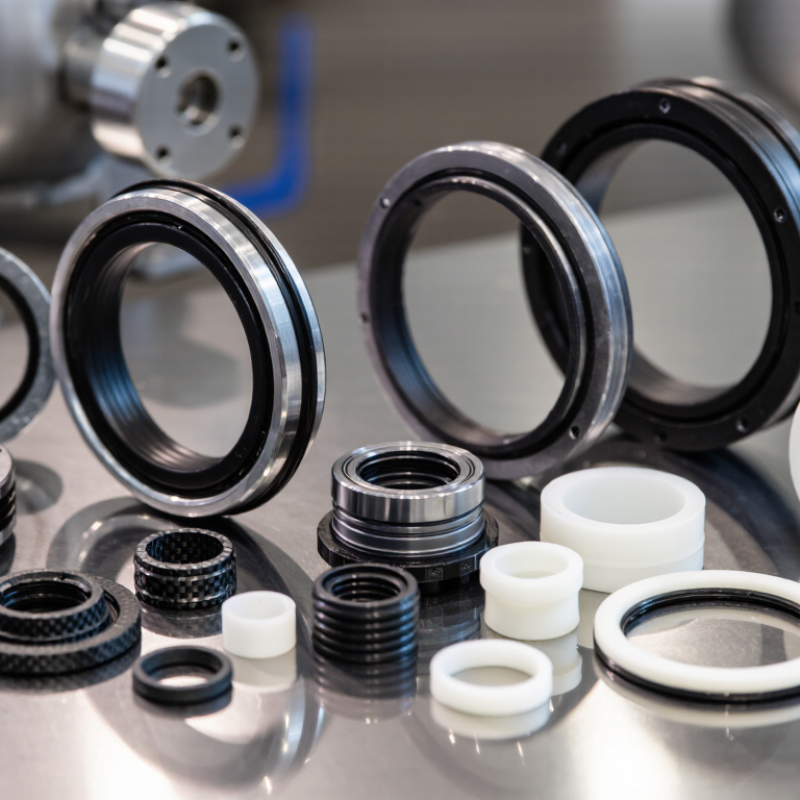
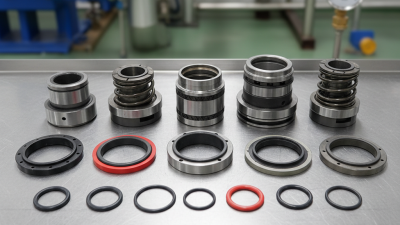
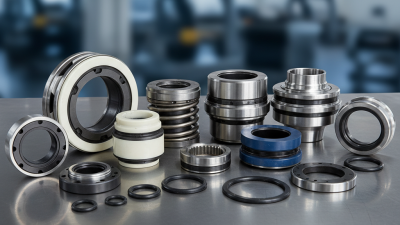
China commonly produces many mechanical seal parts for pumps, mixers, compressors, and rotating equipment. The main types include stationary rings, rotary rings, springs, O-rings, gaskets, and metal retainers. Common ring materials include carbon, ceramic, silicon carbide, and tungsten carbide. Elastomers may include NBR, EPDM, or FKM, depending on temperature and chemical exposure.

Manufacturers also produce cartridge seals, component seals, PTFE parts, and precision metal components. Ceramic and carbide rings usually require grinding and lapping for controlled flatness. Springs need consistent force and corrosion resistance. CNC machining, molding, sintering, and surface inspection support stable production. However, material names alone do not prove suitability. A seal can look excellent and still fail under pressure, vibration, or dry running. This detail is often underestimated.

Tips: Request material certificates, dimensional reports, hardness results, and leakage-test records. Check the working temperature, shaft speed, pressure, fluid, and installation space before ordering. Ask for batch traceability. A small sample test is wiser than trusting photographs. Also, review the mating surfaces carefully. Even a high-quality ring may leak against a damaged shaft. Supplier quality systems matter, but practical testing remains essential.

Materials and Quality Standards for Chinese Seal Components

What Are the Best Mechanical Seal Parts from China?

Materials and quality standards determine whether Chinese mechanical seal components perform reliably in demanding equipment. Common face materials include silicon carbide, carbon graphite, and tungsten carbide. Silicon carbide suits abrasive fluids and high temperatures, while carbon graphite supports smooth running during startup. Stainless steel, such as 316L, is widely used for springs, retainers, and metal holders because it resists many corrosive environments.

Material selection must match the fluid, pressure, speed, and temperature. A strong supplier should provide material certificates, heat numbers, dimensional reports, and batch traceability. Standards such as EN 12756 can guide general seal dimensions and requirements. API 682 is often referenced for petroleum and process applications. However, compliance claims need careful checking. A certificate alone proves little.

Quality inspection should include face flatness, surface roughness, hardness, spring load, and dynamic runout. Inspectors may also conduct pressure and leakage tests under controlled conditions. Small scratches on a sealing face can create visible leakage after installation. This detail is easy to miss. Packaging matters too, especially for polished faces. In practice, some components look excellent but perform inconsistently between batches. That weakness deserves attention. Clear inspection records, calibrated instruments, and communication about tolerances make Chinese seal parts more dependable for global buyers.

What Are the Best Mechanical Seal Parts from China?

Typical Mohs hardness ranges for widely used mechanical seal face materials

How to read the chart: Silicon carbide, tungsten carbide, and alumina provide high abrasion resistance, while carbon graphite offers low friction and good conformability. Actual performance depends on grade, impregnation, mating-face pairing, fluid chemistry, pressure, temperature, and operating speed.

Quality considerations: A reliable component specification should verify material chemistry, density, hardness, microstructure, dimensional tolerances, face flatness, surface finish, and pressure or leak-test results. Mechanical seal assemblies are commonly specified with reference to ISO 21049 and API 682 requirements where applicable.

How to Evaluate Chinese Mechanical Seal Part Manufacturers

What Are the Best Mechanical Seal Parts from China?

When evaluating Chinese mechanical seal part manufacturers, price should not lead the decision. Grand View Research estimated the global mechanical seals market at about USD 4.6 billion in 2023, with steady growth expected through 2030. This growth increases supplier choices, but also increases quality differences.

Check whether the manufacturer follows relevant standards, such as ISO 21049 or API 682 where applicable. Ask for material certificates, dimensional inspection records, and test data for each production batch. A serious supplier should explain face materials, spring alloys, elastomers, and operating limits clearly.

Request a sample before approving volume orders. Measure the seal face flatness, shaft fit, and surface finish with suitable instruments. Ask how the factory controls lapping, cleaning, assembly, and packaging.

Traceability matters. Each batch should connect to raw materials, operators, inspection results, and shipping records. I would not trust polished factory photos alone. An impressive website proves very little.

A low quotation can also hide weak testing, inconsistent materials, or limited after-sales support. The first sample may still fail.

Tips:

Compare at least three manufacturers using the same technical specification. Visit the facility, or arrange an independent audit. Confirm production capacity during peak seasons. Review failure cases, not only success stories. Also, define acceptance criteria before payment.

This step is often missed. It can prevent arguments later. A practical evaluation should balance test evidence, communication speed, engineering experience, and long-term reliability. Then reconsider your decision after field feedback.

Key Factors in Selecting Parts for Different Applications

What Are the Best Mechanical Seal Parts from China?

Key Factors in Selecting Parts for Different Applications

The best mechanical seal parts depend on the equipment, fluid, and operating conditions. A part suitable for clean water may fail quickly with solvents, abrasive slurry, or hot oil. Check the seal face materials carefully. Carbon, ceramic, silicon carbide, and tungsten carbide each respond differently to heat, wear, and chemical exposure. Fit matters.

Pressure, temperature, shaft speed, and shaft diameter must match the seal design. Even a small dimensional error can cause leakage, vibration, or premature face damage. Measure the original component before ordering. Confirm spring length, elastomer size, seat dimensions, and rotating direction. Small errors grow.

Material compatibility needs practical testing. An elastomer may appear suitable on a chart but swell after continuous chemical contact. Request test data, dimensional records, and inspection reports from the manufacturer. Ask how flatness, surface finish, and balance are checked. These details reveal process control better than polished product photos.

Application conditions can also change during operation. Dry running, frequent starts, pressure surges, and suspended particles deserve attention. For abrasive media, harder seal faces and protective flushing may be necessary. For food, pharmaceutical, or high-purity systems, cleanable designs and suitable documentation are essential. A cheaper part may reduce the purchase cost while increasing downtime. That trade-off is easy to miss. Selection should include service life, replacement access, and supplier response, not only unit price.

Inspection, Compatibility, and Maintenance of Imported Seal Parts

What Are the Best Mechanical Seal Parts from China?

Inspection, Compatibility, and Maintenance of Imported Seal Parts

Imported mechanical seal parts should be checked before they enter production. Measure shaft diameter, seat depth, spring length, and face thickness with calibrated tools. Compare every result with the equipment drawing, not only the supplier’s specification. A polished face may still have poor flatness. It happens.

Inspect carbon, ceramic, silicon carbide, elastomers, and metal components for chips, scratches, porosity, and uneven molding. Material certificates can support traceability, but they cannot replace physical inspection. Check the certificate against the delivered batch number. Photograph unusual marks before installation. This creates a practical record for later review.

Compatibility depends on more than size. Consider the pumped liquid, temperature, pressure, shaft speed, and dry-running risk. An elastomer suitable for water may fail in oil or chemical service. Confirm the rotating and stationary faces have compatible hardness and wear behavior. Installation cleanliness matters greatly. One grain of dirt can damage a sealing face.

Store parts in sealed packaging, away from sunlight, moisture, and ozone-producing equipment. Do not stack delicate faces directly on each other. During maintenance, inspect spring corrosion, face scoring, O-ring swelling, and sleeve wear. Replace damaged secondary seals instead of forcing them back into service. I have seen careful measurements fail because the assembly was rushed. That mistake deserves attention.