Top 10 Mechanical Seal Parts You Need for Best Performance?
In the world of industrial machinery, the efficiency of operations heavily relies on Mechanical Seal Parts. These crucial components play a pivotal role in preventing leakage and ensuring optimal performance. According to a report by Market Research Future, the mechanical seals market is projected to reach over $5 billion by 2026, highlighting their importance in various industries.
Experts emphasize that quality Mechanical Seal Parts are essential for system longevity. Dr. Emily Carter, an industry specialist, notes, “The right mechanical seals can significantly enhance equipment reliability.” Yet, choosing the best parts is often challenging. Many operators may overlook specific characteristics, potentially leading to inefficiencies.
Investing time in understanding Mechanical Seal Parts can yield valuable insights. Highlighting the top components can help in making informed decisions. With correct information, industries can optimize their performance while minimizing unexpected failures. Yet, even with the best parts, regular maintenance cannot be ignored. This balance between quality and care is vital for enduring success.
Understanding Mechanical Seals: Components and Functions
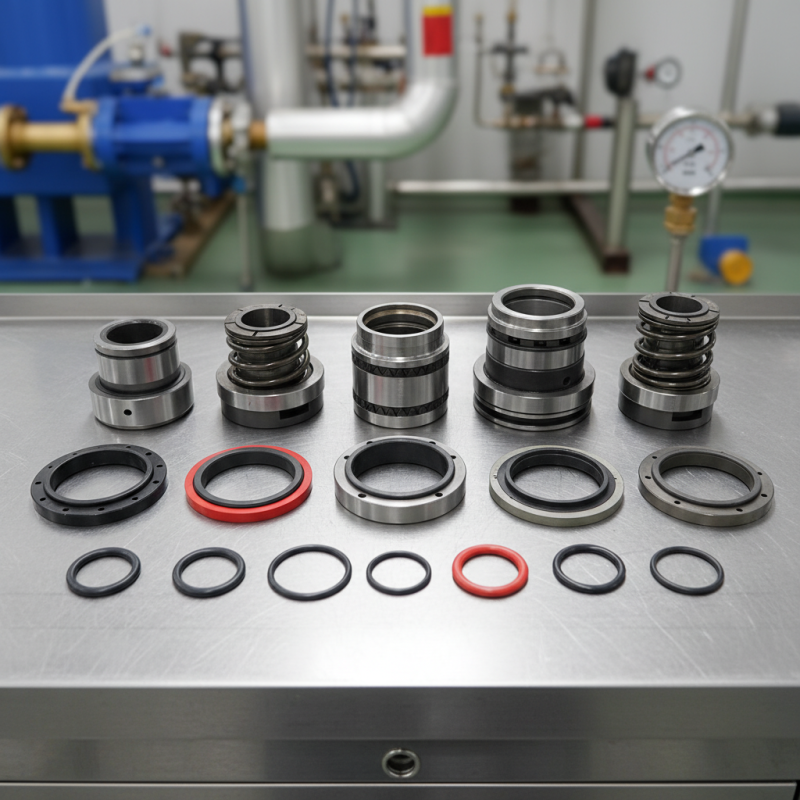
Mechanical seals play a vital role in various industrial applications, ensuring the effective sealing of fluids. Understanding the key components and their functions is essential. A typical mechanical seal consists of several parts, including the sealing face, secondary seal, and springs. The sealing face creates a tight barrier against leaks, while the secondary seal provides additional protection. Springs maintain pressure on the sealing faces, ensuring they remain in contact.
Each component must be carefully engineered for optimal performance. For example, the material of the sealing face significantly affects durability and resistance to wear. Choosing the right materials can prevent failures and enhance the overall service life of the seals. Neglecting this aspect may lead to excessive leaks and costly downtime, forcing a reevaluation of design choices.
Flaws can arise in mechanical seal systems due to incorrect installation or misalignment. Such issues can diminish effectiveness and lead to premature failure. Regular maintenance and checks are crucial in identifying these problems early. By understanding the components and their roles, engineers can make informed decisions to improve seal performance, ensuring processes run smoothly and efficiently.
Key Features of Mechanical Seal Parts for Optimal Performance
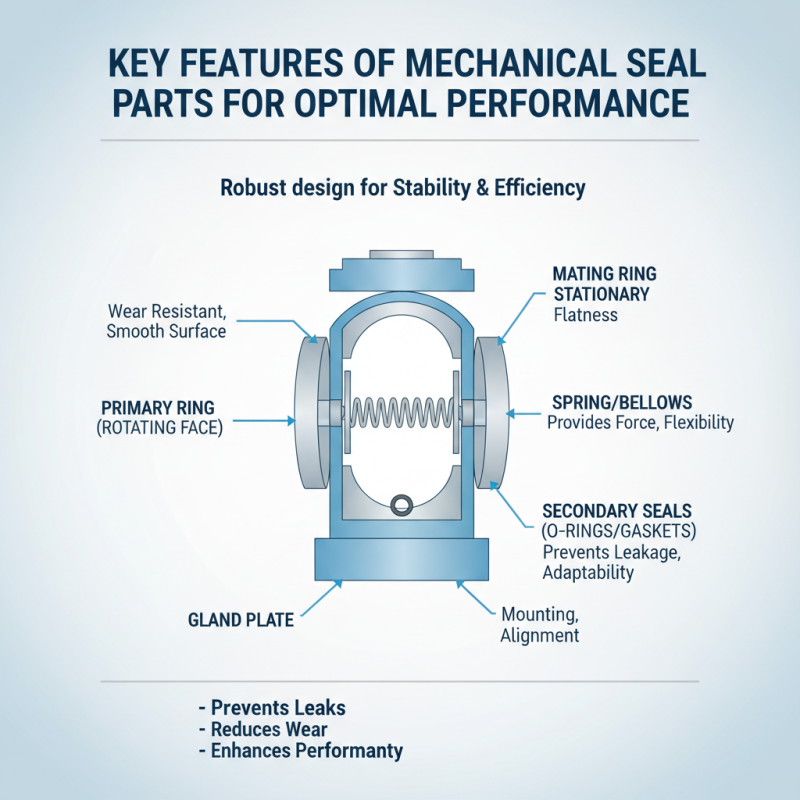
Mechanical seals are critical for preventing leaks in various applications. Understanding their key features can improve performance significantly. A robust mechanical seal consists of several essential parts. Each part plays a role in enhancing stability and efficiency while minimizing wear and tear.
The primary component, the seal ring, ensures a tight fit against the shaft. It minimizes leakage, which is crucial in high-pressure environments. The secondary component, the spring, maintains consistent pressure on the seal. This helps in adapting to minor shaft movements. Materials used must withstand temperature extremes and corrosive environments for optimal performance.
Another vital feature is the face finish. A smooth, well-polished surface reduces friction. This leads to less heat generation during operation. Yet, achieving the perfect finish is challenging. An imperfect finish can increase wear and risk failure over time. Regular inspection and maintenance of these seal parts are necessary for longevity. Understanding these features helps in selecting the right components. Ensuring that each part works harmoniously can greatly enhance the system's efficiency and reliability.
Top 10 Essential Components of Mechanical Seals
Mechanical seals play a crucial role in various industries, ensuring efficient operation and minimizing leaks. Understanding the essential components of mechanical seals is key to achieving optimal performance. A report by the American Society of Mechanical Engineers highlights that around 60% of seal failures arise from component issues, underscoring the need for quality parts.
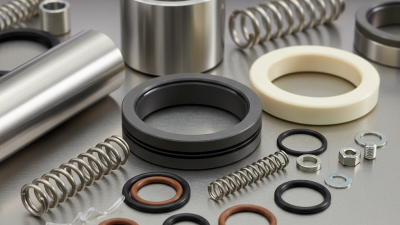
The primary components of mechanical seals include the seal faces, springs, and O-rings. Seal faces are crucial as they create a barrier against leaks. They must be made from materials that can withstand high pressure and corrosive environments. For instance, tungsten carbide is a popular choice due to its durability. Springs provide the necessary force to maintain contact between the seal faces. Their design directly influences the seal's ability to operate efficiently under varying conditions. O-rings, commonly used in seals, ensure proper sealing and can accommodate thermal expansion.
Proper selection of these components is vital. Compatibility with the application environment is essential. Industry studies suggest that improper material choices can lead to premature wear or failure. This highlights the importance of expert knowledge in choosing the right parts for each specific installation. Balancing performance with reliability can be a challenging task for engineers, and ongoing research is necessary to improve mechanical seal effectiveness in diverse applications.
Top 10 Essential Components of Mechanical Seals
This chart illustrates the importance of various components in mechanical seals for optimal performance.
Maintenance Tips for Mechanical Seal Parts Longevity
Mechanical seals play a critical role in ensuring efficient performance in various industrial applications. Regular maintenance of mechanical seal parts can significantly extend their lifespan. According to industry reports, over 40% of mechanical seal failures are due to improper maintenance practices. Ensuring that seals are properly lubricated and that the system pressure falls within manufacturer specifications is essential for high performance.
To maximize the longevity of mechanical seals, it’s important to routinely inspect the materials used. Seals made of high-quality elastomers exhibit better wear resistance. The temperature range and chemical compatibility can also heavily influence performance. For instance, seals exposed to extreme temperatures may degrade faster, leading to leakage and increased downtime.
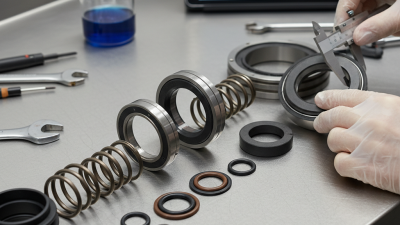
Many experts recommend training personnel on proper handling and installation techniques. A significant portion of seal failures can be traced back to installation errors. Operators should be well acquainted with torque specifications and alignment procedures. This ensures that seals function optimally and achieve their expected service life. Regular cross-checking and data analysis on seal performance can help identify trends and areas for improvement.
Top 10 Mechanical Seal Parts You Need for Best Performance
| Part Name |
Material |
Function |
Maintenance Tips |
Lifespan (Years) |
| Seal Ring |
Carbon |
Forms a primary seal |
Regularly inspect for wear |
5-7 |
| O-Ring |
Nitrile Rubber |
Prevents leaks |
Replace if cracked or brittle |
3-5 |
| Gasket |
PTFE |
Seals between parts |
Check for proper alignment |
4-6 |
| Bellows |
Metal |
Compensates for misalignments |
Inspect for fatigue |
6-8 |
| Driving Collar |
Stainless Steel |
Transmits torque |
Keep clean and free of corrosion |
5-7 |
| Thrust Ring |
Ceramic |
Supports axial loads |
Check for surface wear |
6-9 |
| Seat |
Graphite |
Seals against fluid loss |
Monitor for cracks |
5-7 |
| Spring |
Stainless Steel |
Maintains pressure on seals |
Inspect for corrosion |
7-10 |
| Lubrication |
Synthetic Oil |
Reduces friction |
Change regularly |
Indefinite with proper maintenance |
Selecting the Right Mechanical Seal Parts for Your Application
Selecting the right mechanical seal parts is critical for optimal performance in various applications. A study by the World Pump Association highlights that improper seal selection can lead to failure rates as high as 20% in critical operations. This emphasizes the importance of understanding specific needs when choosing mechanical seal components.
When evaluating mechanical seals, focus on materials, designs, and the operational environment. For instance, elastomers made of Viton or PTFE can withstand harsh chemicals, while ceramic faces are known for their high-performance capability. According to industry standards, a mismatched seal can increase leakage by up to 30%, underscoring the importance of precise specifications.
The sealing environment also plays a significant role. Factors like temperature, pressure, and fluid types must be considered. Many companies overlook these details during selection, resulting in costly downtime. Regular performance assessments and adjustments are needed. This helps in identifying potential weak points in the sealing system, allowing for improvements in efficiency and longevity.