Leave Your Message

Why Are Mechanical Seal Parts Important for Buyers?

Why Are Mechanical Seal Parts Important for Buyers? The answer begins with reliability, not appearance. A seal may be small, yet one damaged face, spring, or elastomer can stop a large pump. Buyers therefore evaluate Mechanical Seal Parts as performance-critical components, not ordinary replacement items.

Market evidence supports this concern. Grand View Research estimates that the global mechanical seals market was worth several billion U.S. dollars in 2023, with continued growth expected through 2030. Fortune Business Insights reports similar expansion, although its figures differ because market definitions and research methods vary. That difference deserves attention. Published numbers guide decisions, but they should not replace technical verification. In practice, buyers must match seal materials with pressure, temperature, fluid chemistry, shaft speed, and equipment design.

Details matter. Silicon carbide faces may resist abrasive fluids, while carbon faces can support dependable running under suitable conditions. EPDM, FKM, and PTFE elastomers behave differently when exposed to heat or aggressive chemicals. API Standard 682 provides widely recognized guidance for sealing systems used in petroleum, petrochemical, and natural gas applications. ISO 21049 also supports consistent selection and installation practices. These standards improve confidence, but they cannot correct poor storage, incorrect installation, or incomplete supplier records.

Experienced buyers request dimensional drawings, material certificates, batch traceability, and application references. They also compare lifecycle cost, not only the initial quotation. A cheaper part can become expensive after leakage, downtime, and emergency labor. Still, no selection is perfect. Operating conditions change, and supplier descriptions may be incomplete. Careful buyers leave room for inspection, testing, and review. That discipline makes Mechanical Seal Parts a practical investment in safety, uptime, and long-term equipment value.

Why Are Mechanical Seal Parts Important for Buyers?

What Are Mechanical Seal Parts and How Do They Work?

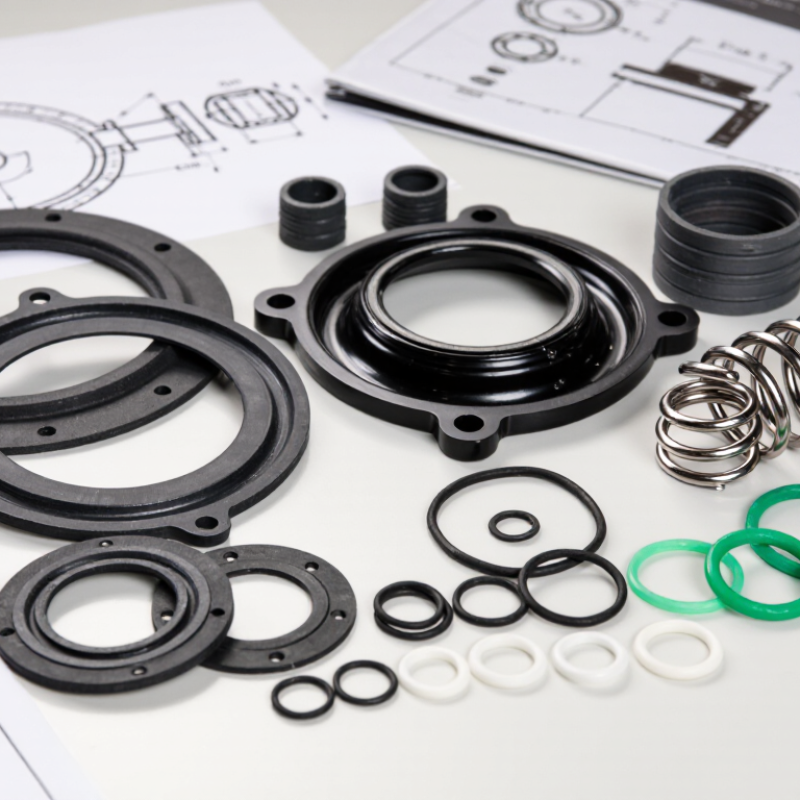
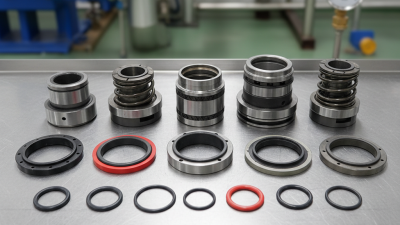
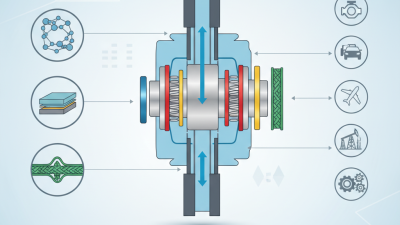
Mechanical seal parts form a controlled barrier between a rotating shaft and a stationary housing. The main sealing pair includes a rotating face and a stationary face. These faces press together with carefully controlled force. A microscopic liquid film remains between them. It reduces friction while limiting leakage. The spring or bellows supplies closing pressure. Secondary seals, such as O-rings, prevent fluid from passing around the faces.

Other parts support alignment and stability. A gland holds the stationary assembly against the equipment. A sleeve protects the shaft surface. Set screws or drive features transfer rotation to the seal. Each part has a specific job. Small damage can disturb the entire sealing system. A scratched face may leak, even when the spring looks undamaged.

In practical inspections, buyers should examine materials, dimensions, pressure limits, temperature range, and fluid compatibility. A seal designed for clean water may perform poorly with abrasive slurry. Face materials also affect heat generation and service life. I have seen replacements fail because the shaft measurement was assumed, not verified. That mistake is easy to repeat. Ask for drawings, tolerance data, and installation guidance before ordering. Check whether the seal needs flushing or cooling. Operating conditions can change after equipment upgrades, so an old specification may no longer be reliable.

Why Are Mechanical Seal Parts Important for Buyers?

Mechanical seal faces form the primary leakage barrier. Their hardness and wear resistance strongly influence service life, while secondary seals, springs, and retainers maintain contact and alignment.

Representative hardness values for commonly used mechanical seal face materials. Actual values vary by grade, manufacturing process, temperature, and test method. Higher hardness generally improves abrasion resistance, but chemical compatibility and thermal behavior must also be evaluated.

Why Are Mechanical Seal Parts Essential for Equipment Performance?

Why Are Mechanical Seal Parts Important for Buyers?

Mechanical seal parts are essential for equipment performance because they control leakage around rotating shafts. A seal may appear small, but its faces manage pressure, friction, and heat continuously. In pumps, mixers, and compressors, poor parts can cause fluid loss, contamination, and unexpected shutdowns. Seal faces must remain flat and aligned. Springs must provide steady loading. O-rings must tolerate temperature and chemical exposure. Even a small defect can create visible drips near the shaft.

Experienced maintenance teams inspect these details before installation. They check surface finish, shaft size, material compatibility, and spring condition. A hardened face may resist wear, while a softer material may suit cleaner fluids. Incorrect dimensions can create vibration or rapid damage. I have seen failures blamed on the seal alone, although rough shafts and poor installation were also involved. That assumption needs review. Seal performance depends on the complete assembly and the equipment around it.

Tips: Match every part with the operating pressure, temperature, speed, and fluid. Store elastomers away from sunlight and ozone. Keep faces clean. Do not touch them with dirty gloves. Confirm measurements twice. No checklist is perfect. Record leakage, vibration, and running hours after installation, because these details help identify gradual wear before failure becomes expensive.

Which Types of Mechanical Seal Parts Do Buyers Need?

Mechanical seal parts matter because one small mismatch can cause leakage, heat, or rapid wear. Buyers rarely need a complete seal blindly. They need parts matched to the pump shaft, fluid, pressure, temperature, and speed.

In maintenance work, I have seen a perfect-looking face fail because its elastomer softened in hot chemical service. That detail is easy to miss. Measure the shaft and housing carefully. Record operating conditions, not only the equipment name.

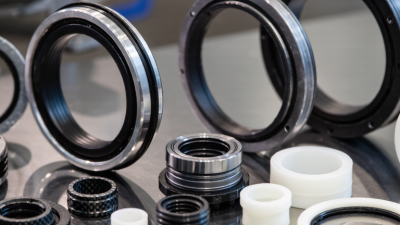
Most buyers need a rotating face, a stationary face, and a spring assembly. The faces create the controlled sealing gap. Carbon suits many services, while ceramic or harder materials may handle abrasive fluids better.

Spring options include single springs, multi-springs, and wave springs. Their loads must remain stable at operating speed. A worn retainer or drive collar can also disturb alignment. Small components matter.

Secondary seals include O-rings, wedges, V-rings, and molded bellows. Choose them for chemical compatibility and temperature range. A gasket may seal the gland, while a sleeve protects the shaft from scoring. Buyers may also need set screws, pins, clips, and replacement hardware.

These parts are not interchangeable by appearance. I have learned this after avoidable rework. Verify dimensions with a micrometer, inspect surface finish, and request material records when service conditions are demanding. A reliable parts list should identify sizes, materials, tolerances, and inspection requirements.

How Do Mechanical Seal Parts Affect Cost, Safety, and Reliability?

Mechanical seal parts are small, but their influence on purchasing decisions is substantial. Buyers often compare price first. That can be a costly shortcut. A seal includes faces, secondary seals, springs, and a gland. Each part must match the pump fluid, pressure, temperature, and shaft movement. A cheaper face material may wear quickly in abrasive slurry. Replacement labor can exceed the original saving.

Reliable parts also protect workplace safety. A damaged O-ring or weak spring can release hot fluid near rotating equipment. This may cause exposure risks, slippery floors, and unexpected shutdowns. During maintenance, technicians should check face condition, spring compression, shaft damage, and elastomer compatibility. Small details matter. Still, inspection is not enough. Dry running, poor alignment, or incorrect installation can defeat a well-made seal. Buyers should request dimensional records, material data, and traceable quality checks.

Parts with stable tolerances usually maintain contact pressure longer. This reduces leakage and maintenance frequency. However, no component lasts forever. Some purchasing plans assume perfect operating conditions, which is unrealistic. A better decision weighs service life, downtime costs, spare availability, and technician skill. I may sound overly cautious, but paperwork cannot replace field performance. The safest choice is not always the most expensive part. It is the part specified for the actual duty, installed correctly, and monitored before minor wear becomes a major failure.

What Should Buyers Check Before Selecting Mechanical Seal Parts?

Why Are Mechanical Seal Parts Important for Buyers?

What Should Buyers Check Before Selecting Mechanical Seal Parts?

Buyers should match every seal part to the pump’s operating conditions. Check the shaft diameter, seal chamber size, pressure, temperature, and rotational speed. A small dimensional error can create leakage, vibration, or premature wear. Measure twice.

Material compatibility deserves careful attention. Carbon, ceramic, silicon carbide, and metal components behave differently in abrasive or corrosive fluids. Elastomers must also resist the pumped liquid and operating temperature. A part that works well with water may fail quickly in solvents, chemicals, or hot oils.

Inspect the mating faces closely. They should be flat, smooth, and free from chips or scratches. Check spring condition, drive lugs, set screws, and secondary seals before installation. Ask for material certificates, dimensional records, batch traceability, and pressure-test information when the application is critical. Reliable suppliers should explain tolerances clearly, not hide behind general descriptions.

Field experience shows that many failures begin with incorrect assumptions. A replacement part may look identical but use a weaker spring or different elastomer. That difference matters. Buyers should review the equipment manual, operating history, and actual fluid conditions, rather than depending only on a catalog image. I have also seen clean-looking components installed in misaligned equipment. The parts were not always the real problem. Availability matters too, but selecting the cheapest item can increase downtime and maintenance costs. Could the inspection process be more detailed? Often, yes.

Why Are Mechanical Seal Parts Important for Buyers? - What Should Buyers Check Before Selecting Mechanical Seal Parts?
Buyer Check Why It Matters Typical Technical Data or Selection Criteria What Buyers Should Verify
Equipment and Seal Type Mechanical seal parts must match the pump or rotating equipment design. An incorrect configuration can cause leakage, vibration, or installation failure. Common configurations include component seals, cartridge seals, pusher seals, non-pusher seals, balanced seals, and unbalanced seals. Confirm the pump model, shaft arrangement, seal chamber design, original seal drawing, and required seal configuration.
Shaft or Sleeve Diameter The rotating parts must fit the shaft or sleeve accurately. Incorrect dimensions can prevent assembly or create excessive runout. Measure the shaft or sleeve diameter at the seal location. Use the equipment drawing or a calibrated measuring tool rather than relying only on visual inspection. Check shaft diameter, sleeve diameter, keyway position, shoulder location, and available installation length.
Operating Temperature Temperature affects face distortion, elastomer performance, lubricant viscosity, and the service life of secondary seals. Record normal, minimum, and maximum process temperatures. Elastomer and face-material limits must be suitable for the actual temperature range. Compare the process temperature with the allowable temperature range of the elastomer, spring, metal parts, and face materials.
Operating Pressure Pressure influences seal loading, leakage control, face separation, and the suitability of balanced or unbalanced designs. Specify normal, maximum, and pressure fluctuation conditions. Pressure capability depends on seal design, diameter, speed, and face loading. Verify maximum seal chamber pressure, pressure direction, pressure spikes, and whether a balanced design is required.
Rotational Speed Higher speed increases surface velocity, heat generation, and sensitivity to dynamic balance and shaft runout. Provide rotational speed in revolutions per minute and consider the seal face diameter when evaluating surface speed. Check pump speed, variable-frequency-drive conditions, shaft runout, and the seal’s rated speed for the selected size.
Fluid Compatibility Process fluids can attack elastomers, metal components, or carbon and ceramic faces, resulting in swelling, cracking, corrosion, or rapid wear. Identify the fluid, concentration, pH, solids content, viscosity, toxicity, crystallization tendency, and presence of abrasive or corrosive chemicals. Request a material-compatibility confirmation for every wetted part, including elastomers, springs, metal holders, and seal faces.
Seal Face Pairing The correct face combination controls friction, heat generation, wear, and leakage under specific operating conditions. Common face materials include carbon, silicon carbide, tungsten carbide, ceramic, and metal alloys. Typical pairings depend on fluid cleanliness, abrasiveness, and lubrication. Select face materials according to fluid properties, dry-running risk, solids content, corrosion exposure, and required service life.
Secondary Seal Material O-rings, gaskets, and bellows provide static or dynamic sealing. Material failure is a common cause of leakage. Common elastomer families include NBR, EPDM, FKM, and PTFE-based materials. Their chemical and temperature resistance differs significantly. Confirm elastomer type, hardness, cross-section, temperature range, chemical compatibility, and resistance to extrusion or swelling.
Material and Corrosion Resistance Metal components exposed to the process fluid can corrode, weaken, or contaminate the product. Frequently used materials include stainless steels, nickel-based alloys, carbon steel with protective treatment, and corrosion-resistant spring materials. Review the material specification, wetted-part list, surface treatment, corrosion allowance, and applicable process requirements.
Installation Dimensions Correct axial length and radial clearance are essential for proper spring compression, face loading, and component alignment. Important dimensions include seal setting length, working length, outside diameter, inside diameter, gland dimensions, and locating features. Compare a certified dimensional drawing with the installed equipment before placing an order.
Spring and Drive Arrangement Springs and drive elements transfer force and torque. Incorrect loading or movement can cause uneven wear and face opening. Review spring type, spring material, spring quantity, rotation direction, torque transmission method, and resistance to clogging. Verify whether the design is suitable for the rotation direction, fluid cleanliness, operating speed, and pressure conditions.
Flush, Quench, or Cooling Requirements External support systems can remove heat, prevent solids from entering the faces, and control crystallization or vaporization. Possible arrangements include clean flush, quench, cooling, drain, or barrier-fluid systems. Flow and pressure must be controlled within design limits. Determine whether a support system is needed and confirm connection size, flow rate, pressure, temperature, and fluid cleanliness.
Leakage and Safety Requirements Some services require controlled leakage, emission reduction, or containment because the fluid may be hazardous, flammable, or environmentally sensitive. Selection may require a single seal, dual seal, tandem arrangement, containment seal, or monitored barrier system. Identify legal, environmental, workplace-safety, and process-containment requirements before selecting the seal arrangement.
Applicable Standards and Documentation Standards and traceable documentation help buyers compare designs, confirm dimensions, and support quality control. Depending on the application, relevant references may include ISO 3069, API 682, EN 12756, material certificates, inspection reports, and dimensional drawings. Request drawings, material certificates, inspection records, test information, installation instructions, and applicable conformity documents.
Quality Inspection and Testing Dimensional errors, surface defects, poor flatness, and incorrect hardness can reduce seal performance even when the design is correct. Useful checks include dimensional inspection, face flatness, surface finish, hardness, material verification, spring testing, and pressure or leakage testing where applicable. Define acceptance criteria, inspection scope, sampling method, packaging requirements, and traceability for critical parts.
Maintenance and Replacement Availability Accessible replacement parts reduce downtime and make future maintenance more predictable. Consider replaceable faces, elastomer kits, springs, sleeves, gaskets, and the availability of complete seal assemblies. Confirm spare-part interchangeability, part identification, lead time, storage life, installation support, and maintenance instructions.
Total Cost of Ownership The lowest purchase price may lead to higher costs if the part has a short service life or causes frequent shutdowns. Evaluate purchase price together with installation labor, planned maintenance, leakage risk, downtime, energy loss, and expected operating life. Compare lifecycle cost, warranty terms, service interval, replacement frequency, and operating reliability rather than price alone.