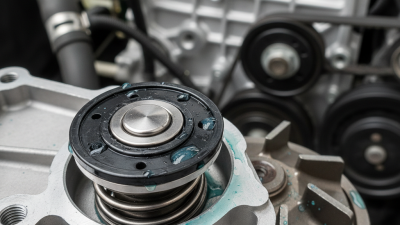
Choosing the right Spring Mechanical Seal begins with understanding the pump, the fluid, and the operating environment. A seal that performs well in clean water may fail quickly in abrasive slurry or hot chemical service. Small details matter. Shaft diameter, rotational speed, pressure, temperature, and fluid viscosity must be checked before comparing seal models.
Experienced maintenance teams usually review previous failures, leakage patterns, and inspection records. A worn carbon face may indicate dry running, poor alignment, or unsuitable materials. Stainless steel components can resist many conditions, but not every chemical. Elastomer selection also requires care. EPDM, NBR, FKM, and PTFE each respond differently to temperature and fluid exposure.
The spring arrangement deserves practical attention. Single springs are simple and economical, while multi-spring designs can distribute loading more evenly. However, a more advanced design is not automatically better. Installation space, shaft condition, flushing plans, and maintenance skills influence the final choice. Always verify operating limits through reliable manufacturer data and recognized engineering documentation.
Details can be missed.
A careful selection process should also consider start-stop cycles, vibration, and temporary dry running. These conditions often explain failures that normal operating figures hide. No selection is perfect when field data remains incomplete. That is worth admitting. By comparing real operating evidence with verified technical specifications, buyers can choose a Spring Mechanical Seal with greater confidence, longer service life, and more predictable maintenance costs.
How to Choose the Right Spring Mechanical Seal?
Understanding Spring Mechanical Seal Types and Operating Principles
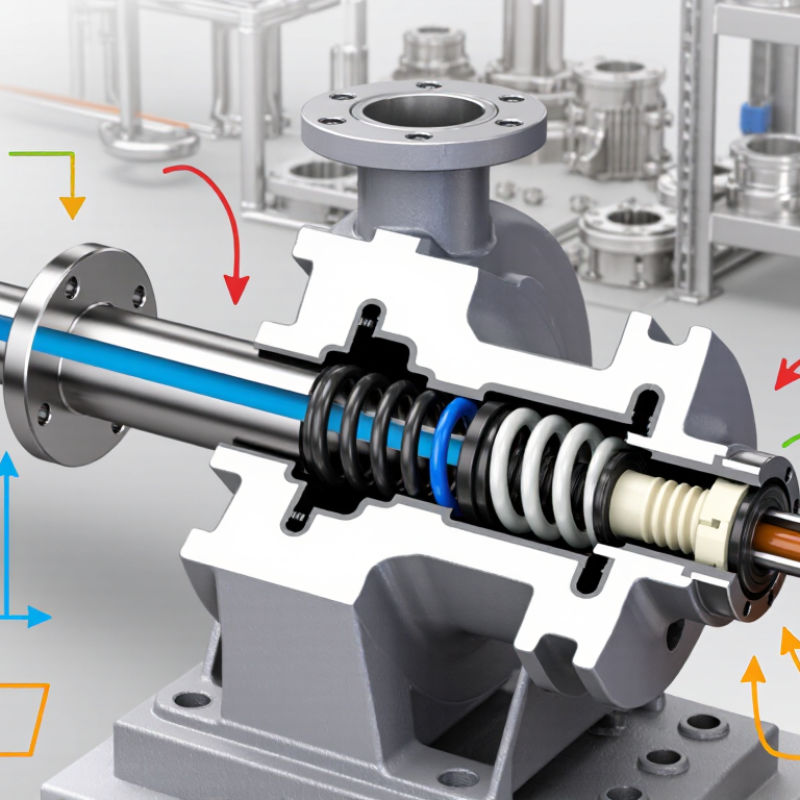
A spring mechanical seal prevents fluid leakage where a rotating shaft enters a pump or mixer. Its core design uses two highly finished faces. One face rotates with the shaft, while the other remains stationary. A controlled liquid film separates them. This film reduces friction, heat, and wear. The spring maintains contact when pressure or shaft movement changes.
Common spring seal types include single, multiple, balanced, and unbalanced designs. A single seal suits many clean, moderate-duty fluids. A double seal adds a barrier fluid for hazardous, abrasive, or easily crystallized media. Balanced seals reduce hydraulic loading on the faces. They often perform better under higher pressure. Pusher seals use a sliding secondary seal, while non-pusher designs avoid this movement. Each choice has weaknesses.
Selection should begin with fluid properties, not only shaft size. Check pressure, temperature, speed, solids content, and chemical compatibility. A gritty slurry may require hardened faces and stronger secondary materials. Hot liquid can demand special elastomers and careful cooling. I have seen specifications fail because operating temperature was treated as a constant. It rarely is. Startup, dry running, and sudden pressure changes can damage faces quickly. Installation alignment matters too. Even a suitable seal may leak when the shaft runs eccentric or the compression setting is wrong. Ask for measured operating data, not optimistic estimates. Small details matter.
Typical upper operating pressure by spring mechanical seal type
A spring mechanical seal maintains face contact by applying closing force as the faces wear or shaft movement occurs. Single springs are compact and tolerant of fouling, multi-spring designs distribute force more evenly, wave springs reduce axial installation space, and metal bellows designs avoid dynamic elastomer movement while supporting demanding temperature or chemical-service conditions.
How to Choose the Right Spring Mechanical Seal?
Matching Seal Materials to the Fluid, Temperature, and Pressure
Choosing a spring mechanical seal starts with the fluid, not the spring itself. Clean water may suit carbon against silicon carbide, with an elastomer rated for the operating temperature. Abrasive slurry needs harder faces, such as silicon carbide against silicon carbide. That choice reduces wear. However, dry running can damage even hard faces quickly. I have seen specifications fail because “water” concealed sand, chemicals, or suspended solids. Ask for the actual fluid composition.
Temperature changes material behavior. EPDM often handles hot water well, while some oils can make it swell. Fluoroelastomers resist many hydrocarbons, but they are not universal solutions. Check continuous temperature, startup peaks, and thermal cycling. A face material may survive the heat while the elastomer fails. This mismatch is easy to miss. Pressure also matters. High pressure can distort faces or overload the springs. A balanced seal often handles higher pressure more effectively than an unbalanced design, but equipment limits still apply.
Match the spring and metal parts to the environment. Stainless steel may work in ordinary service, while chlorides can require a more resistant alloy. Confirm shaft speed, seal chamber pressure, flush quality, and alignment. Do not rely only on catalog temperature ratings. Use compatibility data and test the real fluid when uncertainty remains. My practical rule has changed over time: review every wetted material separately, then inspect the complete seal as one system. That review may reveal an overlooked pressure spike or chemical additive.
| Fluid or Service | Typical Temperature Range | Typical Pressure Range | Recommended Seal Faces | Recommended Secondary Seal | Why This Combination Works | Important Limitations |
|---|---|---|---|---|---|---|
| Clean water and general utility water | 0 to 100 °C | Up to approximately 10–16 bar | Carbon / ceramic | EPDM | Carbon provides good running properties in water, while ceramic offers good hardness and corrosion resistance. EPDM is well suited to water-based service. | Do not use EPDM with mineral oils, fuels, or many hydrocarbon fluids. |
| Hot water and low-pressure condensate | 100 to 150 °C | Up to approximately 10–25 bar | Carbon / silicon carbide | EPDM | Silicon carbide improves wear resistance and thermal stability. EPDM generally performs well with hot water and steam-related service within its temperature limit. | Confirm the EPDM grade, cooling arrangement, and vapor-pressure margin; dry running can rapidly damage the faces. |
| Seawater and mildly saline water | 0 to 100 °C | Up to approximately 10–20 bar | Silicon carbide / silicon carbide | EPDM or FKM, depending on additives | Silicon carbide offers strong resistance to corrosion, saltwater, and abrasive particles. The elastomer should be selected according to temperature and chemical additives. | Avoid metallic springs or components with poor chloride resistance. Check for galvanic corrosion and crystallized salt deposits. |
| Mineral oils, lubricating oils, and many hydrocarbons | -20 to 150 °C | Up to approximately 10–25 bar | Carbon / silicon carbide | FKM | FKM provides good resistance to mineral oils, fuels, and many hydrocarbon-based fluids. Silicon carbide improves wear resistance and thermal capability. | FKM is not generally suitable for hot water, steam, concentrated amines, or some polar solvents. |
| Abrasive slurries and liquids containing solids | 0 to 120 °C | Up to approximately 10–20 bar | Silicon carbide / silicon carbide | EPDM or FKM, selected by fluid chemistry | Hard silicon carbide faces resist abrasive wear better than softer face combinations. A balanced spring seal and adequate flush can reduce solids entering the interface. | Do not rely on material selection alone. Solids concentration, particle size, shaft speed, and flush design strongly affect service life. |
| Acidic or alkaline process liquids | 0 to 120 °C | Up to approximately 5–15 bar | Silicon carbide / silicon carbide | PTFE or a chemically compatible elastomer | Silicon carbide provides broad chemical resistance, while PTFE is useful where elastomers may swell or degrade. | Compatibility depends on concentration, temperature, oxidizing strength, and contaminants. Verify each material against the exact chemical. |
| Solvents and aggressive organic chemicals | -20 to 180 °C | Up to approximately 5–15 bar | Silicon carbide / silicon carbide | PTFE or FFKM-type material | Hard ceramic faces offer good chemical resistance, while PTFE and highly resistant perfluoroelastomer compounds can handle many aggressive fluids. | PTFE has limited elasticity and may require a suitable energizing design. Check swelling, permeation, and pressure-extrusion resistance. |
| Food, beverage, and hygienic water-based liquids | 0 to 140 °C | Up to approximately 10–16 bar | Carbon / silicon carbide | EPDM or FKM suitable for the process | These face materials can provide a clean, low-leakage interface when paired with an appropriate hygienic seal design and cleanable construction. | Material approval, surface finish, dead-space control, cleaning chemicals, and sterilization conditions must be verified for the application. |

Selection rule: First confirm fluid compatibility, then check temperature, pressure, shaft speed, vapor pressure, and the risk of dry running. The spring, metal parts, seal faces, and secondary seal must all be compatible with the complete operating condition.
Choosing a spring mechanical seal starts with dimensions, not catalog preference. Measure shaft diameter, housing bore, seal chamber depth, and working length at the equipment. Even a small measurement error can change compression and face loading. Confirm rotation direction, stationary or rotating spring, and available axial space. API 682 selection practice emphasizes documented operating conditions, not just nominal pump size. That discipline matters. The U.S. Department of Energy’s Improving Pumping System Performance sourcebook identifies pumping as about 25% of industrial electricity use in many facilities.
Spring design should match the fluid, temperature, pressure, and speed. A conical spring can tolerate limited axial movement, while a cylindrical spring may provide more consistent force. Multiple springs distribute loading, but solids can collect between them. For corrosive liquids, material compatibility outranks purchase price. Check face materials, elastomer limits, and corrosion data together.
In field inspections, uneven face wear often points to misalignment, vibration, or incorrect compression. A seal can be dimensionally correct and still be wrong.
Configuration depends on risk and containment needs. A single seal may suit clean, low-pressure water service. Dual arrangements provide a controlled barrier for volatile, abrasive, or crystallizing fluids. The support system must be engineered correctly. Hydraulic Institute lifecycle-cost guidance notes that energy can represent up to 40% of pumping-system lifecycle cost, so friction and flush flow deserve measurement.
Do not choose a larger seal automatically. It may increase heat generation and installation difficulty. I still see selection sheets missing startup temperature and dry-running events. That omission is uncomfortable, but useful.
How to Choose the Right Spring Mechanical Seal?
A spring mechanical seal should match the installation, not only the pump model. Check shaft diameter, seal chamber depth, operating pressure, temperature, speed, and fluid properties. A small alignment error can create uneven face loading. I have seen new seals leak within hours because piping strain shifted the pump casing. Verify shaft runout, face condition, and gland squareness before installation. API 682 and ISO 21049 provide useful selection frameworks for process pump seals.
Compatibility needs careful attention. Confirm elastomer resistance against the actual fluid, concentration, temperature, and cleaning chemicals. Spring materials must also tolerate corrosion risks. The Hydraulic Institute and Europump’s Pump Life Cycle Costs guide reports that energy can represent about 40% of total pump life-cycle cost. A leaking seal may increase energy use through product loss, repeated starts, and unplanned maintenance. Yet material selection alone is not enough. I sometimes overfocus on chemical charts and underestimate poor flushing arrangements.
Tips: Record operating data during startup. Inspect faces under clean light. Keep spare seals sealed and labeled. Follow the manufacturer’s installation dimensions, but verify them against the equipment drawing. For abrasive fluids, use a suitable flush plan and monitor pressure. A simple leakage log can reveal whether the real problem is wear, vibration, or installation practice. Maintenance intervals should reflect actual service conditions, not an optimistic calendar. Check again after the first operating shift.
A spring mechanical seal should match the pump’s actual operating conditions, not only its catalog rating. Check pressure, temperature, shaft speed, fluid chemistry, and the risk of dry running. Face materials also matter. Hard faces can resist abrasive particles, while softer combinations may perform better in cleaner fluids. A seal that performs well today may fail quickly after a process change.
Service life depends on more than seal design. Correct installation, shaft alignment, spring setting, and flush control are equally important. During inspections, look for uneven face wear, heat marks, or crystal deposits near the seal chamber. These details often reveal poor lubrication or incompatible materials. A cheaper seal can appear efficient on paper. However, one unplanned shutdown may erase the initial saving. Total operating cost includes replacement labor, lost production, cleaning, energy use, and disposal time. No selection is perfect. Your assumptions deserve review.
Tips: Record leakage trends, temperature, and vibration during normal operation. Compare these records with maintenance intervals. Ask whether a small increase in purchase price could reduce downtime. Also, confirm the seal remains suitable after changes in fluid concentration or pump speed. Testing one unit first is often wiser than changing an entire fleet.