


Stationary Seat
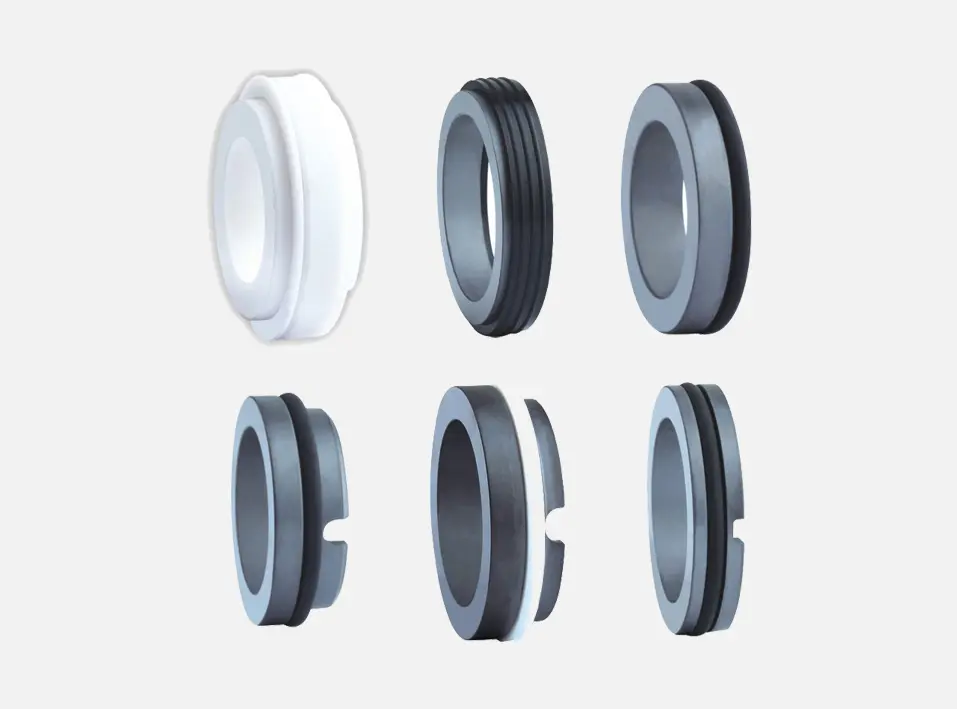
Standard Dimensions and Compliance
Global standardization ensures component interoperability and reliability. Key standards include:
● DIN 24960 / EN 12756: These define precise dimensions, tolerances, and identification codes, including options for short axial dimensions, anti-rotation pin, and seat blocked ring
● European/American Standard Housing Dimensions: Designs often align with common EU/U.S. industry housing specifications, including anti-rotation slot ensuring broad compatibility with pumps and rotary equipment.
Material Selection and Performance Characteristics
For detailed material parameters please refer to
Materials and Features
.
Material choice must account for chemical compatibility, thermal stability, abrasion resistance, and mechanical strength. Common materials include:
Inquiry Now
Secondary Sealing Options
An effective seal between the stationary seat and gland is critical. Beyond standard elastomer O-rings (e.g., NBR, EPDM, FKM/Viton), we have option of L-Shape Seals, PTFE Gaskets
-
OEM Equivalent Quality
We provide high-quality alternatives compatible with major brands including: Vulcan/ AESSEAL/ Burgmann/ John Crane/ Flowserve etc. -
Embroidery Customizationn
Material selection guidance based on your specific applicationCross-referencing services for OEM parts replacementCustom engineering solutions for unique requirementsTechnical consultation for optimal seal performance -
Fabric Selection and Technology
ISO 9001 certified manufacturing processesRigorous quality control at every production stageComprehensive testing and performance validationTraceability and documentation for all materials
-
Detailed material properties and performance data
-
Standard and custom dimension specifications
-
Cross-reference guides for major OEM parts
-
Application recommendations and selection guidelines
-
Technical drawings and installation instructions
-
Download Now to access comprehensive engineering data for your sealing solutions.
Need Immediate Support or Customized Solutions?
Our engineering team is ready to assist with application-specific challenges, material recommendations, and custom-designed stationary components. Contact our technical experts for personalized support and quotation requests.