







Reducing VOC Emissions: 2026 Chemical Plant Sealing Guide
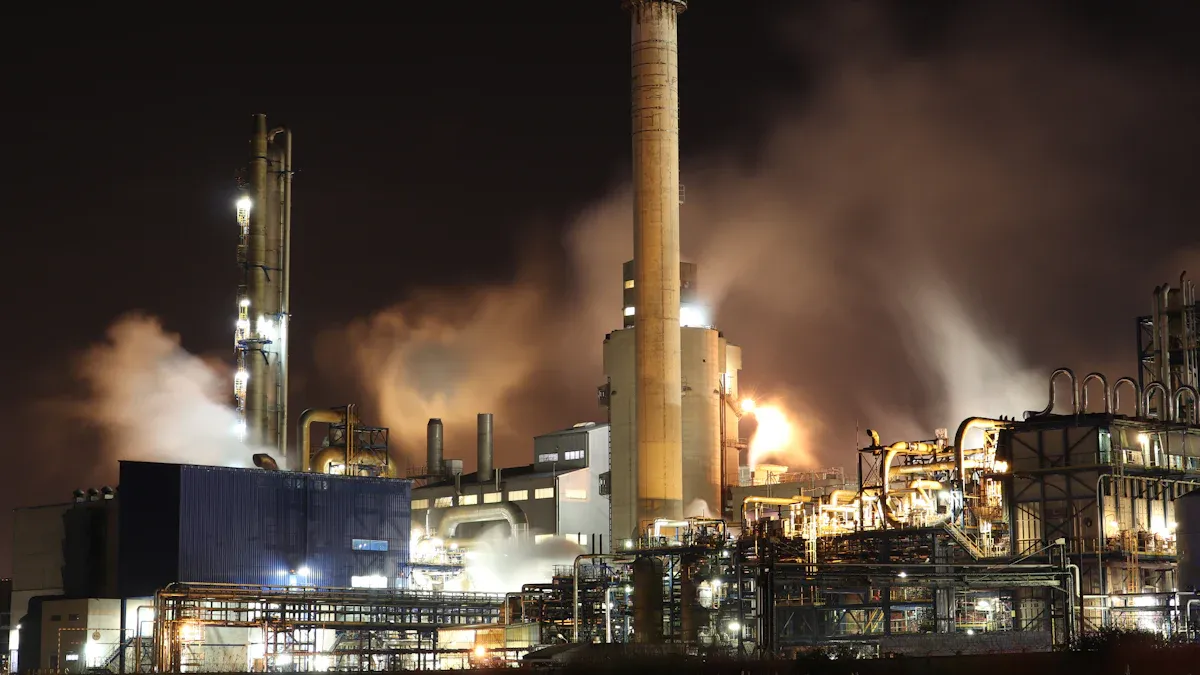
Chemical plants are facing the imperative to meet 2026 VOC compliance. To achieve this, advanced mechanical sealing solutions are absolutely essential. Modern mechanical seal for chemical plants play a crucial role in significantly reducing these emissions. A hi-quality seal manufacturer is key to providing these critical solutions. This guide outlines practical steps for achieving compliance.
Key Takeaways
- Chemical plants must meet new rules for VOC emissions by 2026.
- Advanced mechanical seals help plants reduce harmful emissions.
- Choosing a good seal maker is important for these solutions.
Understanding 2026 VOC Compliance for Chemical Plants

Key Regulatory Changes and Deadlines
Chemical plants face significant regulatory updates for 2026 VOC compliance. The HON MACT Updates, finalized on March 28, 2024, mandate fenceline monitoring by July 2026 for most facilities in the Synthetic Organic Chemical Manufacturing Industry (SOCMI) and Polymers and Resins Groups I & II. Companies must utilize EPA Methods 325A/B and 327 for this monitoring. California also introduced SB 1137 and AB 218. These require enhanced Leak Detection and Repair (LDAR) and operational compliance by July 2026 for existing oil and gas facilities near sensitive receptors. Operators must also submit a sensitive receptor inventory and map by July 1, 2025. Furthermore, NSPS Subpart OOOOb, while primarily for oil and gas, updates performance standards for reducing VOC emissions. By 2025, operators must establish their compliant monitoring program, effective for 2026. This includes initial and frequent routine leak detection surveys. New EPA regulations for 2026 will also significantly impact industrial painting practices. These changes will lead to a rapid decline in high-VOC coatings and a shift towards sustainable alternatives. The National Volatile Organic Compound Emission Standards for Aerosol Coatings have a compliance date of January 17, 2027, with interim rules applicable until then.
The Cost of Non-Compliance
Failing to meet VOC compliance carries substantial financial and operational risks. The Shell Polymers Monaca plant, for example, faced a $5 million state penalty for repeatedly exceeding air pollution limits, including VOCs, between January 2022 and June 2023. BP Products received a total financial penalty of $40 million for violations related to benzene and VOCs. This included a civil penalty of $31,424,000 and an additional $8,576,000 in stipulated penalties. Beyond fines, non-compliance can lead to significant operational disruptions. Environmental agencies, such as the EPA, can issue substantial fines, potentially reaching hundreds of thousands for repeat offenses. Serious violations can even result in criminal charges, including imprisonment. Failed inspections can lead to immediate stop-work orders, halting operations until compliance is demonstrated. A history of violations increases regulatory oversight, leading to more frequent inspections and mandatory third-party audits. The Clean Air Act (CAA) authorizes the EPA to set air quality standards. Non-compliance with the CAA can result in substantial fines and operational restrictions. Facilities often require a Title V permit, part of the CAA, for major sources of air pollution. Failure to comply with this permit can lead to severe legal and operational issues.
The Role of Advanced Mechanical Seals in VOC Emission Reduction

How Traditional Seals Contribute to Emissions
Traditional sealing methods, such as compression packing, often contribute significantly to volatile organic compound (VOC) emissions in chemical plants. These seals rely on constant compression to prevent leakage. Over time, packing materials experience relaxation and wear. This degradation creates pathways for process fluids to escape, leading to increased fugitive emissions. Operators must frequently adjust or replace traditional packing, which introduces maintenance challenges and potential for further leakage during these interventions. The inherent design limitations of these older technologies make achieving stringent VOC compliance difficult.
Fundamental Principles of Advanced Sealing for VOC Control
Advanced mechanical seals offer a robust solution for controlling VOC emissions. These sophisticated devices are engineered for significantly lower, or even zero, leakage. Metal bellows seals, for instance, provide a constant 0 ppm emission level. They outperform traditional packing systems across extended temperature ranges. Metal bellows are pressure-tight, resistant to temperature and corrosion, maintenance-free, and reliable. They also offer a long operational life. While the initial cost for a high-quality mechanical seal for chemical plants might be higher, the monetary savings from reduced process loss and increased uptime far outweigh this investment.
Sophisticated Computer-Aided Engineering (CAE) tools are crucial in designing these advanced seals. These tools, including finite element analysis (FEA) and computational fluid dynamics (CFD), help engineers predict seal performance under various operating conditions. This predictive capability allows for better problem-solving and more accurate projections of seal effectiveness. Using these analytical tools ensures the reduction of VOC emissions, meeting stringent environmental regulations before equipment even enters service. This proactive approach makes advanced mechanical seals the best available technology for optimal fugitive emissions prevention.
Key Features of Advanced Mechanical Seals for 2026 Compliance
Advanced mechanical seals offer specific features that help chemical plants meet stringent VOC compliance standards. These designs move beyond basic sealing. They provide robust solutions for emission control, reliability, and maintenance.
Dual and Tandem Seal Configurations for Zero Emissions
Dual and tandem seal configurations are critical for achieving near-zero VOC emissions. These systems use multiple seals to create a more secure barrier against process fluid leakage. Dual un-pressurized seals, previously known as tandem seals, use a buffer fluid. This fluid is at or near atmospheric pressure. It lubricates the atmospheric side seal. Any leakage from the process side enters this buffer fluid. This significantly reduces environmental leakage of VOCs.
Dual pressurized seals, once called double seals, use a barrier fluid. They maintain this fluid at a pressure 175 kPa (25 psi) higher than the seal chamber pressure. This ensures any leakage from the process side goes into the pump. It prevents release to the atmosphere. The barrier fluid must be compatible with the pumped fluid. Pressurized dual seals, or Arrangement 3 cartridge seals, feature an inner seal and an outer seal. The inner seal is closest to the pump impeller. The outer seal is furthest from the pump impeller. An externally pressurized barrier fluid isolates the process liquid from the environment. Both inner and outer seals seal the clean barrier fluid. They do not seal the process fluid.
Three main configurations exist: Face-to-back, Back-to-back, and Face-to-face. The Face-to-back configuration places the process fluid on the outer side of the seal face. The other two configurations have the process liquid on the inside diameter. Modern Face-to-back designs can also have springs mounted outside the process stream in the clean barrier fluid. Dual seals with a buffer fluid can nearly eliminate product leakage. They achieve emission levels less than 10 ppm. Unpressurized dual seals are simpler to operate. They are more reliable than pressurized systems. Dry-gas seals are often preferred for tandem arrangements. They generate less heat and have simpler auxiliaries. This contributes to reliable operation with minimal leakage. Seal designs handle short-term upset conditions. They manage loss of pump suction without catastrophic leakage. This maintains low emissions even under stress.
Cartridge Seal Designs for Enhanced Reliability
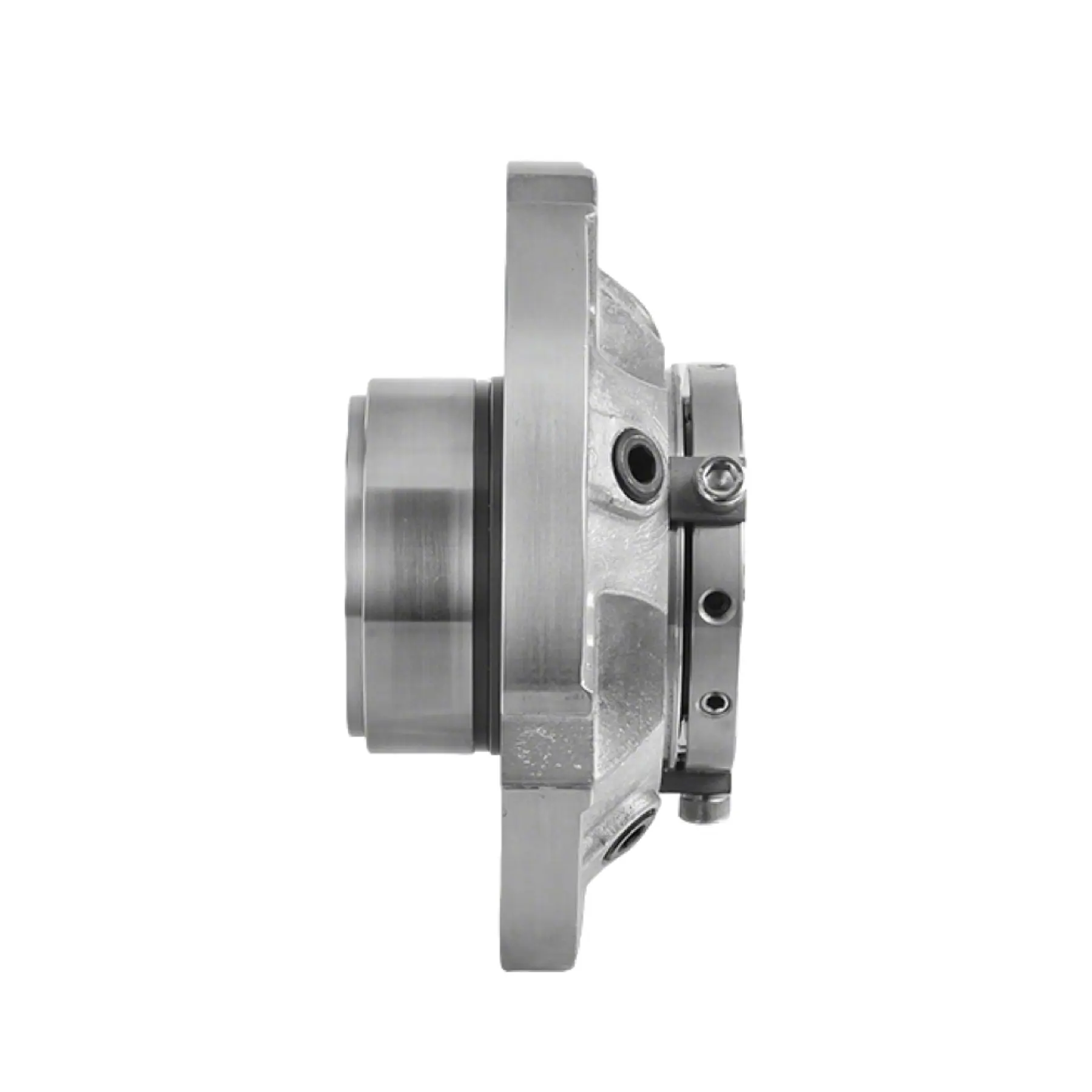
Cartridge seal designs significantly enhance reliability and reduce installation errors in chemical plant operations. Cartridge-mounted, end-face seals were introduced for American National Standards Institute centrifugal pump installations. They accommodate axial shaft adjustments. Their inherent simplicity, ease of installation, and maintenance make them a robust option. They work for rotating equipment with a stuffing box or seal chamber where a gland fits.
Even with advanced cartridge seal designs, poor installation remains a primary contributor to premature seal failure. It accounts for up to 20% of all seal failures. Even high-quality seals will fail if not installed correctly. Common issues include incorrect torque, O-ring misplacement, or contamination during assembly. To prevent these issues, meticulously follow manufacturer guidelines. Involve trained personnel when possible. Some companies offer onsite installation audits. These audits reduce first-time installation errors. While cartridge seals are designed for simpler installation compared to component seals, installation errors can still occur. Adhering strictly to manufacturer's instructions is crucial to prevent these errors.
Advanced Material Selection for Aggressive Chemicals
Advanced material selection is crucial for mechanical seal for chemical plants handling aggressive chemicals. As plants handle increasingly aggressive chemicals, the demand for corrosion-resistant materials like silicon carbide and specialized alloys is peaking in 2026. PTFE-based seals are recommended for handling the most aggressive chemicals. They withstand these chemicals well. They are generally soft and conform well to flange imperfections. They have an indefinite shelf life. Expanded PTFE (ePTFE) is particularly valuable in harsh environments. It offers near-universal chemical resistance and exceptional compressibility. It conforms easily to worn or corroded flange surfaces. When selecting ePTFE for secondary sealing, specify a low-creep material with uniform density.
Advanced materials include next-generation elastomers and thermoplastics. Examples are advanced FFKMs (perfluoroelastomers), cross-linked polyether ether ketone (PEEK), and engineered composites. These materials offer superior chemical resistance and thermal stability. They ensure reliability. Greene Tweed’s Chemraz 541 is an example. It is a high-strength FFKM compound for the chemical process industries. It shows superior chemical resistance, with less than 10% volume change in aggressive amines at 150°C. It provides reliable sealing at continuous operating temperatures up to 230°C. It also has impressive mechanical integrity.
FFKM (Perfluoroelastomer) offers near-universal chemical resistance. It resists strong acids, bases, solvents, and hydrocarbons. It maintains elasticity in extreme conditions. It is best for harsh chemical environments where standard elastomers fail. It also works for applications requiring high temperatures (up to 600°F/315°C). Common uses include semiconductor manufacturing, chemical processing, pharmaceutical seals, and aerospace. PTFE (Polytetrafluoroethylene) is chemically inert to nearly all chemicals. This makes it one of the most resilient sealing materials. It has an exceptionally wide temperature range (−400°F to 600°F). It is best for static seals, gaskets, chemical pumps, and applications involving highly aggressive fluids. Common uses include chemical processing, aerospace, and food-and-beverage applications requiring non-contaminating, non-stick surfaces. Markez Z1028 is a high-performance perfluoroelastomer. It withstands temperatures up to 600°F. It maintains resistance to a wide range of aggressive chemicals. It offers a cost-effective alternative to other premium FFKMs like Kalrez® and Chemraz®. For corrosive fluids, seals made from materials like carbon, ceramic, and tungsten carbide are often preferred. Non-metallic materials such as elastomers, ceramics, and carbon are frequently used in mechanical seals for various fluids. Advanced carbon materials for mechanical seals enhance performance in handling aggressive chemicals and high temperatures. Innovations in elastomer technology lead to seals more resistant to high temperatures, chemicals, and pressures.
Implementing an Advanced Sealing Strategy for Your Chemical Plant
Implementing an advanced sealing strategy requires a systematic approach. Chemical plants must evaluate existing systems, select appropriate seals, ensure correct installation, establish robust maintenance, and train personnel. This comprehensive strategy ensures long-term VOC compliance and operational efficiency.
Assessing Current Sealing Systems for VOC Leakage
Chemical plants must first identify existing VOC leakage points. A comprehensive Leak Detection and Repair (LDAR) program is essential for this assessment. Facilities conduct in-situ testing of valves and other connections using EPA Method 21. They identify, document, and repair leaks within a defined timeframe. Lowering allowable leak limits for valves, connections, and pumps further enhances emission control. Valves represent a significant source of VOC emissions, accounting for an estimated 62% of total uncontrolled VOC emissions in a typical facility. This highlights the importance of focusing assessment efforts on valve sealing systems. Failure to comply with environmental regulations, such as those requiring the installation of low-emission (low-E) valves based on identified leak points, can result in substantial penalties. For instance, not installing low-E valves as mandated by a consent decree can incur fines exceeding $1000 per valve.
Selecting the Right Mechanical Seal for Each Application
Selecting the appropriate mechanical seal for each application involves careful consideration of several factors. The seal material must be chemically compatible with the fluid being processed. Pressure in the seal chamber and seal size dictate whether a balanced or unbalanced seal is necessary. Seal materials must also handle the liquid's temperature without exceeding their limits. Liquid characteristics, such as viscosity, are important for seal life; abrasive liquids may require double seals or external flush plans. The chosen seal type and arrangement must meet company standards for reliability and emission control, with double seals often preferred for environmental safety.
Seal face materials include Carbon, Silicon Carbide, Tungsten Carbide, Ceramics, and Diamond Coatings. Each offers specific properties for wear resistance, heat dissipation, and hardness. Elastomer selections like Viton® (FKM), Aflas® (TFE/P), EPDM, and Kalrez® (FFKM) are chosen based on chemical resistance, temperature ratings, and compatibility with specific media. Design criteria also include temperature and pressure, which influence spring materials and face combinations, chemical compatibility with process fluids, and regulatory compliance (e.g., NSF 61, FDA, USP Class VI).
To select the best seal, plants identify operating parameters such as temperature, pressure, speed, and the media the seal will encounter. They understand sealing requirements, determining if the seal needs to prevent fluid leakage, dust, or contaminants, or handle high-speed rotation or pressure differentials. They then determine the type of seal, choosing from various options like O-rings or mechanical seals based on application specifics. Considering material compatibility, they select seal materials that are chemically resistant, have appropriate temperature tolerance, and possess suitable wear properties for the media. Evaluating environmental factors like moisture, UV exposure, and ozone helps account for conditions affecting seal performance. For complex applications, consulting with seal manufacturers or engineers provides valuable expertise.
Installation Best Practices for Optimal Seal Performance
Proper installation is paramount for optimal mechanical seal performance. Cleanliness is critical; all parts, tools, and the surrounding work area must be spotless to prevent contamination of seal faces. Personnel inspect all seal faces, springs, gaskets, and O-rings for damage, deformation, or contamination before use, replacing any questionable components. They use manufacturer-provided tools, as specialized jigs and gauges ensure correct positioning and prevent over-tightening. Appropriate lubrication is applied to O-rings or elastomers to aid installation, but personnel avoid overuse that could contaminate seal faces. They check shaft condition; shaft surfaces should be smooth, within concentricity tolerances, and free of burrs or scoring. Following a torque pattern, they tighten bolts in a criss-cross sequence to specified torque levels to avoid distorting the seal assembly. Personnel do not rush alignment; they use dial indicators to confirm shaft-to-seal face alignment is within tolerance before startup. After installation, they allow a few hours of ambient stabilization before beginning operation under full load or temperature.
Common pitfalls to avoid include contamination during installation, which introduces particles that wear the seal faces. Improper alignment between the shaft and seal leads to uneven wear or contact. Over-tightening of gland bolts distorts the seal assembly. Using damaged or worn tools increases the risk of scratches or inaccurate torque. Skipping pre-installation inspection results in the use of compromised or misfit parts. Face misalignment causes uneven loading and accelerated surface wear. Elastomer damage can occur from cuts, swelling, or pinching during assembly. Heat generation results from friction due to poor face contact. Vibration occurs when the shaft is not centered or balanced properly. All these issues can lead to a loss of seal integrity due to leakage past improperly seated components.
Maintenance and Monitoring Programs for Advanced Seals
Effective maintenance and monitoring programs are crucial for ensuring long-term VOC compliance with advanced mechanical seals. Routine inspection is essential for detecting deterioration or impairment in seals, followed by necessary replacements. Plants establish a proper maintenance program, including routine inspection and replacement, to ensure optimal seal functionality. A robust and proactive leak detection program is crucial for timely replacement or adjustment of seals to prevent unwanted emissions. This continuous oversight helps maintain the integrity of the mechanical seal for chemical plants, preventing costly leaks and ensuring regulatory adherence.
Real-World Success with Advanced Mechanical Seals
Case Studies of Plants Achieving VOC Compliance
Many chemical plants have successfully achieved stringent VOC compliance by adopting advanced mechanical seals. These real-world examples demonstrate the effectiveness of modern sealing technologies in reducing emissions and enhancing operational efficiency.
One major petrochemical facility in the Gulf Coast region faced significant challenges meeting new fenceline monitoring requirements. They systematically replaced their traditional packing and single mechanical seals with dual pressurized mechanical seals across their most critical pumps. This strategic upgrade resulted in a documented 90% reduction in fugitive VOC emissions from these sources. The plant not only achieved compliance but also experienced a notable decrease in product loss and maintenance costs.
Another example involves a pharmaceutical plant that integrated advanced cartridge seals with real-time monitoring capabilities. The plant's engineering team could track seal performance metrics, such as temperature and vibration, remotely. This predictive maintenance approach allowed them to identify potential seal failures before they occurred. They replaced seals proactively, preventing unexpected shutdowns and avoiding any non-compliance events related to VOC releases. These successes underscore the critical role advanced mechanical seals play in modern chemical plant operations.
Proactive adoption of advanced mechanical seals ensures 2026 VOC compliance. These sophisticated solutions significantly enhance operational efficiency and worker safety. Chemical plants must start planning their advanced mechanical seal for chemical plants strategy today. This proactive approach secures a sustainable and compliant future.
GW SEAL: Advanced Sealing Solutions for VOC Emission Control
In industries where controlling Volatile Organic Compound (VOC) emissions is critical for environmental compliance and operational safety, GW SEAL provides precision-engineered mechanical seals designed to achieve superior containment. Our solutions are specifically developed to minimize fugitive emissions, ensuring your processes meet stringent environmental standards while enhancing plant safety and efficiency.
The effectiveness of our low-emission seals is built upon a foundation of high-performance, corrosion-resistant materials meticulously selected for their compatibility with volatile and aggressive media:
-
Premium Grade SiC & Advanced Face Materials: For unmatched resistance to chemical attack and wear, ensuring long-term seal face integrity.
-
Specialized Elastomers (e.g., FFKM, FKM): Precisely formulated to maintain sealing force and stability when exposed to hydrocarbons and solvents, preventing swelling or degradation.
-
Robust Metallurgy: Components constructed from alloys that resist corrosion, maintaining structural integrity under challenging conditions.
By integrating these superior materials with innovative seal designs, GW SEAL delivers reliable, long-lasting sealing that directly contributes to:
-
Emission Reduction: Significantly lowering fugitive VOC leaks at the source.
-
Regulatory Compliance: Helping your operations adhere to EPA, TA Luft, and other global environmental regulations.
-
Cost Savings: Reducing product loss and avoiding potential fines, while decreasing maintenance frequency.
Choose GW SEAL for emission control sealing solutions where material excellence and engineering precision converge. We help you seal in performance and seal out emissions.
FAQ
What is VOC compliance for chemical plants?
VOC compliance means chemical plants must meet strict regulations on volatile organic compound emissions. New rules, like HON MACT Updates, require fenceline monitoring and advanced sealing solutions by 2026.
Why are advanced mechanical seals important for VOC compliance?
Advanced mechanical seals significantly reduce or eliminate VOC emissions. They offer superior leakage control compared to traditional seals. This helps plants meet stringent environmental standards.
What are the benefits of dual and tandem seal configurations?
Dual and tandem seals provide enhanced emission control. They use multiple barriers or buffer fluids. This achieves near-zero VOC leakage, improving safety and compliance.