



Precision OEM Mechanical Seal Engineering in China 7 Critical Checks for 2026
Successful sourcing of precision OEM mechanical seals requires critical checks. Meticulous supplier evaluation directly impacts project success and operational reliability. This guide empowers buyers to navigate the complexities of finding a reliable Mechanical Seal Factory in China. Understanding a China mechanical seal factory's capabilities, such as those from GW SEAL, proves crucial for effective market engagement.
Key Takeaways
- Choosing a mechanical seal factory in China needs careful checks. Look for quality certifications, strong research, and good after-sales support.
- A good factory shows its quality through strict testing and clear material tracking. They also offer many products and can make custom seals.
- Protect your ideas and designs when working with Chinese factories. Use clear contracts and register your brand in China early.
Why China Remains Key for Precision Mechanical Seals in 2026
China continues its role as a pivotal global player in precision OEM mechanical seal engineering. Its sustained growth stems from continuous investment in technology, efficient production models, and a vast pool of engineering talent. These factors collectively offer unparalleled advantages for global buyers seeking reliable sealing solutions.
Advancements in Manufacturing Capabilities
Chinese manufacturers consistently push the boundaries of mechanical seal technology. They invest heavily in advanced processes and materials. This commitment leads to superior product performance and durability.
- Development of High-Performance Materials: Manufacturers utilize advanced materials like carbon composites and specialized elastomers. These materials provide high heat resistance, pressure tolerance, and chemical resistance. This extends seal life in demanding environments such as oil, gas, and chemical industries.
- Smart Technology Digitalization and Integration: The industry embraces digitalization. IoT sensors integrate into smart seals for real-time monitoring and predictive maintenance. This minimizes downtime and improves operational efficiency, aligning with Industry 4.0 principles.
- Paradigm Shift Towards Green and Sustainable Seals: Environmental regulations drive demand for eco-friendly seals. Manufacturers focus on recyclable materials and energy-efficient production. This supports sustainability goals and reduces emissions.
- Greater Emphasis on High-Temperature and Pressure Seals: The energy and chemical sectors require seals for harsh conditions. Chinese factories develop sophisticated solutions for high temperatures and pressures. This ensures system integrity and prevents leaks.
Competitive Cost Structures and Scalability
China offers a compelling combination of cost-effectiveness and the ability to scale production. This makes it an attractive sourcing destination. China is the largest global producer of cartridge mechanical seals. It accounts for approximately 35-40% of the total production volume. Furthermore, China contributes 45% to the global export volume of cartridge mechanical seals, translating to around 540,000 units. This significant output demonstrates its capacity for large-scale manufacturing. A Mechanical Seal Factory in China can meet diverse volume requirements, from small batches to mass production, without compromising quality.
Broad Spectrum of Engineering Expertise
Chinese engineering teams possess extensive knowledge in mechanical seal design and application. They offer deep expertise across various industries. This allows for innovative solutions tailored to specific operational challenges. Their comprehensive understanding of material science and fluid dynamics ensures optimal seal performance.
Critical Check 1: Certifications and Adherence to Global Standards
Buyers must thoroughly vet a mechanical seal factory in China for its commitment to global quality and ethical standards. This ensures product reliability and compliance.
Verifying ISO and Industry-Specific Quality Systems
A reputable manufacturer demonstrates its quality commitment through certifications. Factories often hold ISO 9001:2015 certification, which confirms a robust quality management system. For specialized applications, such as aerospace, suppliers may possess AS9100D certification. This standard builds upon ISO 9001 with more rigorous requirements for aviation, space, and defense industries. Another relevant certification, AS9120, applies to aerospace stockist distributors. It incorporates ISO9001:2000 and specific aerospace industry requirements. Companies emphasize ISO Certified Manufacturing and Quality Compliance.
Ensuring Compliance with International Regulations
Compliance with international regulations is paramount for global trade. For mechanical seals used in freight containers, ISO 17712:2013 is the primary international standard. This standard defines mechanical requirements, tamper evidence features, and test procedures. It applies to manufacturers, logistics companies, customs authorities, and importers/exporters. Manufacturers must classify seals by physical strength and ensure high-security seals pass specific tests verified by an ISO/IEC 17025 accredited laboratory. They also produce seals designed to resist tampering and mark them with unique identification.
Assessing Environmental and Ethical Manufacturing Practices
Responsible sourcing includes evaluating a factory's environmental and ethical practices. Key environmental certifications include ISO 14001:2015 for environmental management. This covers design, manufacture, repair, and stockholding of mechanical seals. ISO 14064-1:2019 verifies carbon footprint, while ISO 50001:2018 addresses energy management. Furthermore, manufacturers should comply with regulations like RoHS (Restriction of Hazardous Substances) and REACH (Registration, Evaluation, Authorisation and Restriction of Chemicals). These ensure seals are free from hazardous materials and address chemical impacts.
Critical Check 2: R&D and Innovation Capabilities of a Mechanical Seal Factory in China
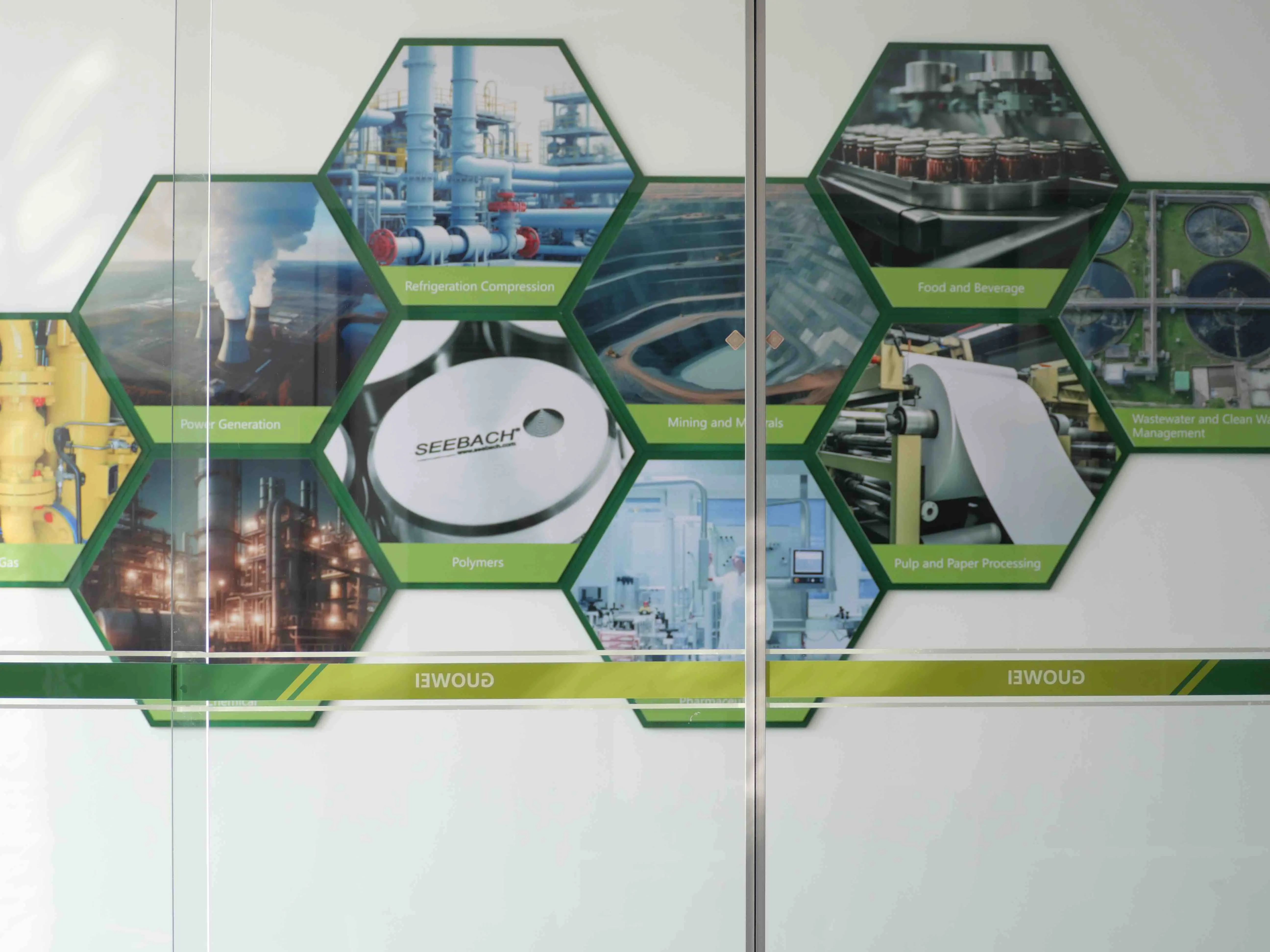
A leading Mechanical Seal Factory in China demonstrates a strong commitment to research and development. This commitment ensures they remain at the forefront of sealing technology. Evaluating their R&D efforts provides insight into their future capabilities and product quality.
Evaluating Investment in Research and Development
Buyers should assess a factory's investment in R&D. This includes dedicated R&D teams, modern laboratories, and advanced testing equipment. Significant investment indicates a proactive approach to product improvement and problem-solving. Manufacturers often focus on developing new materials for seal faces and secondary seals. These materials withstand extreme temperatures, pressures, and corrosive media. This extends the lifespan of mechanical seals in demanding industrial environments.
Assessing Patent Portfolios and Novel Solutions
A robust patent portfolio signals a factory's innovative strength. It showcases their ability to develop novel solutions. These solutions often include optimized seal geometries and configurations. Such designs lead to reduced friction and energy consumption in specific applications. Some factories integrate sensors and monitoring capabilities into smart sealing solutions. This enables predictive maintenance and enhances operational reliability. For example, Rock Metal developed special graphite for air compressors, increasing service life significantly. They also provided double-layer metal bellows seals for circulating boiler equipment, receiving positive feedback. HQSeal specializes in custom mechanical seal solutions for demanding sectors like the aircraft industry and chemical process pumps.
Understanding Collaborative Innovation Initiatives
Many Chinese manufacturers engage in collaborative innovation. They partner with universities, research institutions, or even customers. These collaborations foster knowledge exchange and accelerate product development. Such initiatives often lead to tailored sealing solutions for complex industrial challenges. This approach ensures the factory can adapt to evolving market needs and specific client requirements.
Critical Check 3: Robust Quality Control and Testing Protocols
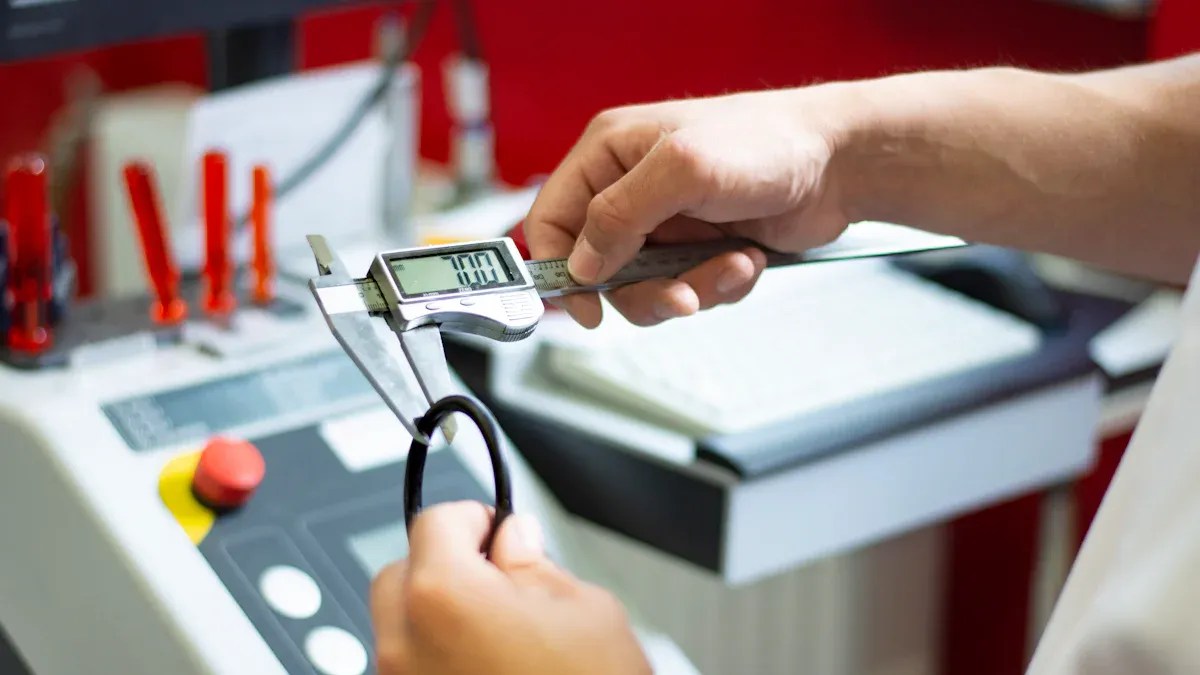
A reliable mechanical seal factory in China demonstrates its commitment to quality through stringent control and testing. These protocols ensure product performance and consistency.
Examining In-House Testing and Validation Processes
Manufacturers must possess comprehensive in-house testing capabilities. They use video measuring equipment for precise measurements of complex parts. Traditional measuring devices like calipers, bore mics, and pin gauges also ensure accuracy. For material properties, a tensometer measures tensile strength and elongation. A scale determines specific gravity and volume, indicating material changes after fluid exposure. A Fourier Infrared Spectrometer (FTIR) verifies material composition by comparing production parts with known compound scans. Factories also employ five different test rigs to validate seal designs. These rigs simulate application environments, including high system pressures, various fluid tests, vibration, and high speeds. Vibration test shakers simulate shock conditions. Optical flatness gauges measure seal face deviations. Pressure test rigs mimic actual operating conditions, from low to high pressure.
Ensuring Material Traceability and Verification
Effective quality control includes robust material traceability. Manufacturers track materials from their origin through every production stage. This ensures the use of correct specifications. Verification processes, often involving tools like the FTIR, confirm material integrity and prevent substandard components from entering the production line.
Reviewing Failure Analysis and Continuous Improvement Systems
Factories implement systematic failure analysis to identify root causes and prevent recurrence. Weibull analysis serves as an important statistical tool in reliability engineering. It models failure rates and helps engineers understand why failures occur. Before Weibull analysis, the Laplace trend test assesses data suitability. This ensures accurate predictions. A detailed analysis of each mechanical seal failure involves collecting and cleaning disassembled parts. It also includes checking seal rings, transmission parts, and auxiliary components for wear. Understanding equipment operating conditions and past failures helps identify the root cause. This comprehensive approach drives continuous improvement in seal design and manufacturing.
Critical Check 4: Comprehensive Product Range and Customization Expertise
A leading mechanical seal factory in China offers a diverse product portfolio. It also demonstrates strong capabilities in custom engineering. This combination ensures they meet varied industrial demands.
Assessing Standard Product Offerings and Availability
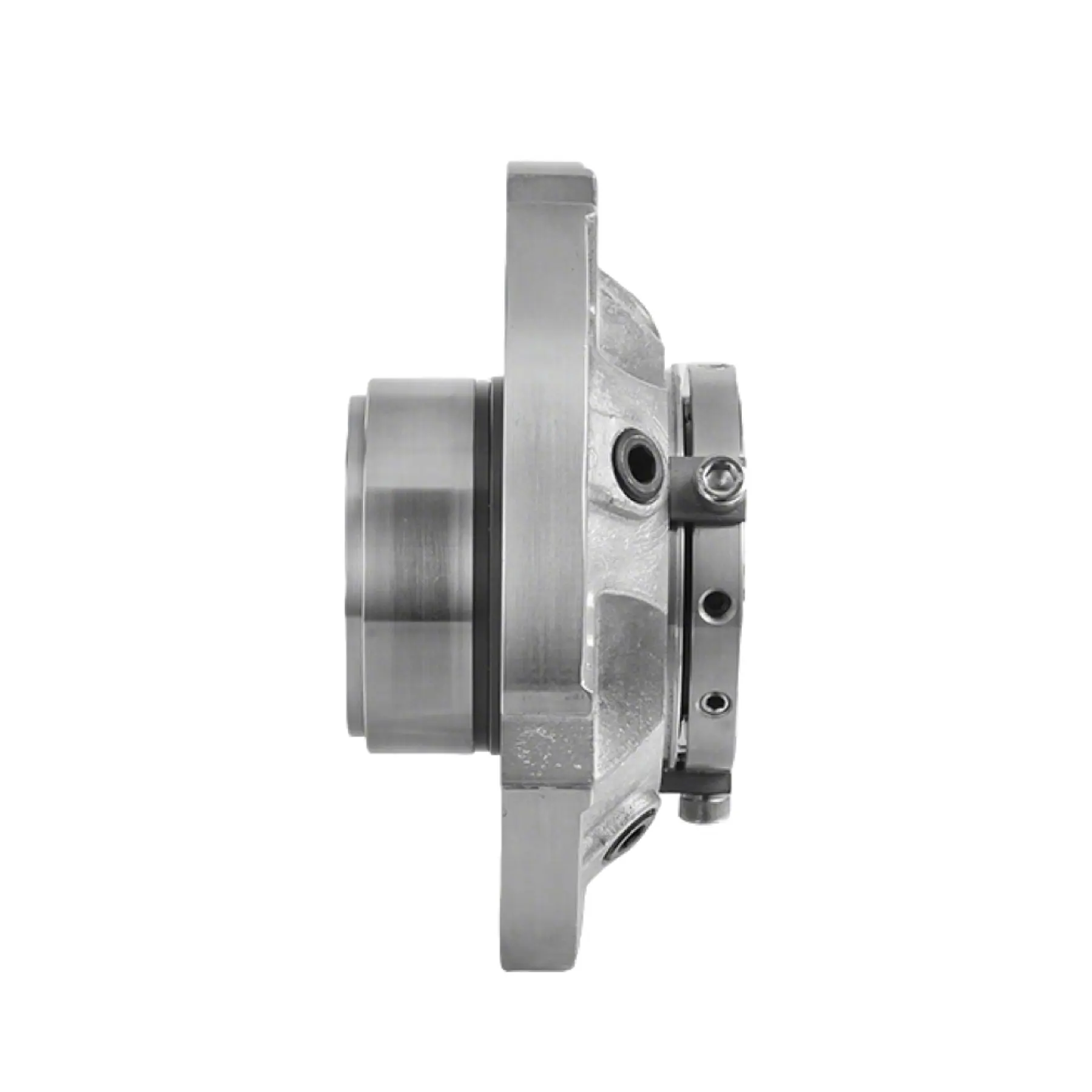
Manufacturers provide a wide array of standard mechanical seals. These include O-ring pusher, multiple spring, wave spring, cartridge, metal bellows, and elastomer bellows mechanical seals. For example, TNG Seal offers over 100 series, encompassing more than 2000 models and specifications. They also provide OEM pump mechanical seals for brands like Alfa Laval, APV, and Grundfos. Sinoseal Holding Co., Ltd. offers the CM1B Typical Cartridge Single Mechanical Seal. This seal operates at pressures up to 3MPa and temperatures from -40 to 260℃. It handles shaft diameters from 20 to 200mm. Sealcon also provides OEM mechanical seals for pumps from brands like Grundfos and Alfa Laval, with specific models like E91 and E92 available in various shaft sizes and stock materials.
Evaluating Bespoke Engineering and Design Capabilities
Factories excel in bespoke engineering solutions. They utilize proprietary seal design software and 3D modeling software. These tools quickly design virtually any seal, reducing development costs. Specialized platforms like SimMS simulate thin-film lubrication and thermal effects. ANSYS Mechanical performs FEA for structural deformation and thermal stresses. COMSOL Multiphysics offers versatile coupling of fluid flow and heat transfer. CAD modeling software develops precise component geometries. CAM software optimizes machining cycles. CFD simulations analyze fluid flow and pressure distribution. FEA software simulates real-world stresses and operating conditions.
Understanding Material Science and Selection Expertise
Manufacturers possess deep expertise in material science. They select optimal materials for specific applications. Advanced materials include Polyester Resin Composites, Polyetheretherketone (PEEK), Polyamides (PA), Polytetrafluoroethylene (PTFE), Fluoroelastomer (FKM/FPM), Perfluoroelastomer (FFKM), Silicone Elastomer, and Ethylene Propylene Elastomer (EPDM). PEEK stands out as a highly advanced polymer. It offers exceptional physical and chemical stability at high temperatures and in aggressive chemical environments. Fillers like glass or carbon fiber enhance its mechanical properties. PTFE, graphite, or carbon powder reduce friction or increase wear life.
Critical Check 5: After-Sales Support and Warranty Provisions
Effective after-sales support and clear warranty provisions are essential for long-term reliability. Buyers must evaluate a mechanical seal factory's commitment to supporting its products post-purchase. This ensures operational continuity and minimizes potential downtime.
Availability of Technical Assistance and Troubleshooting
A reputable manufacturer provides accessible technical assistance. This support helps customers resolve issues quickly. Factories often offer dedicated hotlines, email support, or online portals for troubleshooting. Their technical teams possess deep product knowledge. They guide users through installation, maintenance, and problem diagnosis. This proactive support minimizes operational disruptions.
Ensuring Spare Parts Availability and Logistics
Reliable access to spare parts is crucial for maintenance and repairs. Buyers should confirm the factory's ability to supply necessary components efficiently. Typical lead times for mechanical seals range from 7 to 21 days. Customization complexity significantly influences these timelines. Suppliers with fast response times, sometimes as quick as one or two hours, can facilitate quicker scheduling and delivery. Sample lead times for mechanical seals usually range from 7 to 15 days. Bulk production of standard orders averages 30 to 45 days.
Clarifying Warranty Terms and Conditions
Clear warranty terms protect the buyer's investment. Manufacturers must provide detailed information about their warranty coverage. This includes the duration of the warranty and what defects it covers. Buyers should understand the process for making a warranty claim. Transparent warranty provisions demonstrate a manufacturer's confidence in its product quality and commitment to customer satisfaction.
Critical Check 6: Due Diligence and Verification for Your Mechanical Seal Factory in China
Thorough due diligence is paramount when selecting a Mechanical Seal Factory in China. This process ensures a partner's reliability and capability. Buyers must verify all claims and assess potential risks.
Conducting Thorough Factory Audits and Site Visits
Buyers should conduct comprehensive factory audits and site visits. These audits verify a supplier's legitimacy and operational capabilities. Auditors examine general documentation, including design and development procedures. They confirm compliance with standards like ISO 9001 and API 682. Regulatory compliance checks ensure adherence to international and local regulations. Auditors also review design inputs and outputs, validating that products meet customer requirements. They assess risk management strategies, including formal plans like FMEA. Furthermore, they evaluate innovation and research activities, along with prototyping and testing processes. A factory audit also covers supplier and material evaluation, ensuring material traceability. This detailed inspection provides a clear picture of the Mechanical Seal Factory in China's operational integrity.
Assessing Financial Stability and Operational Longevity
Evaluating a factory's financial stability is crucial for long-term partnerships. Buyers analyze key financial indicators. Consistently positive cash flow ensures the business meets its obligations. Healthy profit margins indicate effective revenue conversion into net profit. Sufficient working capital is vital for daily operations. The quick ratio measures the ability to meet short-term obligations without relying on inventory sales. Coverage ratios assess a company's ability to meet debt obligations. A lower debt-to-equity ratio suggests a healthier economic position. These metrics confirm the operational longevity of a Mechanical Seal Factory in China.
Requesting Customer References and Case Studies
Requesting customer references and case studies provides invaluable insights. These resources offer independent validation of a factory's performance and reliability. Buyers can learn about a factory's track record, product quality, and responsiveness. Successful case studies demonstrate a factory's expertise in specific applications. This step helps build confidence in the chosen supplier.
Critical Check 7: Clear Communication and Contractual Agreements
Effective communication and robust contractual agreements form the bedrock of successful partnerships with a mechanical seal factory in China. These elements prevent misunderstandings and protect all parties.
Importance of Language Proficiency and Cultural Understanding
Clear communication bridges cultural and linguistic gaps. Buyers should employ strategies to ensure messages are accurately conveyed.
- Hiring a translator effectively conveys intentions and messages between English and Chinese.
- Using clear channels for communication avoids complex words, slang, and idioms.
- Utilizing translation software and apps like WeChat and Google Translate assists conversations and document translation.
- Bi-lingual documentation ensures all important documents, such as product specifications and contracts, are available in both English and Chinese. Businesses using professional translation services report a 60% improvement in negotiation outcomes.
Detailing Specifications and Scope of Work
Precise documentation of specifications and the scope of work eliminates ambiguity. Buyers must provide detailed technical drawings, material requirements, and performance criteria. This clarity ensures the factory manufactures seals exactly to requirements. A well-defined scope of work also outlines responsibilities, timelines, and deliverables for both parties.
Applying these critical checks offers a significant strategic advantage. Buyers build resilient, mutually beneficial partnerships with Chinese OEM manufacturers. This meticulous approach ensures high-quality seals and operational reliability. Precision OEM mechanical seal engineering in China holds a promising future for global buyers. It combines innovation with cost-effectiveness.
FAQ
How is quality controlled? What's your warranty policy?
Three-stage quality assurance:
1) Raw material inspection (ISO 9001 certified)
2) In-process QC checks
3) Final inspection + 3rd-party verification (optional)
Warranty: 12-month coverage from B/L date for material/workmanship defects. All complaints receive:
48-hour response guarantee
Custom solutions: repair/replacement/compensation