





Mastering Wastewater Treatment Mechanical Seals for Harsh Conditions
 Mechanical seals are crucial for wastewater treatment plants. They prevent leaks and maintain operational efficiency. Selecting and optimizing water treatment mechanical seals is vital. This ensures they endure abrasive, corrosive, and variable wastewater conditions. GW SEAL offers high quality seals designed for these demanding environments.
Key Takeaways
- Wastewater treatment needs strong mechanical seals. These seals must handle rough particles, harsh chemicals, and changing temperatures. Special materials like silicon carbide and tungsten carbide help seals last longer.
- Choosing the right seal design is important. Double mechanical seals are best for dangerous liquids. They use a special fluid to stop leaks. New cartridge seals make installation easy and reduce repair time.
- Good installation and regular checks keep seals working well. Use proper tools for setup. Watch for problems like leaks or overheating. This helps avoid breakdowns and saves money.
Understanding Wastewater's Unique Challenges for Water Treatment Mechanical Seals
Wastewater treatment environments present unique and demanding challenges for mechanical seals. These conditions require specialized designs and materials to ensure reliable operation and prevent costly downtime.
The Abrasive Nature of Wastewater
Wastewater frequently contains abrasive particles, which cause significant wear on pump components, including mechanical seals. Common abrasive particles include sand, lint, machine burrs, rust, metallic shavings, cleaning rag fibers, and weld spatters. In some industrial applications, one might also encounter loose proppant, particles of reservoir rocks, corrosion products from downhole equipment, solid particles from well-kill solutions, and sediment particles. These hard, suspended solids continuously rub against the seal faces, leading to premature wear and eventual seal failure.
Corrosive Elements and Chemical Attack
Beyond abrasives, corrosive elements in wastewater aggressively attack mechanical seal materials. Chloride and its derivatives, along with caustic products, are particularly damaging. Other corrosive agents include chlorinated water, sodium hypochlorite solutions, ferric chloride, concentrated acids, and organic solvents. Maintaining the proper pH is essential in wastewater treatment. Abnormal pH can cause corrosion or damage to treatment plant equipment. Highly acidic or alkaline wastewater corrodes metal surfaces, causing structural damage and operational issues. Microbiologically Influenced Corrosion (MIC) can also lead to significant pH drops, accelerating corrosion of mild steel and ductile iron.
Variable Operating Conditions
Mechanical seals in wastewater treatment also face variable operating conditions, especially temperature fluctuations. External environmental factors like seasonal changes cause these variations. Internal operational issues, such as running a pump dry, heat exchanger problems, or loss of clean fluid injection, also contribute. These fluctuations can cause thermal expansion and contraction, thermal shock, and heat checking. High temperatures lead to thermal degradation and increased chemical aggression. Low temperatures can increase fluid viscosity, affecting lubrication. Each seal type has specific temperature ranges, and exceeding these limits causes degradation and premature failure for water treatment mechanical seals.
Key Design and Material Choices for Harsh Wastewater Mechanical Seals
Selecting the correct design and materials for mechanical seals is paramount for their longevity and performance in challenging wastewater environments. Engineers must consider the specific conditions, including abrasives, corrosives, and variable temperatures, to ensure optimal operation.
Material Selection for Abrasive Resistance
Abrasive particles in wastewater demand seal face materials with exceptional hardness and wear resistance. Silicon carbide (SiC) stands out as a primary choice. It offers high thermal conductivity, excellent abrasion resistance, and strong chemical resistance. Different grades of silicon carbide exist, each suited for particular conditions. Reaction-bonded silicon carbide contains free silicon metal, which limits its chemical resistance in extreme pH environments. Direct sintered silicon carbide provides greater chemical resistance due to its almost entirely silicon carbide composition. Graphite-loaded silicon carbide enhances lubrication, proving useful in scenarios with limited lubrication.
Tungsten carbide (TC) also serves as a common hard face material. It offers increased strength and is less fragile than silicon carbide, performing better in pumps experiencing vibrations. Nickel-bound tungsten carbide is often preferred for its broader chemical resistance. For the most severe conditions, including extreme pressures and highly abrasive fluids, tungsten carbide is the ultimate choice. It resists wear from suspended solids that would rapidly erode silicon carbide or ceramic. Specialized seals for mining dewatering and dredge pump applications routinely use tungsten carbide faces to achieve service lives measured in years.
The hardness of these materials directly correlates with their ability to resist abrasive wear. For instance, materials like hardened grey cast iron and white iron, often used for impellers in similar abrasive environments, exhibit high hardness values. White iron, for example, has a hardness of 550 HBW (55 HRC), indicating its robust nature against wear. This level of hardness is crucial for seal faces operating in abrasive wastewater.
Corrosion-Resistant Components
Wastewater often contains corrosive elements, necessitating the use of materials that resist chemical attack. For metallic components, various stainless steels and nickel alloys offer superior corrosion resistance. Austenitic stainless steels, such as 316L, provide good general corrosion resistance. Duplex stainless steels offer enhanced resistance to chloride-induced stress corrosion cracking due to their higher chromium content and dual-phase microstructure. For the most demanding environments, super austenitic grades like 254 SMO or 654 SMO provide exceptional resistance against pitting and crevice corrosion in chloride-rich conditions.
Nickel alloys, including Hastelloy and Inconel, are highly effective in effluent decontamination systems, especially with aggressive chemicals and extreme temperatures. Their high nickel, chromium, and molybdenum content provides superior resistance to both general and localized corrosion. Hastelloy C-276, for example, offers unparalleled corrosion resistance in systems exposed to reducing acids and chloride-containing process streams. HASTELLOY® 'C-type' alloys are highly versatile. C-2000® alloy offers outstanding resistance to both oxidizing and non-oxidizing media, while C-22® alloy resists pitting and crevice corrosion.
Polymer-based materials also play a crucial role. Fiber-reinforced plastics (FRP), thermoplastics, and fluoropolymers like PTFE offer excellent chemical resistance across a broad pH range. They are impervious to many corrosive agents that affect metals. FRP combines the chemical resistance of polymers with the strength of reinforcing fibers, providing a cost-effective alternative to exotic metal alloys in many low-pressure applications.
Seal Face Technologies for Durability
Beyond material selection, advanced surface treatments and coatings significantly extend the life of mechanical seal faces. Diamond-like carbon (DLC) coatings improve hardness and reduce friction when applied to seal faces, minimizing wear and extending service life. Tungsten carbide coatings also enhance hardness and reduce friction, contributing to longer operational periods.
A new method, composite anodic jet electrodeposition (CAJED), has been developed to prepare a Ni-Fe-WC reinforcement layer on seal faces. This reinforcement layer demonstrates a strong anti-friction effect and effectively suppresses wear. It can reduce seal face leakage by a significant margin, showcasing the potential of advanced surface engineering. These precisely controlled processes enhance wear resistance and chemical compatibility, ensuring consistent quality and performance for water treatment mechanical seals in demanding industrial applications.
Seal Arrangement and Configuration
The choice between single and dual mechanical seal arrangements depends on the application's specific requirements, particularly concerning safety and environmental protection.
| Feature/Aspect | Single Mechanical Seal | Double Mechanical Seal |
|---|---|---|
| Definition | Utilizes one set of primary seal faces to contain the process fluid. | Employs two sets of primary seal faces, arranged in tandem or back-to-back, with a barrier fluid in between. |
| Cost | Generally lower initial cost. | Higher initial cost due to increased complexity and barrier fluid system. |
| Leakage | Designed for minimal, controlled leakage of process fluid to the atmosphere for lubrication and cooling. | Designed for zero process fluid leakage to the atmosphere. Any leakage is barrier fluid. |
| Safety | Lower safety for hazardous, toxic, or flammable fluids due to potential leakage. | Higher safety for hazardous, toxic, or flammable fluids as the barrier fluid acts as a buffer. |
| Abrasive/Corrosive Fluids | Not ideal for abrasive or corrosive fluids, as these can quickly wear down the single seal faces. | Excellent for abrasive or corrosive fluids, as the barrier fluid protects the primary seal faces from direct contact with the process fluid. |
Single mechanical seals are simpler and have a lower initial cost. They are suitable for non-hazardous, non-toxic, or less critical applications where minor leakage is acceptable. However, they are not ideal for abrasive or corrosive fluids, as these can quickly wear down the single seal faces.
Double mechanical seals employ two sets of primary seal faces with a barrier fluid in between. They offer superior environmental protection by preventing hazardous process fluids from escaping. These seals are essential for hazardous, toxic, flammable, abrasive, high-temperature, or high-pressure applications where zero emissions are critical. The barrier fluid provides lubrication and cooling to both sets of seal faces, enhancing seal life and performance.
For containing hazardous wastewater media, specific API Plans are highly effective. API Plan 54 is suitable for applications where no leakage to the atmosphere can be tolerated, such as with hazardous, toxic, or inflammable media. It is also used for dirty, abrasive, or polymerizing products where the media is unsuitable as a lubricant for inboard seal faces. This plan ensures positive barrier fluid circulation and better heat dissipation compared to other plans, using a pump for circulation and pressurization. API Plan 53 is also suitable for demanding conditions, using a barrier fluid at a higher pressure than the process fluid. It prevents leakage of hazardous fluids, making it essential for critical and hazardous applications where leakage could have severe environmental and safety consequences.
Advanced Sealing Solutions and Technologies for Water Treatment Mechanical Seals in 2025
 Wastewater treatment plants continuously seek innovative sealing solutions. These solutions enhance reliability, reduce maintenance, and improve operational efficiency. Advanced technologies in mechanical seals address the specific challenges of harsh wastewater environments.
Slurry Seals and Heavy-Duty Designs
Heavy-duty slurry seals are essential for applications with high concentrations of solids. These specialized designs effectively manage abrasive media, ensuring prolonged operational life. They feature several key design characteristics that make them suitable for high-solids wastewater applications:
- Reverse pressure capability.
- Non-clogging multi-springs.
- Rugged seal drive operation.
- Hydraulically balanced faces.
- Abrasion and corrosion-resistant materials promote longevity.
- Seal design coordinates with pump features for single-face flushless sealing of slurries up to 60% solids by weight.
- Stationary face multi-spring design with springs isolated and far from pumped media.
- Large and open inner seal chamber that self-evacuates and prevents packing in and heat retention.
These robust seals provide effective sealing for sewage and sludge media. Manufacturers supply them in various wear-resistant materials for arduous slurry applications. They often include large seal port orifices (1/2" NPT Barrier Fluid In and Out) for API Plan 53 or 52. The barrier fluid directs to inboard faces via an integral deflector, with an outlet over outboard faces for effective heat removal. A gland insert with integral inboard vortex breakers is ideal for applications with slurry or suspended particles/solids. Monolithic seal faces improve high-temperature performance. A stationary seal design with a self-aligning stationary seal face is ideal for high-speed applications. Multi-spring designs locate springs out of the process fluid. Highly efficient bi-direction barrier fluid pumping rings further enhance their performance.
Quench and Flush Systems (API Plans)
Quench and flush systems, often referred to as API Plans, play a critical role in protecting mechanical seals from harsh process fluids. API Plan 32, an external flush system, offers significant operational benefits but also presents certain drawbacks.
| Category | Benefit/Drawback |
|---|---|
| Benefits | |
| Seal Life | Significantly extended seal life when external flush fluid is properly selected and applied. |
| MTBF | Improved Mean Time Between Pump Failures (MTBPF) for the pump system. |
| Solids Removal | Isolates solid particles from the process liquid, ensuring a clean environment around the mechanical seal faces. |
| Temperature Reduction | Lowers product temperature, which improves mechanical seal performance. |
| Maintenance Flexibility | Allows for repair of strainers and flow-meters via a by-pass line while Plan 32 remains operational. |
| Drawbacks | |
| Product Quality | Potential for product degradation or dilution due to the introduction of an external fluid. |
| Costs (Energy/Reprocessing) | Increased energy consumption and reprocessing costs, depending on the overall system design. |
| Costs (Support System) | High support system costs, requiring additional equipment that must operate whenever the pump is online. |
| Pump Performance | Introduction of a lower boiling point flush liquid into a hot process stream can lower NPSHA, potentially causing vaporization in the pump, reducing capacity, or even leading to vapor lock and damage. |
| Application | Not recommended for cooling only due to very high energy costs. |
When using an API Plan 32 to isolate the mechanical seal from process fluid, the flush fluid should be delivered at a velocity or pressure sufficient to prevent process fluid from entering the seal chamber past the throat bushing. A good starting point for velocity is 15 feet per second (fps) across the throat bushing. Alternatively, if adjusting based on pressure, increase the flush flow until the seal chamber pressure rises at least 10 psi, and potentially up to 25 psi, above the stuffing box pressure. Another approach suggests a flush flow rate of 1 gallon per minute (gpm) for each inch of mechanical seal diameter for pumps operating at 3600 rpm. The lowest required flow rate should be used to maintain seal reliability and minimize operating costs.
Determining the correct API Plan 32 flush flow rate involves considering multiple factors:
- The purpose of the plan (isolation and/or heat removal).
- Mechanical seal manufacturer’s flow rate recommendations.
- Historical data from asset management systems regarding pump types, process conditions, and API Plan 32 seal flush flow rates.
- Type and cost of flush fluid.
- Size/volume of the seal chamber.
- Throat bushing geometry (clearance and length).
For hazardous or corrosive fluids like wastewater, a double seal configuration is necessary. This setup should be lubricated with an exterior barrier fluid such as water, synthetic lubricant, or glycol to ensure effective sealing. Instead of focusing solely on high flush water flow rates, plants should prioritize maintaining flush pressure at 15 to 20 pounds per square inch (psi) above the stuffing box pressure to maximize seal and packing performance.
Condition Monitoring and Predictive Maintenance
Condition monitoring and predictive maintenance revolutionize how plants manage mechanical seals. These advanced strategies move beyond reactive repairs, allowing for proactive interventions. Various tools and technologies facilitate this shift:
- Handheld vibration analyzers for route-based monitoring.
- Wireless sensors for continuous monitoring.
- Wired online condition monitoring systems for continuous monitoring.
While in-house vibration analysis is often impractical for wastewater treatment plants, outsourced condition monitoring utilizes AI tools for hourly overall values and daily full diagnostic data. AI analysis filters noise, highlights risks, recommends actions, and compares vibration signatures against historical data to identify over 1,600 fault types (e.g., lubrication issues, bearing problems, cavitation, misalignment). A preventive monitoring system continuously tracks pressure changes in mechanical seals. The system identifies thresholds for undesirable pressure changes and operationalizes these findings into a live monitor. A real-time dashboard provides an overview of operational seals and alerts teams to anomalies like unexpected pressure changes, enabling timely interventions and proactive maintenance scheduling.
Modular and Cartridge Seal Innovations
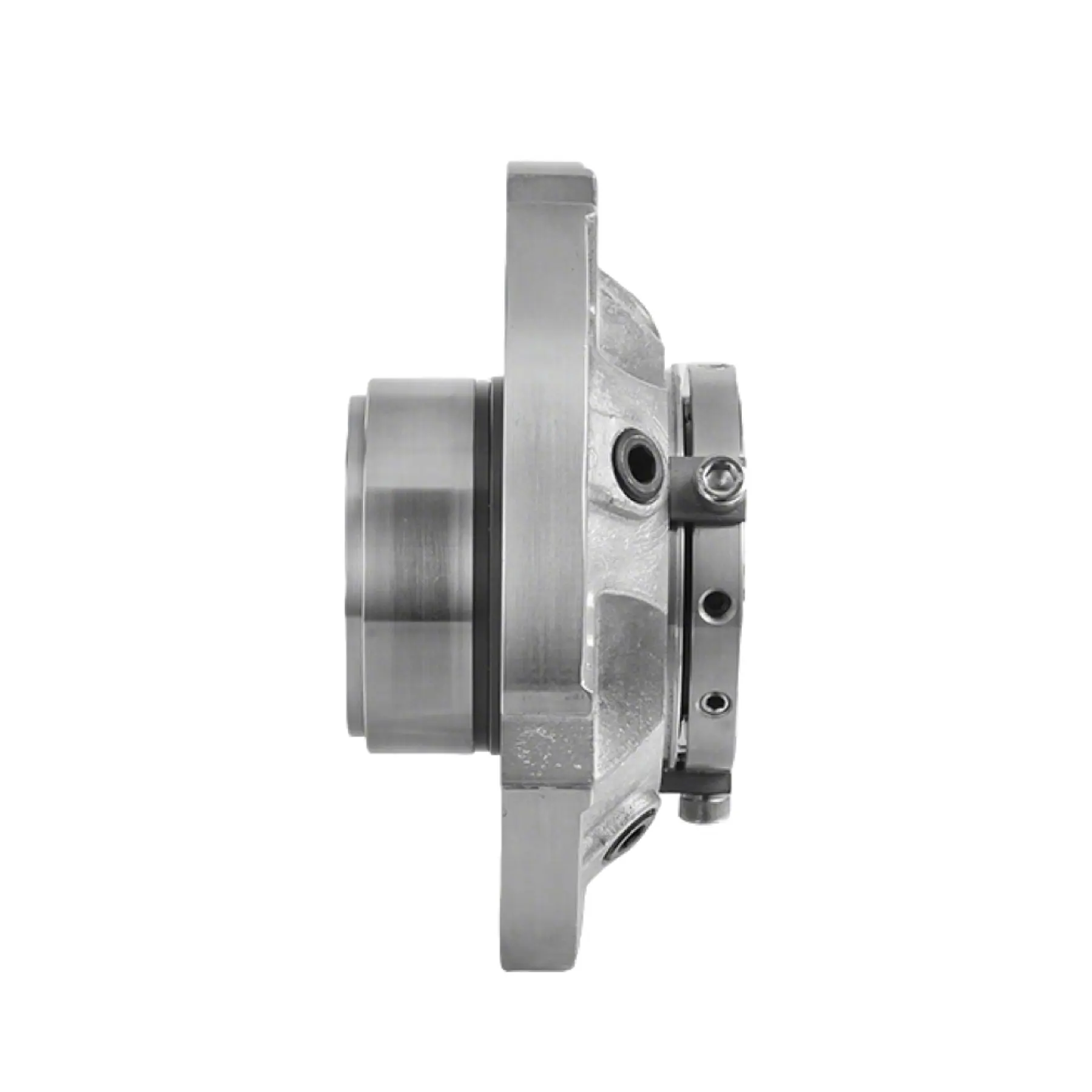
Modular and cartridge seal innovations significantly enhance maintenance and reliability in wastewater plants. These designs offer numerous advantages over traditional component seals.
Cartridge seals provide:
- Easy and Quick Installation: They eliminate complex assembly and specialized tools, reducing downtime during replacement and ensuring consistent performance.
- Modular Design: This allows for customization to meet specific application needs, enhancing sealing effectiveness and longevity.
- Accommodation of Movement: They handle radial and axial movement, compensating for equipment misalignment, shaft deflection, and vibration, ensuring continuous sealing.
- Thermal Resistance: Engineers design them to withstand thermal cycling and extreme temperature variations without compromising sealing.
- Robust Construction: High-quality materials provide superior resistance to corrosion, abrasion, and chemical attack, ensuring long-term durability and reliability.
These innovations lead to exceptional operational reliability. Precision-engineered design and advanced materials ensure optimal sealing across a wide range of operating conditions (-40°C to 220°C). The integrated assembly design prevents common errors associated with component mechanical seals, reducing premature failure and downtime. Advanced seal face materials (silicon carbide, tungsten carbide, specialized carbon) provide superior wear resistance and consistent performance in demanding environments. Spring-loaded designs maintain optimal contact pressure, compensating for face wear and thermal expansion, ensuring consistent sealing without frequent adjustments.
Cartridge seals also simplify installation. Their pre-assembled design reduces installation time by approximately two-thirds, eliminating complex procedures and specialized training. This translates to installation time reductions of 50-60%, meaning system downtime for installation is reduced by more than 60%. This reduction in installation time is a significant benefit for water treatment mechanical seals. The cartridge design ensures proper positioning and alignment, minimizing errors that lead to premature failure. Components are pre-assembled and factory-tested, ensuring performance from installation. Standardized designs fit existing seal chambers without modifications, making them ideal for plant modernization. Advanced materials and manufacturing lead to 30% or more improvement in service life compared to component seals. This reduces maintenance labor, eliminates frequent adjustments and repairs, lowers labor costs, and improves equipment availability. Consistent performance allows for scheduled maintenance and improved spare parts management. Standardized designs minimize spare parts variety, lowering carrying costs. Advanced elastomer materials provide superior chemical resistance and thermal stability, maintaining cost-effectiveness.
Best Practices for Installation, Operation, and Maintenance of Wastewater Mechanical Seals
Proper Installation Techniques
Correct installation is fundamental for mechanical seal longevity. Proper alignment of the pump shaft and the seal is vital. Misalignment causes uneven wear on seal faces, leading to leaks and reduced seal life. Technicians use precision alignment tools, such as dial indicators or laser alignment systems, to perfectly align the pump shaft with the seal housing. This step is especially important in high-speed applications.
Several steps ensure proper alignment and concentricity.
- Relieve stress from the fabricated discharge head after welding and before machining. This prevents runout issues affecting motor mounting flange perpendicularity or seal chamber bore concentricity.
- Ensure the seal chamber has a registered fit, concentric to the shaft, with a 0.005 in/in TIR per API 610 11th Edition section 6.8.4. The seal chamber face should have a runout of 0.0005 in/in of seal chamber bore TIR per API 610 11th edition section 6.8.5.
- Inspect pump and driver runout after coupling. Shaft runout must remain within the seal manufacturer's specified limits, typically 0.001 to 0.002 in TIR. Also, check seal register and face runout, documenting all inspections.
Successful installation is indicated if the pump operates without leaks, vibration, or unusual noises. The seal should run cool under normal operating conditions. Monitoring during the first few hours of operation is also advised. Tools like torque wrenches ensure bolts and fasteners are tightened to correct specifications.
Optimizing Operating Parameters
Operating mechanical seals within specified parameters maximizes their lifespan. Adhering to manufacturer recommendations for temperature, pressure, and fluid properties prevents premature failure. Pump cavitation significantly impacts mechanical seal performance. Cavitation, characterized by the formation and implosion of vapor bubbles, causes excessive machinery vibration. This vibration damages water treatment mechanical seals and reduces bearing life. Poor equipment conditions, such as those caused by cavitation, contribute to excessive motion, heat, and mechanical shock on seals.
Proactive Maintenance Strategies
Proactive maintenance prevents unexpected failures. Regular inspections identify potential issues before they escalate. Implementing a schedule for seal checks and replacements based on operational hours or condition monitoring data improves reliability. This approach minimizes downtime and extends equipment life.
Troubleshooting Common Seal Failures
Diagnosing seal issues quickly prevents further damage. For leakage, technicians identify the source by checking for gasket or O-ring wear, improper gland tightening, or secondary sealing element failures. They inspect installation practices, ensuring clean and smooth shaft/sleeve surfaces, correct seal face alignment, and proper torque on gland bolts. Technicians also check for shaft misalignment using laser alignment or dial indicators. For overheating, monitoring equipment with temperature sensors, infrared thermography, or manual inspections helps identify the problem. Regularly inspecting seals for wear and damage ensures correct seal assembly with proper face loading and spring compression.
A comprehensive approach to material selection, design, and maintenance ensures reliable sealing in wastewater treatment. This strategy minimizes failures. Adopting advanced technologies and best practices significantly improves reliability, reduces downtime, and achieves sustainable operations for facilities in 2025 and beyond.
FAQ
Why are silicon carbide and tungsten carbide crucial for wastewater seals?
Silicon carbide and tungsten carbide offer exceptional hardness and wear resistance. These materials withstand abrasive particles in wastewater, extending seal life and preventing premature failure.
What advantages do double mechanical seals offer in wastewater treatment?
Double mechanical seals provide superior environmental protection. They prevent hazardous process fluids from escaping. A barrier fluid lubricates and cools both seal faces, enhancing reliability and safety.
How do cartridge seals simplify maintenance in wastewater plants?
Cartridge seals feature a pre-assembled design. This design reduces installation time and minimizes errors. They improve reliability and lower maintenance costs by ensuring proper alignment and consistent performance.