








How to Ensure Product Integrity Through Proper Sanitary Mechanical Sealing
Product integrity in hygienic environments is paramount. Contamination fundamentally threatens product quality and consumer safety. Proper sanitary mechanical sealing provides a critical barrier against these risks. This essential component ensures products remain pure and effective. Businesses must prioritize effective sealing solutions to uphold stringent industry standards.
Key Takeaways
- Sanitary mechanical seals are very important. They stop products from getting dirty. This keeps products safe and good to use.
- Choosing the right seal means looking at materials, design, and how it works. Materials must be safe for food. The design must stop dirt from hiding.
- Install seals correctly. Check them often. This helps them work well for a long time. It also keeps products clean and safe.
Understanding Contamination Risks and the Role of Sanitary Mechanical Seals

Defining Hygienic Environments and Contamination Challenges
Hygienic design is crucial for the consistent production of safe products. This includes equipment function, ease of cleaning, and material construction. Automated cleaning systems, such as Clean-in-Place (CIP), are critical for maintaining these environments. CIP systems clean equipment without disassembly, improving efficiency and reducing downtime. They use automated valves to introduce cleaning solutions under high turbulence. These systems also ensure scheduled and traceable cleaning processes. Contamination challenges involve various microbial and particulate threats. These include Listeria Monocytogenes, Salmonella spp., and Escherichia Coli. Particulate contaminants like dust, fibers, and equipment-generated particles also pose risks. Physical-chemical contamination, such as additives leaching from components or wear particles from seal faces, further complicates maintaining product purity.
Impact of Contamination on Product Integrity and Operations
Contamination severely impacts product integrity and operations. Contaminated products can lead to serious health risks. For example, a 1965 typhoid epidemic affected over 200 people due to contaminated oral drugs. A 2012–2013 fungal meningitis epidemic caused 64 fatalities from contaminated injections. These incidents highlight the danger of live pathogenic microorganisms or their toxins in products. Beyond health, contamination causes significant financial losses and damages brand reputation. Product recalls erode consumer trust, leading to customers switching to competitors. Recalls also cause operational disruptions, financial tolls from legal fees, and regulatory consequences like fines. The McDonald's E. coli outbreak, for instance, severely shook consumer trust and damaged the company's reputation.
Why Traditional Seals Fail in Hygienic Applications
Traditional seals, such as O-rings, often fail in hygienic applications. These failures compromise product integrity. Common issues include improper gland design, incorrect O-ring size, or material incompatibility. Compression set is a frequent problem where the O-ring permanently deforms, losing its sealing ability. Extrusion and nibbling occur when the O-ring material is forced into clearance gaps, causing damage. Abrasion, or wear and tear from friction, also degrades seals. Installation damage, such as cuts or nicks, can also lead to seal failure. These vulnerabilities make traditional seals unsuitable for the stringent demands of hygienic processing.
Principles of Sanitary Mechanical Seal Design for Aseptic Operation
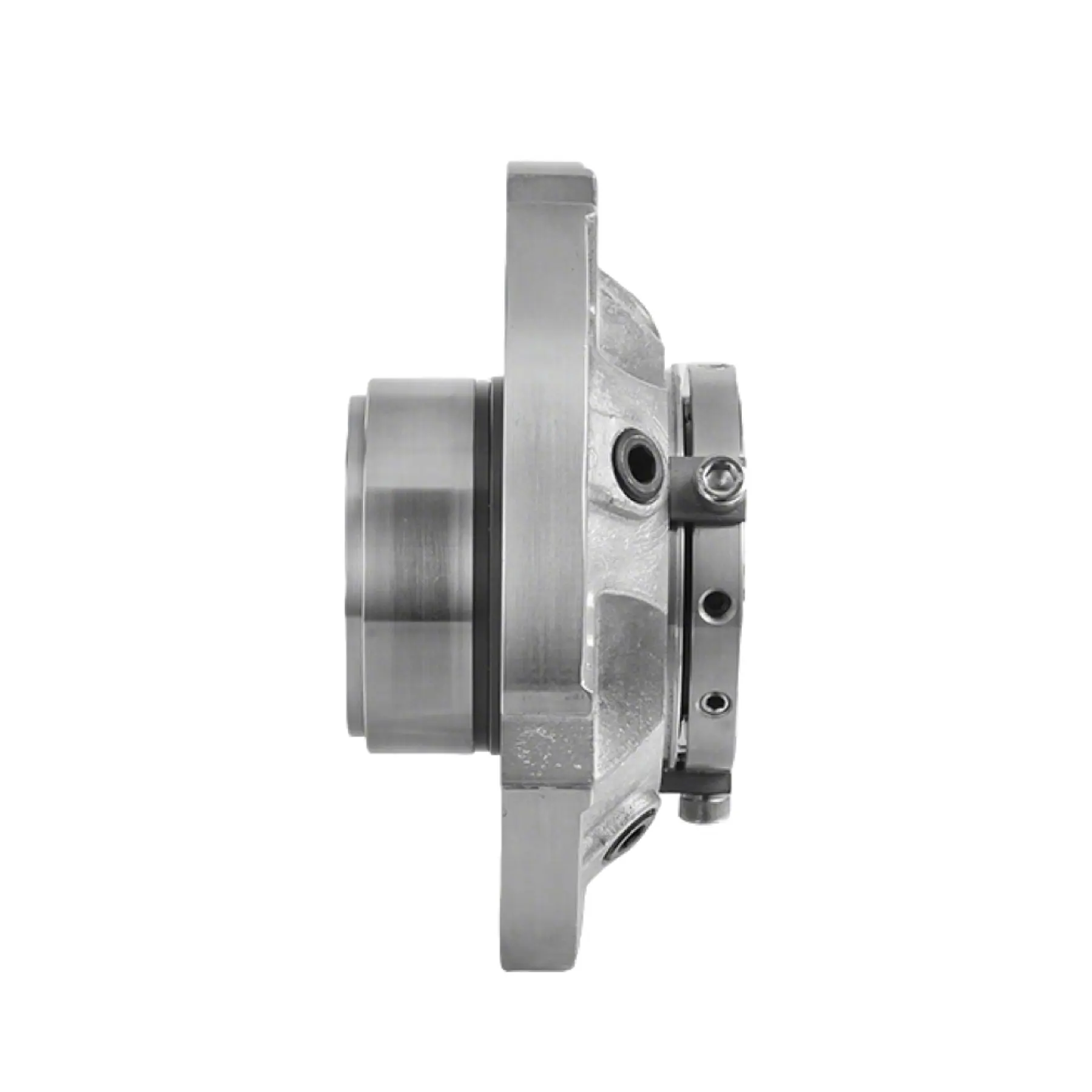
Sanitary mechanical seal design incorporates specific principles for aseptic operation. These seals feature precision-machined surfaces, with one stationary part and one rotating part. Springs or expanding bellows apply pressure to keep these surfaces in contact. Cooling and lubrication, often with water, reduce wear on the seal surfaces. Material selection is critical; silicon carbide paired with tungsten carbide offers durability and wear resistance. Double mechanical seals are used in critical applications to prevent fluid leakage and enhance containment. Flush ports and drain features also contribute to cleanability. For example, flush Plan 62 uses quench and drain ports to wash away salt crystals, preventing buildup and ensuring effective seal face contact. This design ensures the sanitary mechanical seal maintains a clean, aseptic environment.
Key Features for Selecting the Right Sanitary Mechanical Seal
Selecting the correct sanitary mechanical seal is crucial for maintaining product integrity and operational efficiency in hygienic environments. This process involves careful consideration of materials, design, surface finish, and operating conditions. Each factor plays a vital role in preventing contamination and ensuring long-term performance.
Material Selection for Compliance and Performance
Material selection forms the foundation of a reliable sanitary mechanical seal. Manufacturers must choose materials that comply with stringent regulatory requirements and offer superior performance.
Regulatory bodies like the U.S. Food and Drug Administration (FDA) and the European Union (EU) set strict guidelines for materials in food contact applications. The FDA considers chemicals migrating from food contact materials as indirect food additives. Approval often comes through the Code of Federal Regulations 21 (CFR 21), specifically Section 177.2600 for rubber articles. Companies can also obtain approval via Food Contact Substance Notification (FCN) or a Threshold of Regulation (TOR) exemption for materials posing no health risks. In the EU, Framework Regulation 1935/2004 sets general safety requirements, emphasizing that materials must not transfer harmful constituents to food or alter its composition. Good Manufacturing Practice (GMP) Regulation 2023/2006 also applies to all food contact materials. Specific regulations like Regulation (EU) 10/2011 address plastic materials such as PTFE and UHMWPE.
For seal faces, silicon carbide and tungsten carbide are common choices. Silicon carbide mechanical seals excel in chemical processing, water treatment, and pharmaceutical applications due to their chemical resistance and high thermal conductivity. They also perform well in low-lubrication scenarios. Tungsten carbide offers high impact resistance, extended wear life, and suitability for high-pressure pump seals. However, tungsten carbide is more susceptible to chemical corrosion from aggressive acids unless it has protective coatings.
Elastomer materials must withstand the extreme temperatures of Clean-in-Place (CIP) and Steam-in-Place (SIP) cycles. High-temperature elastomers maintain flexibility, chemical resistance, and sealing performance in environments exceeding 240°C (464°F).
- EPDM materials show excellent results in most CIP fluids and superheated steam, including aggressive polar solvents. However, they are not ideal for extremely fatty foods.
- FKM performs well in acidic fluids and unpolar solvents, but its steam exposure should be limited. Premium FKM compounds can handle steam up to 170°C (338°F) and resist cleaning fluids, making them suitable for fatty foods and oils.
- Isolast® FFKM demonstrates superior performance across all test situations, including steam up to 240°C (464°F), making it ideal for critical applications.
- Turcon® PTFE materials offer almost universal chemical compatibility and operate effectively at high temperatures and in steam, making them suitable for CIP/SIP regimes. The Turcon® MF range specifically targets aseptic applications and complies with major standards.
Design Considerations for Optimal Sanitary Mechanical Seal Performance
Optimal design ensures a sanitary mechanical seal performs reliably and prevents contamination. Key design elements include the balance ratio, seal configuration (single versus double), and spring placement.
The mechanical seal balance, defined as the ratio of the closing area to the opening area, significantly influences performance. Achieving the correct balance is essential for proper seal configuration. The goal is to establish a necessary closing force without applying excessive force. Excessive force generates heat, causes unnecessary wear, leads to leaks, damages equipment, and results in production downtime. An imbalance occurs when the closing area to opening area ratio exceeds 1:1 due to pressures on different parts of the seal areas. Adjusting the opening force provides more flexibility in achieving the correct balance, mitigating excessive heat generation and enhancing reliability.
Choosing between a single and double mechanical seal depends on the application's specific needs.
| Feature | Single Mechanical Seal | Double Mechanical Seal |
|---|---|---|
| Sealing Mechanism | Relies on a single point of sealing contact. | Provides two points of sealing contact, with a barrier fluid. |
| Leakage Control | Minimal leakage of process fluid to the atmosphere. | Virtually zero leakage of process fluid to the atmosphere. |
| Hygienic Applications | Can be used, but minimal leakage might concern strict hygiene. | Highly recommended; prevents process fluid escape, ensures purity. |
| Cost | Generally lower initial cost. | Higher initial cost due to complexity and barrier fluid system. |
| Reliability | Good reliability for non-critical applications. | Higher reliability and extended seal life in demanding applications. |
Double mechanical seals are highly recommended for hygienic applications because they prevent any process fluid from escaping into the environment. This ensures product purity and prevents contamination. The barrier fluid used in double seals can also be sterile, adding another layer of protection.
Spring design and placement also impact cleanability and reliability. Seal designs must prevent the accumulation of soil and microbes, requiring a 'gap-free' configuration under all operating conditions. Even minute gaps and crevices can harbor microorganisms, leading to product contamination. Areas around shaft seals should avoid deep annular crevices to facilitate cleaning. Manufacturers should avoid using springs in the product contact area to ensure hygienic design and prevent contamination. Spring mechanisms, including single, multiple, wave, plate, or vulcanized disc springs, are crucial for maintaining consistent face loading. This consistent loading is vital for the seal's reliability, ensuring effective sealing performance over time.
Importance of Surface Finish and Cleanability for Sanitary Mechanical Seals
The surface finish of a sanitary mechanical seal directly impacts its cleanability and, consequently, its ability to maintain product integrity. Smooth, polished surfaces prevent microbial adhesion and biofilm formation. Rough surfaces create microscopic crevices where bacteria can hide, making complete sterilization difficult even with rigorous CIP/SIP cycles. A superior surface finish allows cleaning solutions to flow freely, effectively removing all residues and contaminants. This minimizes the risk of cross-contamination and ensures the product remains pure. Proper design also eliminates dead spaces and sharp corners, which can trap product or cleaning agents, further enhancing cleanability.
Matching Sanitary Mechanical Seals to Operating Conditions
Matching the sanitary mechanical seal to specific operating conditions is critical for optimal performance and longevity. Several factors influence this selection.
First, liquid identification is the initial consideration. Seal materials must be chemically compatible with the fluid to prevent seal failure. The pressure within the seal chamber and the seal's size dictate whether a balanced or unbalanced seal is necessary. Temperature is another crucial factor; seal materials must withstand the liquid's temperature. Exceeding material temperature limits can lead to failure.
Liquid characteristics, such as viscosity and abrasiveness, also play a significant role. Understanding the liquid's viscosity is crucial for seal longevity. Abrasive liquids can cause excessive wear, potentially requiring double seals or external flush plans for difficult fluids. For high-viscosity fluids, a seal form that can accommodate greater friction is necessary.
Temperature fluctuations during processing and cleaning cycles demand highly temperature-resistant and resilient seals. CIP processes typically involve temperatures around 90°C, while SIP processes can reach approximately 140°C using hot water or steam. Some critical applications may even involve steam at temperatures up to 240°C. Failure to consider these high-temperature cleaning and sterilization cycles can lead to complex seal failures. Material selection, geometry, and construction of the seal are critical to withstand these conditions. PTFE lip seals are a proven solution for environments with high temperatures and cleaning processes, especially when different ingredients mix under high temperatures or vacuum, and during cleaning cycles with chemical agents.
Best Practices for Implementing and Maintaining Sanitary Mechanical Seals
Implementing and maintaining sanitary mechanical seals correctly ensures product integrity and operational efficiency. These best practices cover selection, installation, routine checks, and performance monitoring. Adhering to these guidelines minimizes contamination risks and extends equipment lifespan.
Step-by-Step Guide for Selecting the Optimal Sanitary Mechanical Seal
Selecting the optimal sanitary mechanical seal requires a thorough understanding of the application and operating conditions. Manufacturers must gather specific data points to ensure the chosen seal meets all requirements.
First, identify the application's specific use case and operational environment. This includes details about the mixer or agitator design parameters, such as a maximum speed of 350 rpm and pressures up to 50 psig at 250°F. Shaft diameter sizes, ranging from 3/8” to over 6”, also influence selection. Determine the required seal type, whether a single or dual dry running mixer seal, or a cartridge style.
Next, consider the materials. Specify seal faces like GRAS Carbon versus Silicon Carbide, particularly USP VI silicon carbide seal faces for stringent applications. For elastomers, USP VI EPDM is a common choice, with other options including Silicone, Viton, Buna, Kalrez, and Chemraz. The base metal for components such as the bolt-up gland, debris well, and seal housing should be 316L SS. Springs often utilize Hast C for corrosion resistance. Special features like a debris well with 1/4” NPT ports, aseptic cleaning, vacuum packing options, and CIP/SIP sanitary valves for the debris well enhance functionality.
Finally, consider the operating conditions. This includes pressure, temperature, and rotational speed. Proper installation and alignment of the seal are also crucial considerations during the selection process.
Proper Installation Techniques for Sanitary Mechanical Seals
Correct installation is paramount for a sanitary mechanical seal's performance and longevity. Many seal failures stem from improper installation.
Before installation, perform critical pre-checks.
- Verify Compatibility: Confirm the seal model, size, and materials (seal faces, elastomers) suit the equipment and operating conditions. This includes temperature, pressure, and the process medium. Material compatibility ensures the seal does not swell, corrode, or become brittle.
- Clean All Components: Use a lint-free cloth and appropriate cleaning agents to clean the seal, shaft, seal chamber, and gland. This prevents contamination from tiny particles that could scratch seal faces or cause misalignment.
- Inspect for Damage: Examine the seal for defects like cracks on seal faces, O-ring deformations, or broken springs. Ensure the shaft surface is smooth and free of scratches or burrs. Also, check the seal chamber for wear.
During installation, precision alignment is vital. Improper seal installation, often due to insufficient knowledge, contributes significantly to most seal failures. Mechanical seal faces are delicate; forceful actions, such as pounding couplings onto a shaft, can cause damage. Common installation errors include failing to tighten set screws before removing setting clips, unevenly tightening gland bolts, damaging O-rings, nicking seal faces, or incorrect piping connections. Component seal installations are more prone to errors than cartridge seals because they require additional steps and measurements.
Use precision alignment tools like dial indicators or laser alignment systems to ensure perfect alignment of the pump shaft with the seal housing. This step is especially important in high-speed applications where minor misalignments cause significant problems. Torque wrenches prevent over- or under-tightening of bolts, which affects alignment. Follow a torque pattern, specifically tightening bolts in a criss-cross sequence to specified torque levels. This helps avoid seal distortion. Do not rush alignment; use dial indicators to confirm shaft-to-seal face alignment is within tolerance before startup. During final assembly, tighten the gland plate bolts evenly in a crisscross pattern to ensure even pressure distribution and proper alignment. Manually rotate the shaft to check for smooth movement.
Routine Inspection and Preventative Maintenance for Sanitary Mechanical Seals
Routine inspection and preventative maintenance are essential for ensuring the continuous integrity of sanitary mechanical seals. Regular checks help identify potential issues before they escalate into costly failures.
Establish a schedule for visual inspections of the seal area. Look for any visible signs of leakage, unusual noises, or changes in temperature. Check the condition of external components, such as flush lines and cooling systems, ensuring they operate correctly. Verify that all fasteners remain securely tightened.
Implement a preventative maintenance schedule based on the manufacturer's recommendations and the operating environment. This often includes periodic replacement of seal components, especially elastomers, which can degrade over time due to chemical exposure and temperature cycles. Maintain accurate records of all inspections, maintenance activities, and component replacements. These records provide valuable data for trend analysis and help optimize future maintenance schedules. Training maintenance teams to identify early warning signs is also crucial for effective preventative maintenance.
Monitoring Performance and Troubleshooting Common Issues
Monitoring the performance of sanitary mechanical seals helps detect impending failures and allows for timely intervention. Several indicators signal potential problems.
Watch for specific signs of wear or damage.
- Deep Grooves on Seal Face: This suggests inadequate lubrication or abrasive materials in the process fluid, leading to grinding on the seal face.
- Even vs. Uneven Wear Track: An uneven wear pattern indicates distortion from overtightening, clamping, excessive pressure, high temperatures, or an insufficient hard face width.
- Fractured or Cracked Seal Face: Thermal shock or mechanical impact can cause this, often due to uneven tightening of fasteners or an inappropriate flush plan.
- Chips, Cracks in Seal Ring: Improper installation or mishandling of seal components often causes these.
- Squealing or Popping Sound: A squealing sound suggests insufficient liquid for lubrication, while a popping sound indicates an inadequate liquid environment for the product.
Monitor operational parameters.
- Temperature Monitoring: Placing a thermocouple in the void or monitoring temperature at a drain/vent port can detect hot oil leakage. Increased steam from vents or water/steam from drains also indicates leakage.
- Bearing Temperature Monitor: An increase in bearing housing temperature, combined with increased PeakVue vibration, can signal oil leaks or lubrication issues.
- Oil Level Sightglass: An increasing oil level or change in oil color can be an early indicator of a seal leak, potentially leading to external leakage if the oil reaches bearing oil seals.
- Vibration/Ultrasound: Excessive vibration accelerates wear, causes micro-fractures, and misaligns seal components. Monitoring with vibration sensors is crucial.
Predictive maintenance technologies, specifically Condition-Based Monitoring (CBM), help monitor the health of sanitary mechanical seals. CBM detects and responds to symptoms before primary seal failures occur. These technologies identify progressing failures in earlier stages, preventing mechanical seal leaks in rotating equipment. For instance, a customized CBM program can involve adding a new differential pressure reading to compare seal stuffing box pressure to pump suction pressure. Integrating this data into a SCADA system with alarms and training operators to monitor and respond to these alerts provides early warnings.
Smart mechanical seals, integrated with sensors and wireless communication, continuously collect data such as temperature, pressure, vibration, leakage rate, and shaft speed. This data goes to cloud-based systems or local servers for processing by predictive analytics tools. These tools identify potential failures. The process involves real-time monitoring, data analysis using AI algorithms, early alerts for maintenance teams, and reduced downtime. For example, a double cartridge mechanical seal with IoT sensors can detect micro-leakages and temperature variations, signaling potential failure for timely servicing.
Troubleshooting common issues involves understanding the signs of wear and damage and taking appropriate actions.
| Issue Type | Symptoms (Signs of Wear/Damage) | Actions (How Issues are Addressed) |
|---|---|---|
| Face Distortion | Excessive leakage; non-uniform wear pattern. | Relap seal faces; consider flexibly mounted stationary faces; readjust gland; check gland dimensions and housing finish. |
| Seal Face Deflection | Uneven wear (continuous 360 degrees, concave or convex); unstable under cyclic pressure. | Check design operating limits; consider flexible mounting; replace carbon faces with higher modulus materials. |
| Tracking | Wear pattern of the nose on the larger seal face is wider than the nose itself. | Check and adjust seal centering in housing, equipment condition, or operating conditions. |
| Extrusion | O-rings or secondary seals show deformation (squeezed, cut, or peeled). | Check O-ring clearances; replace O-ring; check chemical compatibility/temperature limits of secondary seals; install anti-extrusion rings; correct equipment condition. |
| Erosion | Seal face eaten away or washed out in a localized area. | Reduce seal flush rate; eliminate abrasives from flush fluid; replace carbon faces with erosion-resistant materials; relocate flush or install shroud. |
| Excessive Drive Pin Wear | Premature wear of drive pins or drive slots. | Check equipment condition; limit shaft end play, deflections, or out-of-squareness; check piloting/centering of components; incorporate hardened drive pins; consider double seals for better lubrication; check pressure limitations. |
| Heat Checking | Fine to large cracks radiating from the center of the seal ring. | Check operating conditions against limits; confirm adequate cooling/flow; ensure seal not mechanically overloaded; improve cooling/lubrication; consult manufacturers. |
| Vaporization | Popping, puffing, or blowing of vapors at seal faces; chipping at inside/outside diameters and pitting. | Improve circulation/cooling; ensure seal cavity pressure is above product vapor pressure; check seal design within pressure/speed limits; consult manufacturer. |
| Blistering | Small circular raised sections on carbon seal faces. | Address the cause of blistering. |
Other wear patterns also indicate specific problems. Normal wear shows an even, continuous, and centered ring matching the width of the rotating seal face. A narrow wear pattern indicates seal faces are not flat or parallel. A wider wear pattern suggests a bent shaft or worn bearings. An even, off-center wear pattern implies the rotating ring is not properly positioned. An uneven wear pattern with gaps could mean a distorted seal face, possibly from overheating or overtightening the gland. A corroded or pitted seal face points to a chemical compatibility issue. Chipped seal faces may indicate mishandling or foreign material trapped in the seal. A grooved appearance usually comes from foreign material trapped between the seal faces. Hairline cracks in metallic faces indicate overheating.
Selecting and maintaining the correct sanitary mechanical seal is paramount for ensuring product integrity. Proper sealing prevents contamination. It also meets stringent hygienic standards. Businesses safeguard consumer health and brand reputation. Effective sanitary mechanical sealing provides this crucial protection.
FAQ
What makes certain materials ideal for sanitary mechanical seals?
Specific materials, like USP VI silicon carbide and EPDM, ensure compliance with strict regulations. They also resist harsh chemicals and high temperatures during cleaning cycles.
Why do hygienic applications often use double mechanical seals?
Double mechanical seals prevent process fluid from escaping into the environment. They use a sterile barrier fluid, ensuring product purity and preventing contamination effectively.
How frequently should businesses inspect sanitary mechanical seals?
Businesses should establish a routine inspection schedule based on manufacturer recommendations. Regular visual checks and preventative maintenance help identify issues early and ensure continuous integrity.
