






How to Ensure Leak-Free Operation in Offshore Mechanical Seal Applications
Achieving leak-free operation in offshore mechanical seal applications demands a comprehensive strategy. This strategy encompasses material selection, seal design, precise installation, and proactive maintenance. Seal failures cause substantial financial losses. Downtime on rigs can reach $100,000 per hour. Offshore organizations face an average of $38 million annually in unplanned downtime. Implementing a robust mechanical seal solution is therefore critical. Effective Mechanical Seal Solutions prevent these costly disruptions.
Key Takeaways
- Offshore mechanical seals face tough challenges. These include saltwater, high pressure, and constant movement. These conditions can cause seals to fail.
- Good seal design and strong materials are very important. They help seals work well in harsh offshore places. Materials must fight rust and extreme temperatures.
- Installing seals correctly and checking them often keeps them working. This stops leaks and saves money. Regular checks and timely fixes are key.
Understanding Offshore Environmental Challenges for Mechanical Seal Solutions
Offshore environments present unique and severe challenges for mechanical seals. These conditions demand robust and reliable Mechanical Seal Solutions. Engineers must consider these factors during design and operation.
Saltwater Corrosion and Erosion Risks
Saltwater is highly corrosive. It contains several aggressive chemical components. These components accelerate material degradation.
- Chloride ions
- Sulfides
- High salt content
- Various salts and chemicals
- Dissolved oxygen
- Chloride anions
- Other salts
These elements attack seal faces and secondary sealing components. Erosion also occurs from suspended solids in the water. This combination quickly wears down less resilient materials.
High Pressure and Temperature Fluctuations
Offshore operations involve extreme pressures. Equipment often operates deep underwater. This creates significant external pressure on seals. Temperatures also vary widely. Surface temperatures can be warm, while deep-sea temperatures are near freezing. These rapid changes cause material expansion and contraction. Such fluctuations stress seal components. They can lead to premature failure.
Vibration and Dynamic Movement
Offshore platforms and vessels experience constant motion. Waves, currents, and machinery operation cause significant vibration. This dynamic movement puts continuous stress on mechanical seals. It can lead to misalignment. Vibration also causes fretting corrosion. This reduces seal life and effectiveness.
Limited Space Constraints
Offshore equipment often has compact designs. Space is a premium on platforms and subsea installations. This limits the size and type of mechanical seals engineers can use. Maintenance and repair also become more difficult in confined areas. This constraint requires innovative and compact seal designs.
Key Design and Material Considerations for Leak-Free Mechanical Seal Solutions
Effective mechanical seal design and material selection are crucial for ensuring leak-free operation in demanding offshore environments. Engineers must carefully consider each component's role and its interaction with harsh conditions.
Selecting Corrosion-Resistant Materials
Offshore applications require materials that resist the aggressive nature of saltwater and other corrosive agents. Selecting the right materials prevents premature seal failure.
- 316 Stainless Steel (316SS): This material offers excellent corrosion resistance. It also provides good machinability, strength, and cost-effectiveness for many metal components. It is a standard choice for most applications.
- Duplex Stainless Steels: These steels provide greater resistance to stress corrosion cracking and chloride pitting compared to 316SS. They are suitable for sour services and applications with high chloride content. Duplex stainless steels are more expensive than 316SS but often more cost-effective than nickel alloys.
- Nickel Alloys: Materials like Hastelloy®, Alloy-20, Monel®, and Inconel® show superior corrosion resistance. They perform well in high-temperature and more aggressive applications.
- Premium Metals: Titanium and Zirconium are used in the most aggressive and hottest applications. They are chosen when nickel alloys are insufficient. Their high cost limits their use to specific critical situations.
The table below highlights some materials and their properties:
| Material | Comments |
|---|---|
| AM-350® SS | Good chemical resistance; Good for high temperature applications |
| Hastelloy-C® | Excellent corrosion resistance; Good for high temperature applications |
| Inconel 718® | Excellent corrosion resistance; Best for high temperature applications |
| Alloy 20 | Excellent corrosion resistance; Good for high temperature applications |
For smaller components like coils and springs, higher specification alloys such as Hastelloy®, Monel®, and Duplex® improve chemical resistance. They also reduce coil fatigue in highly aggressive environments.
Advanced Elastomers and Face Materials
Elastomers and face materials form the primary sealing interface. Their advanced properties are vital for maintaining integrity under extreme offshore conditions.
Advanced elastomers maintain integrity under prolonged exposure to intense heat. This combats material degradation that causes seals to lose flexibility. Components must provide a secure seal. They must also resist deformation from fluctuating loads in hydraulic systems and pipelines. High-performance elastomers offer robust defense against corrosive substances. These include hydrogen sulfide, strong acids, or solvents.
Specific materials are chosen for their exceptional properties:
- FFKM and FKM: These are selected for their outstanding heat and chemical resistance.
- AFLAS® FEPM, HNBR, and NBR: These provide durability for intense mechanical demands.
Petroz™ Specialty FFKM Seals, for example, withstand corrosive agents. These include H₂S, amine-based inhibitors, and strong acids without degradation. These seals maintain a low compression set. This ensures sealing integrity over extended use. They also resist rapid gas decompression (RGD). This means they can withstand sudden pressure drops without cracking or rupturing. Petroz™ FFKM seals have shown exceptional sealing performance in high-pressure subsea drilling operations. This is true even when exposed to corrosive chemicals like H₂S.
Modern materials offer resistance to hydrogen sulfide, methane, and CO₂. High-temperature materials like PTFE and its derivatives maintain structural stability. They also maintain sealing performance across a wide thermal range. Advanced sealing technologies handle pressure ratings exceeding 20,000 psi. They prevent extrusion and maintain shape under fluctuating pressure. Innovative elastomers and thermoplastics maintain tight contact with mating surfaces for extended periods. Compounds ensure extended service life, reducing maintenance shutdowns. Seals also prevent blistering or rupturing during rapid transitions from high to low pressure.
Balanced Seal Designs for Stability
Balanced seal designs significantly improve stability and reduce leakage rates. They achieve this even in dynamic offshore conditions. A newly introduced mechanical seal design featured more evenly loaded sealing faces. This design operated reliably in variable speed environments. It did not experience premature failures. This led to improved electrical reliability and performance. It handled variable speed and high-pressure conditions effectively. The optimized design also resulted in lower maintenance and operational costs. It reduced the need for frequent servicing.
Robust Secondary Sealing Mechanisms
Secondary sealing mechanisms play a critical role in preventing leaks. These components support the primary seal and provide backup protection. O-rings and gaskets are common examples. They must also be made from materials compatible with the process fluid and environment. Proper selection and installation of these components ensure the overall integrity of the Mechanical Seal Solutions. They prevent fluid bypass and maintain a tight seal even if the primary seal experiences minor wear.
Cartridge Seal Benefits for Offshore
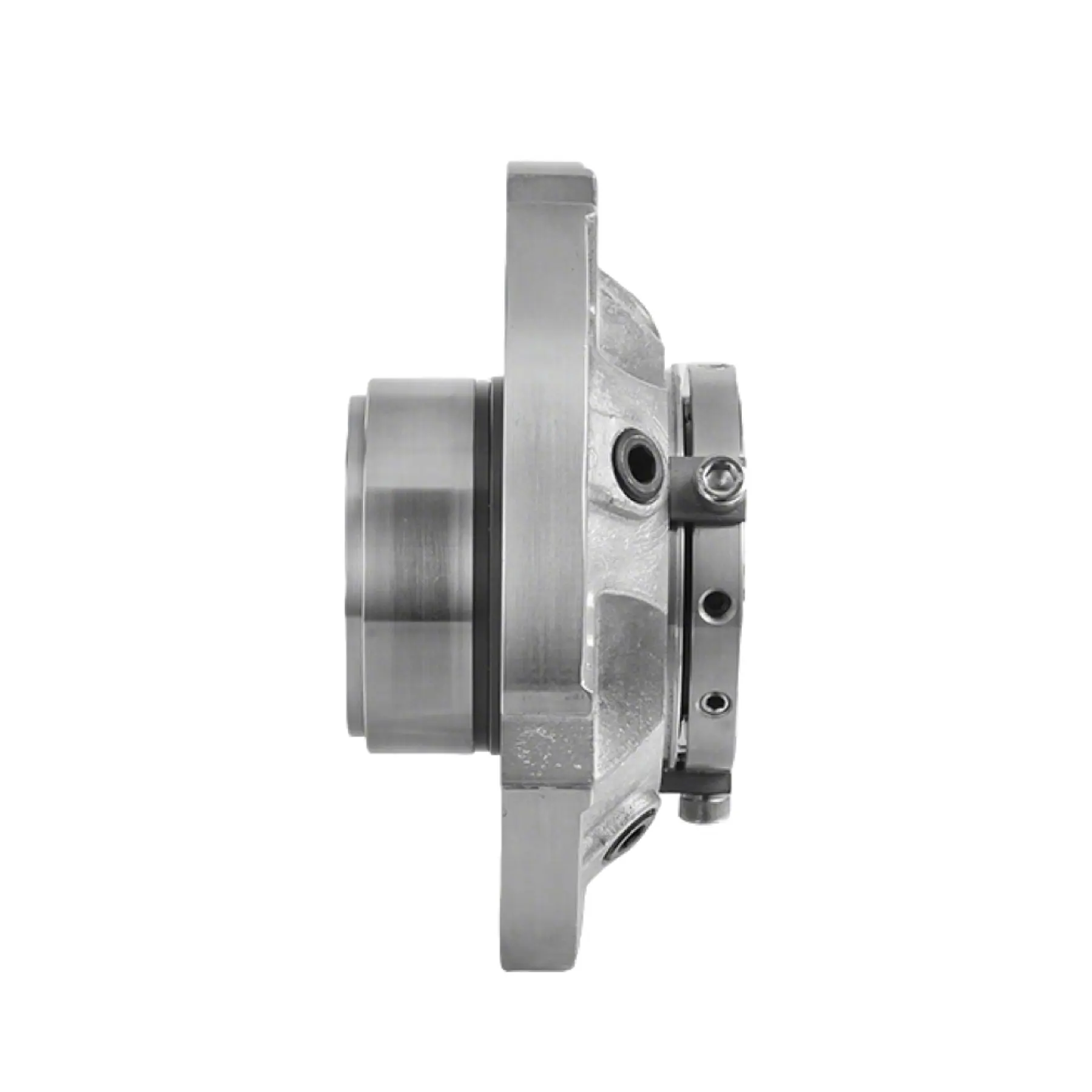
Cartridge seals offer significant advantages for offshore applications. They simplify installation and enhance reliability.
- Installation Ease: Cartridge seals are pre-assembled units. They include all necessary components. This simplifies installation and reduces the risk of assembly errors. This allows for faster installation and reduced downtime. They eliminate the need for precise alignment and adjustments. This minimizes installation errors. They are pre-tested to ensure flawless performance right out of the box. Their pre-assembled structure simplifies installation. It eliminates the need for adjustments. It also significantly reduces human assembly errors. They are factory-assembled with a 100% installation success rate.
- Reliability: Their simplified installation and maintenance contribute to overall reliability. This makes them suitable for applications where efficiency and reliability are paramount. They are designed with durable, premium-grade materials. These resist corrosion and wear. This ensures they withstand intense conditions and maintain performance over time. This robust construction prevents leaks and reduces the risk of unplanned shutdowns. Cartridge seals provide a stable sealing effect. They maintain high sealing reliability in harsh conditions. These include high-pressure, corrosive, or hard-to-maintain environments. They can extend operating life by 40% to 60% compared to traditional seals. They also reduce the risk of leakage. Their advanced design significantly enhances reliability. It minimizes the risk of leaks. This provides a more secure and efficient sealing solution. They contribute to enhanced operating efficiency by preventing leakage and minimizing energy losses.
Precision Installation and Commissioning for Reliable Mechanical Seal Solutions
Precise installation and thorough commissioning are paramount for ensuring the long-term reliability of mechanical seals in offshore environments. These steps prevent premature failures and maximize operational efficiency.
Importance of Proper Alignment
Proper alignment is critical for a mechanical seal's longevity. Installing a mechanical seal on a misaligned pump can lead to significant damage and necessitate another installation. Various factors such as pipe strain, deflection during hard starts, and shaft runout can cause pump misalignment. Before installation, thoroughly examine the agitator for any wear, damage, or existing misalignment. Replace damaged components and ensure proper alignment before proceeding. Utilize alignment tools and techniques to meet manufacturer specifications and tolerances.
Correct Torque and Fastener Selection
Selecting the correct fasteners and applying precise torque prevents both under-tightening and over-tightening. Under-tightening can lead to leaks, while over-tightening can deform components or damage the seal faces. Always follow manufacturer specifications for torque values to ensure optimal compression and secure assembly.
Pre-Installation Checks and Preparation
Thorough pre-installation checks are essential. Engineers must carefully piece together mechanical seal assembly components, understanding each part's role, from stationary to rotating rings and springs. Ensure all parts are in optimal condition before installation, checking for damage or wear. Surface preparation for mechanical seal installation is also vital; surfaces must be clean and free of imperfections to create a strong connection. Apply appropriate lubricants to reduce friction and consider protective coatings to enhance durability. Always use the right tools and prioritize safety by following protocols like locking out and tagging out equipment.
Initial System Testing and Verification
After installation, initial system testing and verification confirm the integrity of the Mechanical Seal Solutions. For newly completed subsea wells disconnected from monitoring for over six months, specific pressure barrier tests are required prior to rig departure. The surface-controlled SSSV must undergo leakage testing. The USV and any additional pressure barrier must be tested to confirm a zero leakage rate. A sealing pressure cap must be installed on the flowline connection hub, allowing for pressure monitoring and confirming barrier integrity. Methods for testing dry gas seals include performance testing, leakage testing, material testing, endurance testing, and vibration and shock testing.
Proactive Monitoring and Maintenance Strategies for Offshore Mechanical Seal Solutions
Proactive monitoring and maintenance strategies are essential for ensuring the continuous, leak-free operation of mechanical seals in offshore environments. These strategies help identify potential issues early, preventing costly failures and extending equipment lifespan.
Regular Visual Inspections
Regular visual inspections form the first line of defense against seal failure. Operators must diligently check seals for any signs of distress. They look for signs of past water ingress. These include rust or water streaks on coamings. They also observe wetting patterns on the cargo surface. These indicators suggest a breach in the seal's integrity. Inspectors also watch for attempts to conceal defects. This includes applying silicone-based sealants. Excessive use of lubricating greases also raises suspicion. Unauthorized additions of rubber strips or packing materials are red flags. Recent overpainting of corrosion areas can hide problems. Temporary clamping or weighting of components also indicates an issue. Furthermore, inspectors assess the material condition.
-
Thermal Degradation:
- Silicone rubbers may feel 'sticky' if the polymer degrades.
- Other elastomers increase in hardness and rigidity. They also develop a 'compression set'. This means the seal does not recover after removal.
-
Chemical Damage:
- Chemical damage can cause hardening or softening.
- Volume loss occurs when plasticizers and process aids leach out. This leads to a less flexible seal.
Condition Monitoring Techniques
Advanced condition monitoring techniques provide deeper insights into seal health. Acoustic Emission (AE) technology offers significant advantages. It detects defects and anomalies earlier than traditional vibration analysis. This capability is crucial for safety-critical equipment. It allows for proactive maintenance. It also prevents catastrophic failures.
- Acoustic measurements offer benefits over traditional vibration measurements for fault diagnostics.
- These advantages include earlier detection of emerging faults and increased diagnostic accuracy.
- Acoustic sensors can be remote. They are also easier to set up and operate.
AE monitoring tracks the state evolution of dry gas seals. This occurs during start-stop operations. The seal's state progresses through running-in, normal working, transition, and abnormal stages. AE parameters, such as RMS curve changes, indicate seal face misalignment. They also show the presence of abrasive particles. Monitoring lift-off speed and RMS values helps operators assess seal health. They can then implement interventions. AE monitoring is also used for pump mechanical seals. The MUSIC algorithm, enhanced with higher-order statistics (HOS), extracts features from noisy AE signals. HOS methods effectively eliminate Gaussian noise. This allows detection of seal condition changes even with low signal-to-noise ratios. Tests confirmed the algorithm's ability to detect AE signals from seal face friction under noisy conditions. These advanced methods enhance the reliability of Mechanical Seal Solutions.
Predictive Maintenance Scheduling
Predictive maintenance scheduling optimizes the lifespan and reliability of offshore mechanical seals. This approach involves using condition-based monitoring technologies. It also uses statistical process control or equipment performance data. These tools enable early detection and elimination of defects. This prevents unplanned downtime.
- Early problem detection allows maintenance teams to fix issues promptly. This prevents severe and potentially irreversible damage.
- Early detection facilitates less invasive repair methods. For example, adding sealant to a small leak is less disruptive. This avoids a complete component replacement if the leak escalates.
The oil and gas industry increasingly adopts predictive maintenance. This includes remote, offshore, and deep-water locations. They utilize massive amounts of data from sensors. This provides visibility into equipment condition. Performance monitoring capabilities enable these strategies. Operators can schedule maintenance activities during planned shutdowns. This avoids responding to emergency failures. This proactive approach significantly improves the operational efficiency of Mechanical Seal Solutions.
Timely Replacement of Wear Parts
Timely replacement of wear parts is a cornerstone of proactive maintenance. Even with the best design and monitoring, components eventually wear out. Seal faces, O-rings, and springs have finite lifespans. Ignoring wear can lead to sudden seal failure. This causes costly downtime. Proactive replacement schedules are based on historical data. They also use insights from condition monitoring. This ensures components are replaced before they fail. This strategy prevents cascading damage to other parts of the equipment. It also extends the overall operational life of the mechanical seal. This approach minimizes unexpected interruptions. It maintains continuous, leak-free operation.
Troubleshooting Common Leakage Issues in Offshore Mechanical Seal Solutions
Identifying Seal Face Wear
Seal face wear is a primary cause of leakage in offshore applications. Mechanical seal deterioration often leads to water intrusion and electrical malfunctions. Wear, pressure fluctuations, and temperature changes cause this. Leakages primarily occur at the interface between the two seal faces. Dry running, thermal distortion, and misalignment commonly cause these leakages. Identifying specific wear patterns helps diagnose the problem.
| Problem | Wear Pattern/Failure Mode |
|---|---|
| Dry Running | Friction and heat quickly destroy seal faces due to lack of lubrication. |
| Chemical attack | Corrosion, swelling, or rapid wear of seal materials. |
| Improper Installation | Misalignment, over-tightening, or contamination leading to premature failure. |
Addressing O-Ring and Gasket Failures
O-ring and gasket failures also contribute significantly to leakage. Several issues commonly affect these secondary sealing components.
- Extrusion and Nibbling: Occurs with high-pressure pulsing or excessive clearances. Decreasing clearances, using back-up devices, or checking material compatibility addresses this.
- Compression Set: The O-ring loses elasticity due to poor material, improper gland design, or excessive temperature. Using low-set materials or compatible materials helps resolve it.
- Spiral Failure: Seen in long-stroke hydraulic piston seals. The O-ring slides and rolls simultaneously. Eccentric components or inadequate lubrication cause it. Improving surface finish or providing proper lubrication addresses this.
Diagnosing Installation Errors
Incorrect installation is a significant root cause of mechanical seal failure and leakage. A seal failure analysis can determine improper installation. Impact, like a cracked stationary seal face, indicates this. This analysis reveals what the seal experienced, identifying misalignment or other mechanical problems. Frequent errors include improper pump shaft alignment, poor surface finish, and incorrect dimensional accuracy. Debris or old sealant residues also interfere. Diagnostic methods involve visual inspection and careful examination of seal chamber conditions, face contact patterns, and system operating parameters.
Resolving System-Induced Problems
System-induced problems also cause offshore mechanical seal leakage. Cavitation is a common issue. It results from rapid vaporization and condensation due to pressure fluctuations, creating intense hydraulic shock. This shock causes significant outlet pressure fluctuations and increased pump vibration. It can damage mechanical seals, leading to shaft holding or breaking. The fierce hydraulic impact from cavitation drives rapid axial movement of the mechanical seal. This causes serious damage to components like the rotary face and stationary seat, destroying seal performance.
- The stationary seat can dislodge or the anti-rotation pin can bend.
- The rotary face can jam, rendering the spring ineffective.
- Brittle friction pair materials, like silicon carbide, can flake off due to impact. Cavitation shockwaves induce micro-cracks and pitting on seal faces, allowing fluid leakage. Leakage, excessive wear, vibration, noise, and temperature increases indicate cavitation-induced damage.
Sustained leak-free operation in offshore environments demands an integrated strategy. This strategy encompasses careful design, material selection, precise installation, and diligent maintenance. Prioritizing these aspects ensures the reliability of mechanical seal solutions. It also extends their lifespan in demanding marine applications.
FAQ
What causes mechanical seal failure in offshore environments?
Offshore mechanical seals fail due to saltwater corrosion, high pressure, temperature fluctuations, and constant vibration. Poor installation and material selection also contribute to failures.
How do cartridge seals benefit offshore applications?
Cartridge seals simplify installation, reducing human error and downtime. They offer enhanced reliability due to their pre-assembled, pre-tested design and robust materials.
Why is material selection critical for offshore mechanical seals?
Material selection is critical because offshore environments are highly corrosive. Choosing corrosion-resistant alloys and advanced elastomers prevents premature wear and ensures long-term seal integrity.