



High Pressure Mechanical Seals Design Strategies to Prevent Blowout
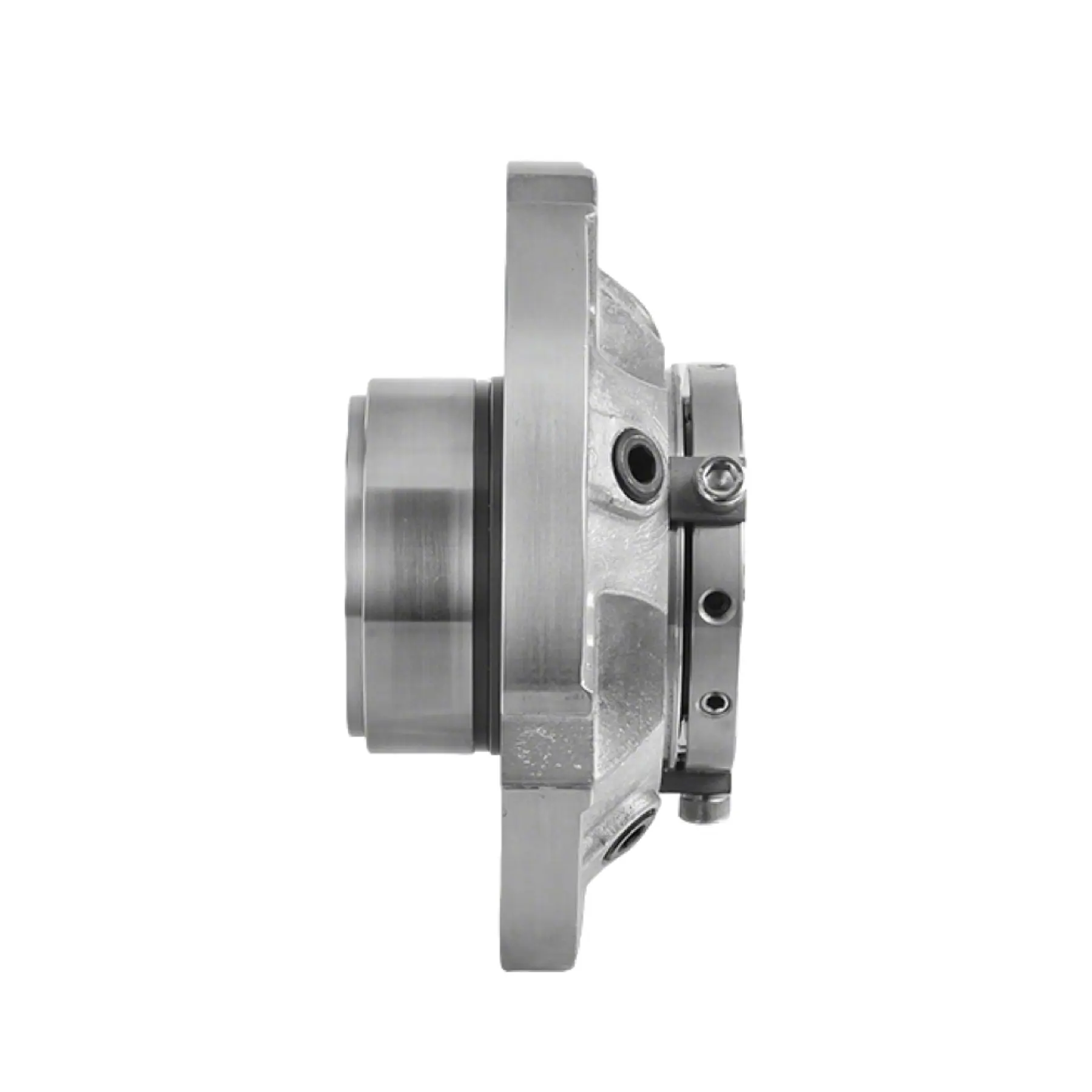
Robust high pressure mechanical seal designs are critical. They prevent catastrophic face blowout in demanding industrial applications. Design engineers face a significant challenge. They must ensure system reliability and safety under extreme pressure conditions. An effective OEM mechanical seal is essential for operational integrity.
Key Takeaways
- High pressure mechanical seal blowout happens when seal faces separate. This causes fluid leaks. Poor pressure balance, bad materials, and wrong installation are common causes.
- Engineers prevent blowout with smart designs. They balance pressure, pick strong materials, and shape seal faces carefully. They also use backup seals and advanced setups.
- Proper manufacturing and installation are very important. Cleanliness and correct procedures stop early seal failures. Regular checks and maintenance also make seals last longer.
Understanding High Pressure Mechanical Seal Blowout Mechanisms
Defining High Pressure Mechanical Seal Face Blowout
High pressure mechanical seal face blowout describes a critical failure mode. The seal faces separate under extreme process pressure. This separation allows uncontrolled leakage of the sealed fluid. It compromises system integrity. Engineers design seals to maintain contact between the primary and mating faces. This contact creates a dynamic seal. When internal pressure overcomes the closing forces, the faces push apart.
If the seal face is not pushed against the spinning face (as in a pusher-type seal) or process fluid at the pressure that needs to be sealed is not allowed to get behind the seal face, the process pressure would blow the seal face back and open.
This event leads to immediate and often catastrophic fluid release.
Root Causes of High Pressure Mechanical Seal Failure
Several factors contribute to high pressure mechanical seal failure. Inadequate pressure balancing is a primary cause. If the seal design does not effectively manage the pressure differential, blowout can occur. Material limitations also play a role. Seal components may degrade under high temperatures or corrosive media. This degradation reduces their structural integrity. Improper installation or assembly errors can create pathways for leakage. Operational excursions, such as sudden pressure spikes or temperature fluctuations, also stress the seal beyond its design limits.
Consequences of High Pressure Mechanical Seal Blowout
High pressure mechanical seal blowout carries severe consequences. These impacts affect safety, the environment, and operations.
- Safety Risks: Workers face immediate danger. Blowouts can cause explosions and fires, especially on drilling sites. Toxic exposure is a significant hazard for personnel. Incidents like the Deepwater Horizon disaster show documented fatalities and severe injuries.
- Environmental Damage: Oil spills devastate marine and coastal environments. Animals are directly affected and killed. Fisheries suffer economic and ecological impacts. Water pollution contaminates extensive sources. Ecosystems may take decades to recover, if at all.
- Operational and Financial Impacts: Significant financial costs include well control, cleanup, legal fees, fines, and settlements. BP faced $65 billion for Deepwater Horizon. Downtime and production losses affect efficiency. Increased operational expenses occur as machinery works harder. Blowouts severely damage corporate reputation and trust. Regulatory penalties and lawsuits can continue for years.
- Energy Waste: Machinery works harder to compensate for lost fluid. This increases costs and energy waste. It also undermines sustainability efforts.
Fundamental Design Principles for High Pressure Mechanical Seals
Designing high pressure mechanical seals requires a deep understanding of fundamental principles. Engineers must carefully consider pressure management, material properties, geometric configurations, and secondary sealing elements. These considerations ensure reliable operation and prevent catastrophic failures.
Pressure Balancing Techniques for High Pressure Mechanical Seals
Pressure balancing is a critical technique for managing the extreme forces present in high-pressure applications. Balanced seals reduce the hydraulic forces acting on the seal faces. This reduction in force allows them to operate efficiently in high-pressure applications by preventing excessive contact pressure, which can lead to wear and overheating.
Engineers implement a balanced design by exposing only a portion of the sealing interface to the stuffing box pressure. This method reduces the hydraulic loading on the seal faces. Consequently, the seal operates more reliably at higher pressures, temperatures, and speeds. The balance ratio quantifies the relationship between closing forces and countering opening forces on the sealing interface. A standard balanced seal design typically features a balance ratio between 0.65 and 0.85. A ratio greater than 1.0 indicates an unbalanced seal. Different applications require specific ratios to optimize the design.
Material Selection for High Pressure Mechanical Seal Components
Selecting appropriate materials is paramount for the longevity and performance of high pressure mechanical seal components. Materials must withstand extreme pressures, temperatures, and corrosive media. Engineers choose materials based on their hardness, wear resistance, and chemical compatibility.
| Material | Hardness/Wear Resistance | Chemical Resistance |
|---|---|---|
| Carbon Graphite | Good self-lubricating properties, low friction coefficient, good wear resistance. | Excellent chemical resistance to most acids, alkalis, and organic solvents. |
| Silicon Carbide | Extremely high hardness, excellent wear resistance, high thermal conductivity. | Excellent chemical resistance to strong acids, alkalis, and abrasive media. |
| Tungsten Carbide | High hardness, good wear resistance, high strength. | Good chemical resistance to many corrosive media, but can be attacked by strong acids and alkalis. |
| Alumina Ceramic | High hardness, good wear resistance, high temperature resistance. | Excellent chemical resistance to most acids and alkalis, but can be attacked by hydrofluoric acid. |
| PTFE (Polytetrafluoroethylene) | Low friction coefficient, good flexibility, good wear resistance in non-abrasive environments. | Excellent chemical resistance to almost all chemicals, including strong acids and alkalis. |
| Stainless Steel | Moderate hardness and wear resistance, good strength. | Good chemical resistance to many corrosive media, but can be susceptible to pitting and crevice corrosion in certain environments. |
| Bronze | Good wear resistance, good thermal conductivity, good machinability. | Good chemical resistance to water and many non-corrosive fluids, but can be attacked by acids and some chemicals. |
| Ceramic (General) | High hardness, excellent wear resistance, high temperature resistance. | Excellent chemical resistance to most acids and alkalis. |
| Rubber (Elastomers) | Good elasticity, good sealing performance, good vibration absorption. | Chemical resistance varies greatly depending on the specific rubber compound. Generally good for water, oils, and some chemicals, but can be attacked by strong acids, alkalis, and solvents. |
| Plastic (General) | Varies depending on the specific plastic, generally lower hardness and wear resistance compared to ceramics and metals. | Chemical resistance varies greatly depending on the specific plastic. Generally good for water, some chemicals, but can be attacked by strong acids, alkalis, and solvents. |
For instance, silicon carbide offers exceptional hardness and chemical resistance, making it suitable for highly abrasive and corrosive environments. Carbon graphite provides excellent self-lubricating properties, reducing friction and wear.
Optimizing High Pressure Mechanical Seal Face Geometry
Optimizing seal face geometry significantly impacts pressure distribution and leakage rates. Engineers meticulously design the contact surfaces to achieve optimal performance.
- Film Thickness: As film thickness increases, the viscous shear friction heat effect decreases. This leads to a reduction in the viscosity-temperature effect on leakage. However, if the film becomes too thick, leakage increases, compromising sealing effectiveness. Therefore, an appropriate range for film thickness is crucial for optimal sealing.
- Taper of Stationary Slide Ring End-Face: Increasing the taper reduces the viscosity-temperature effect on the leakage rate. A larger taper increases the film thickness in the taper zone, which in turn decreases viscous shear friction heat.
- Dam Width Ratio: An increase in the dam width ratio leads to a decrease in the leakage rate. This occurs because a larger dam area increases viscous shear friction heat and temperature rise in the liquid film, intensifying the viscosity-temperature effect.
Advanced seal face geometry optimizes contact pressure distribution. This creates a more uniform contact pattern between seal faces. Uniformity is crucial for reducing leakage and improving the containment of process fluids. Additionally, this optimized geometry promotes better heat dissipation and reduces frictional heat generation. It achieves this through the strategic distribution of contact pressure and enhanced fluid film formation. These enhancements enable seals to operate efficiently in challenging environments with high pressures.
A leakage channel model for mechanical face seals, based on percolation theory, reveals that the porosity of the sealing interface significantly influences sealing performance. This porosity is determined by fractal parameters, material properties, and face pressure. The model helps explain leakage mechanisms and provides a basis for optimizing the design of contact mechanical face seals, thereby impacting pressure distribution and leakage rates.
Secondary Seal Design for High Pressure Retention
Secondary seals play a vital role in retaining high pressure and preventing blowout. Their design requires careful consideration to avoid unintended consequences.
- Avoid Redundant Seals: Using double or redundant seals is often counterproductive. These seals can interact destructively rather than providing backup. They can share compression forces unevenly and, more critically, trap and pressurize fluid between them.
- Risk of Trapped Fluid Pressurization: A new sealed volume forms between redundant seals. If the inner seal fails, fluid can pass through. If the outer seal holds, the pressure in this inter-seal space can become equal to the contained pressure. This pressurized fluid reduces the compression force on the seals, diminishing their margin. It can potentially cause one of the seals to burst. This negates any perceived advantage of redundancy and can leave the remaining seal with less margin than if a single seal had been used from the start.
Engineers employ alternative strategies for robust secondary sealing:
- Metal-to-Metal Concept: This approach involves placing the seal within a groove or utilizing a spacer/limiter to precisely manage seal compression. This configuration creates a barrier wall, effectively preventing blowout in high-pressure environments. It also protects the seal and provides its own energizing function for sealing and creep compensation. Once metal-to-metal contact is established, additional bolt load can be applied to account for system factors without risking damage to the seal.
- Pressure-Balanced O-rings: For very high-pressure applications, metal O-rings can be susceptible to collapse. To counteract this, the tubing core of the O-ring should be pressure-balanced by drilling small holes on the pressure side. This significantly enhances the pressure capability, though it does expose the O-ring's interior to any caustic or corrosive chemicals being sealed.
Advanced High Pressure Mechanical Seal Configurations for Blowout Prevention
Engineers develop advanced mechanical seal configurations to enhance reliability and prevent blowout in extreme operating conditions. These designs move beyond fundamental principles, incorporating sophisticated arrangements and analytical tools to manage high pressures effectively.
Reverse Balance High Pressure Mechanical Seals
Reverse balance mechanical seals represent a specialized design for high-pressure applications. Unlike conventional balanced seals where the closing force is applied to the outside diameter of the seal face, reverse balance seals apply the closing force to the inside diameter. This configuration is particularly effective when the sealed pressure is very high and acts to open the seal faces. By reversing the balance, the process pressure helps to close the seal faces, thereby maintaining contact and preventing blowout. This design often finds use in applications where the sealed fluid is clean and provides good lubrication.
Tandem and Dual High Pressure Mechanical Seal Arrangements
Tandem and dual mechanical seal arrangements offer enhanced safety and reliability, especially when handling hazardous or critical fluids. A tandem seal arrangement features two seals oriented in the same direction, with a buffer fluid between them. The primary seal handles the full process pressure, and the secondary seal acts as a backup, containing any leakage from the primary seal. This setup provides an extra layer of protection against environmental release.
Dual mechanical seals, also known as double seals, position two seals back-to-back or face-to-face. A barrier fluid circulates between these seals. This configuration ensures that if one seal fails, the other still maintains containment. Dual seals are essential for applications involving toxic, flammable, or abrasive media, where any leakage is unacceptable.
Barrier Fluid Systems for High Pressure Mechanical Seals
Barrier fluid systems significantly enhance the reliability and blowout prevention capabilities of high pressure mechanical seals. These systems circulate a pressurized fluid between the primary and secondary seals in a dual seal arrangement. Barrier fluid systems prevent dangerous or toxic process fluid from endangering personnel or the environment if a primary seal fails. They also protect process-side seal faces from damage and lubricate both process-side and atmospheric-side seal faces.
Double mechanical seals utilize barrier or buffer fluids from support systems (e.g., API Plans 52, 53A/B/C) to improve cooling and prevent hazardous process fluids from escaping into the environment, thereby ensuring safety. Pressurized barrier systems are crucial for maintaining the correct differential pressure across seal faces, which reduces leakage and boosts reliability, especially in demanding operational conditions.
Pressurized barrier fluid systems minimize the migration of process fluid into the environment. Engineers employ them when process fluids offer poor lubrication for seal faces or when the process fluid changes frequently, such as in pipeline services. Both primary and secondary seals receive lubrication from the pressurized barrier fluid, typically arranged in series according to API Standard 682. Barrier fluid circulation can be achieved via an internal pumping ring (API Plan 53) or an external pump/pressure system (API Plan 54). API Plan 54 uses an external pump and reservoir to circulate pressurized barrier fluid to dual seals, offering customization for high-pressure pumping processes and including components like filters, heat exchangers, and accumulators for performance monitoring. The barrier fluid pressure is generally set at least 10% (or 25 psi) higher than the pump process pressure at the seal chamber throat bushing to prevent process fluid migration into the barrier fluid. Excessive pressure can lead to increased face loading and accelerated wear.
Dynamic Pressure Compensation in High Pressure Mechanical Seal Design
Dynamic pressure compensation involves designing seals to adapt to fluctuating process pressures. This advanced technique ensures that the balance ratio and face loading remain optimal even when system pressures change rapidly. Engineers achieve dynamic compensation through various mechanisms, such as bellows or spring-loaded components that adjust the seal's effective sealing diameter in response to pressure variations. This adaptability prevents sudden pressure spikes from causing face separation or excessive wear, thereby extending the seal's operational life and preventing blowout.
Finite Element Analysis for High Pressure Mechanical Seal Performance
Finite Element Analysis (FEA) is a powerful computational tool engineers use to predict and optimize high pressure mechanical seal performance and blowout resistance. FEA breaks down a seal into small elements and nodes to calculate the effects of forces, pressures, and temperatures, predicting real-world behavior. It provides visual insights into stress points, aiding engineers in refining designs and preventing issues before physical testing. FEA helps understand seal performance under pressure, temperature, and other conditions, thereby reducing the risk of failures. Designs can be optimized virtually to improve reliability, lifespan, and functionality, saving time and money by reducing the need for physical prototypes.
FEA allows for the observation of stress distribution on the seal to pinpoint maximum contact stress and deformation, helping to identify potential component damage from excessive stress concentration. It also helps assess the overall sealing integrity post-compression and determines if the sealing force meets operational requirements. Furthermore, FEA observes the resistance encountered during seal assembly, ensuring stability during installation and preventing physical damage like extrusion, nibbling, or rolling. Engineers employ FEA in seal design to predict product function under various conditions and optimize designs without extensive physical prototyping. This involves creating 2D or 3D models, applying boundary conditions like pressure and temperature, and assigning material properties. The analysis helps identify areas for optimization, such as minimizing friction, withstanding high pressures without extrusion, and ensuring overall reliability and cost-effectiveness in critical sealing applications.
Manufacturing and Installation for High Pressure Mechanical Seal Integrity
Manufacturing and installation processes significantly impact the integrity and performance of mechanical seals. Meticulous attention to detail during these stages prevents premature failure and ensures reliable operation under extreme conditions.
Precision Manufacturing of High Pressure Mechanical Seal Components
Precision manufacturing is fundamental for high pressure mechanical seal components. Seal faces, both rotating and stationary, demand extremely smooth surface finishes, typically 1 to 3 microinches (0.025 to 0.076 micrometers). Their flatness tolerance is equally critical, often within a few millionths of an inch. These stringent requirements ensure seals withstand high pressures without leaking. Static glands often require surface finishes between 64 and 128 micro-inches RMS, with 32 micro-inches RMS preferred for liquids and 16 RMS for vacuum and gases. Dynamic glands, such as those for reciprocating seals, benefit from metal surface roughness of 10 to 20 micro-inches to hold lubricant. Rotary seals require a shaft surface finish of 16 RMS for smooth, non-abrasive running.
Proper Installation Procedures for High Pressure Mechanical Seals
Proper installation is crucial for preventing blowout and ensuring seal reliability. Engineers must maintain cleanliness, as even microscopic contaminants compromise seal faces. They inspect all components—faces, springs, gaskets, and O-rings—for damage before use. Utilizing manufacturer-provided jigs and gauges ensures correct positioning and prevents over-tightening. Applying recommended lubricants to O-rings aids installation, but excessive use must be avoided to prevent seal face contamination. Technicians verify shaft surfaces are smooth, within concentricity tolerances, and free from burrs. They tighten gland bolts in a criss-cross sequence to specified torque levels, preventing seal distortion. Dial indicators confirm shaft-to-seal face alignment. After installation, allowing several hours for ambient stabilization before full operation is a best practice.
Quality Control and Testing of High Pressure Mechanical Seals
Rigorous quality control and testing protocols are essential before deploying mechanical seals. Laboratory testing simulates real-world operations, evaluating leakage rates, pressure resistance, and temperature tolerance. These tests include accelerated wear tests and pressure cycling to ensure compliance with industry standards. Material properties undergo thorough evaluation. Hardness is assessed via durometer testing, while tensile properties measure strength and elongation. Thermal properties evaluate material performance across temperatures. Compressive properties determine material grades and overall strength. Immersion testing provides insight into the effect of specific media on a material. Operational Qualification (OQ) testing validates consistent performance across the operational range, including pressure decay and endurance cycling. Performance Qualification (PQ) testing demonstrates real-world performance under actual manufacturing conditions.
Operational Best Practices for High Pressure Mechanical Seal Longevity
Effective operational practices significantly extend the lifespan and reliability of high pressure mechanical seals. Adhering to established protocols for start-up, shutdown, monitoring, and maintenance prevents premature failure and ensures safe operation.
System Start-up and Shutdown Protocols for High Pressure Mechanical Seals
Proper start-up and shutdown procedures are crucial for seal integrity. Before starting a system, engineers verify all pipework and equipment are clean and connections are secure. For pumps with flushed seals, they confirm auxiliary services provide adequate flow and pressure. They ensure proper lubrication for the pump and drive. Operators confirm the external relief valve setting and ensure suction and discharge valves are fully open. They verify the drive shaft's rotation direction and confirm product availability to prevent dry running. Finally, they briefly start and stop the pump to check rotation and freedom from obstructions before full operation.
For shutdown, operators close both suction and discharge valves. They isolate, depressurize, and drain all mechanical seal flush and barrier flush auxiliary services. They also drain and purge the pump head and pipework. After extended shutdowns, maintenance teams review procedures, manually rotate the shaft to prevent seal face adhesion, and confirm bolt torque settings. They verify motor rotation, vent the pump to prevent vapor lock, and ensure flush lines are properly connected and flowing. They also check barrier fluid levels for dual seals.
Monitoring High Pressure Mechanical Seal Performance
Continuous monitoring helps identify potential issues early. Operators regularly observe, touch, and listen to operations to distinguish normal from abnormal behavior. They compare current flow rates, operating temperatures, and suction/discharge pressures against normal values. They visually inspect the seal and its support system for any leaks. For dual seals, they monitor the level and condition of the barrier or buffer fluid. They confirm the operating pressure and temperature of the buffer pot or water management system. They ensure proper cooling water flow to heat exchangers. Technicians verify interconnecting tubing rises from the seal gland to the buffer pot, preventing air pockets. In water management systems, they check visual flow indicators for signs of excessive makeup water, which suggests a seal leak. They periodically drain and refill water management systems to prevent contaminant buildup and monitor inline water filters.
Preventative Maintenance for High Pressure Mechanical Seals
Preventative maintenance strategies are vital for longevity. Maintenance teams prevent dry running, as a lack of liquid for cooling causes heat buildup and cracking. A dry-run monitor with an alarm alerts personnel to insufficient lubrication. They minimize excessive vibration by ensuring the pump system operates within its Best Efficiency Point (BEP). Operating outside the BEP causes recirculation and cavitation, leading to vibration that impacts the seal. They ensure correct lubrication, as a cooling fluid film between seal faces minimizes wear and friction. Using the wrong lubricant increases temperatures and causes damage. Maintenance personnel address improper installation by following manufacturer guidelines, using proper tools, and ensuring correct alignment and torque specifications. They maintain cleanliness in seal environments and filter process fluids. They also monitor operating conditions, ensuring operation within the seal’s design parameters.
A holistic design approach is essential for preventing high pressure mechanical seal face blowout. This involves integrating advanced design principles, cutting-edge material science, and meticulous manufacturing processes. These comprehensive strategies collectively enhance system reliability and safety, ensuring robust performance under extreme conditions for every high pressure mechanical seal.
FAQ
❓ What causes high pressure mechanical seal blowout?
Inadequate pressure balancing, material degradation, improper installation, and sudden pressure spikes cause high pressure mechanical seal blowout. These factors lead to seal face separation.
🛠️ How do engineers prevent seal blowout?
Engineers prevent blowout through pressure balancing, selecting robust materials, optimizing seal face geometry, and designing effective secondary seals. Advanced configurations also help.
🧪 What role does Finite Element Analysis (FEA) play?
FEA predicts and optimizes seal performance. It identifies stress points and refines designs virtually. This reduces failure risks and saves development time and costs.