






Clog-Resistant Pump Seals: 2026 Guide for Heavy Slurry Apps
Heavy slurry applications demand robust clog-resistant slurry pump seal solutions. These critical components ensure operational continuity. The latest 2026 advancements in pump seal technology enhance reliability significantly. Modern solutions from experts like GW SEAL reduce maintenance and operational downtime in challenging heavy slurry environments.
Key Takeaways
- New pump seals in 2026 use strong materials and smart designs. These seals stop clogs and wear in tough slurry jobs. This means less repair work and longer-lasting equipment.
- Choosing the right seal means looking at the slurry, how the pump runs, and the pump type. This helps pick a seal that works best and saves money over time.
- Good installation and regular checks keep pump seals working well. This makes pumps run smoothly and safely.
The Persistent Challenge of Heavy Slurry for Pump Seals
Common Failure Modes of Traditional Slurry Pump Seals
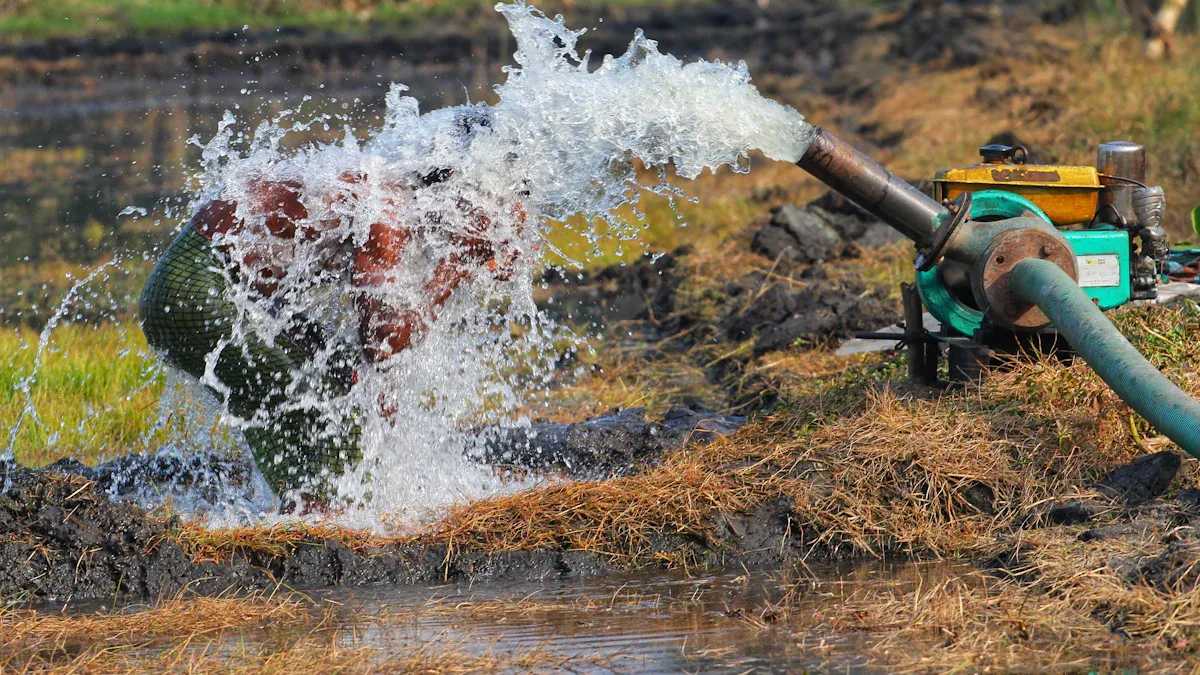
Traditional pump seals frequently encounter specific failure modes in heavy slurry environments. A common issue involves abrasive particles entering the seal faces. This causes premature wear and grooves, leading to leakage. Springs and other delicate components within the seal can also clog with solids, preventing proper seal face contact. Elastomeric O-rings and secondary seals often suffer from chemical attack or abrasion, losing their sealing integrity. Shaft sleeves also experience wear, creating pathways for leakage. These failures compromise pump performance and reliability.
The Significant Cost of Downtime in Slurry Operations
Downtime in heavy slurry operations carries a significant financial burden. When a pump seal fails, the entire pumping system stops. This halts production, leading to substantial revenue losses. Companies incur direct costs for repair, including parts and labor. Emergency repairs often require premium pricing for expedited services. Beyond these immediate expenses, unscheduled downtime can damage equipment, create safety hazards, and delay project timelines. Minimizing these interruptions is crucial for maintaining profitability and operational continuity.
2026 Innovations in Clog-Resistant Slurry Pump Seal Technology
The landscape of heavy slurry operations constantly evolves, demanding more resilient and efficient sealing solutions. 2026 brings significant advancements in clog-resistant pump seal technology. These innovations focus on material science, dynamic design principles, integrated support systems, and simplified maintenance approaches. They collectively aim to extend operational life and reduce the total cost of ownership for critical pumping assets.
Advanced Materials for Slurry Pump Seals: Ceramics, Carbides, and Polymers
Material science forms the bedrock of modern clog-resistant pump seals. Manufacturers now leverage advanced ceramics, carbides, and specialized polymers to combat the extreme abrasive and corrosive nature of heavy slurries. Silicon carbide (SiC) and tungsten carbide (WC) stand out as primary choices for seal faces due to their exceptional hardness.
| Feature | Silicon Carbide (SiC) | Tungsten Carbide (WC) |
|---|---|---|
| Hardness | Extremely hard, second only to diamond. | Very hard, but slightly less than SiC. |
| Corrosion Resistance | Excellent in most chemicals, including strong acids and bases. | Good, but can be susceptible to corrosion in strong oxidizing acids or high pH solutions. |
| Abrasion Resistance | Superior, ideal for abrasive slurries. | Excellent, but SiC generally performs better in highly abrasive environments. |
| Thermal Conductivity | High, dissipates heat effectively. | Lower than SiC, can lead to higher face temperatures. |
| Fracture Toughness | Lower, more brittle. Susceptible to thermal shock and impact. | Higher, more resistant to impact and thermal shock. |
| Density | Lower, lighter. | Higher, heavier. |
| Lubricity | Poor, requires good lubrication. | Better, can run with less lubrication. |
| Cost | Generally more expensive. | Generally less expensive. |
| Applications | Highly abrasive slurries, strong chemicals, high temperatures. | Less abrasive slurries, oils, water, moderate chemicals. |
| Performance in Slurry Pumps | Preferred for heavy-duty slurry applications due to superior hardness and abrasion resistance. | Suitable for less demanding slurry applications, but may wear faster than SiC in highly abrasive conditions. |
Silicon carbide, with its superior hardness and abrasion resistance, often becomes the preferred material for heavy-duty applications. Specialized polymers and elastomers also play a crucial role. They offer enhanced chemical resistance and flexibility for secondary sealing elements, ensuring integrity even in aggressive chemical environments.
Dynamic Slurry Pump Seal Designs: Non-Contacting and Hydrodynamic Solutions
Innovative seal designs actively prevent slurry ingress and wear. Non-contacting and hydrodynamic solutions represent a significant leap forward.
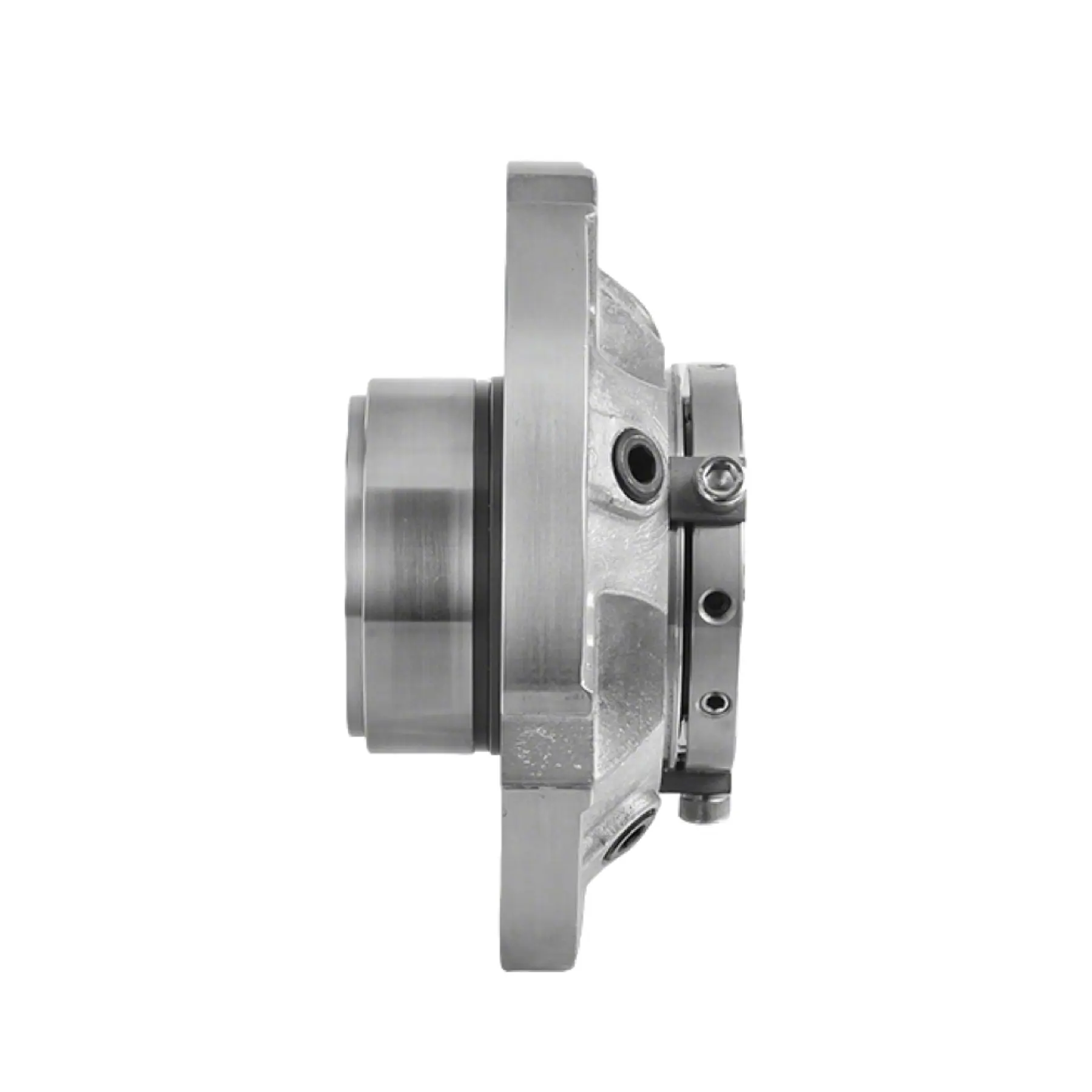
Non-contacting designs specifically address clogging by keeping critical components away from the process fluid. The Flowserve RIS Slurry Seal, for example, features a unique, non-clogging design. It avoids springs or bellows. Its adaptive components allow installation from the wet-end of the pump and external adjustment. A key aspect of its true non-clogging design is the rubber in shear component. This contributes to longer Mean Time Between Failures (MTBF). Similarly, the John Crane USP seal uses a face-to-back configuration. This positions delicate components like springs away from the process fluid. This robust design prevents these sensitive parts from becoming clogged by slurries or suspended solids. Lubrication by a clean barrier fluid eliminates abrasive damage to the seal face running surfaces. This contributes to its non-clogging performance. Other designs, like the Vulcassette®, eliminate moving parts. This reduces surfaces where slurry particles can accumulate. A profiled rotary sleeve protection also shields mechanical seal faces from large particles, fibrous contaminants, and low-fluid media. This effectively prevents blockages and damage.
Hydrodynamic seals create a dynamic barrier. They utilize the pump's rotation to generate pressure or flow that repels slurry from the seal faces.
- A repeller acts like an impeller during pump operation. It draws liquid from the stuffing box.
- This action allows air to enter the stuffing box. It creates an air-liquid interface within the repeller chamber. This keeps the stuffing box clear of pumped liquid.
- When the pump stops, a secondary diaphragm seal prevents liquid from escaping the stuffing box.
- A key advantage is that the repeller handles sealing during operation. It protects the secondary seal from the pumped fluid's degrading effects.
- This design often eliminates or reduces the need for external flush water. It prevents leakage and fluid contamination. It also minimizes wear on pump and sealing components.
Modular and Cartridge Slurry Pump Seal Solutions for Simplified Maintenance
Ease of maintenance directly impacts operational efficiency. Modular and cartridge seal solutions simplify installation and replacement procedures. These pre-assembled units come factory-set and tested. This eliminates the need for complex on-site adjustments. Technicians can quickly install or replace them, drastically reducing downtime. This design also minimizes the risk of installation errors, a common cause of premature seal failure. For heavy slurry applications, where maintenance intervals can be critical, these solutions offer a practical advantage. They ensure that pumps return to service faster and operate reliably.
Types of Clog-Resistant Slurry Pump Seals for Heavy Applications (2026)
The year 2026 brings a diverse array of clog-resistant pump seal technologies. These solutions specifically address the challenges of heavy slurry applications. Each type offers unique advantages, catering to different operational demands and fluid characteristics.
Specialized Mechanical Slurry Pump Seals for Abrasive Environments
Specialized mechanical seals are crucial for abrasive environments. They feature designs that minimize leakage and prevent contamination of pump bearings. These seals incorporate tougher materials that resist erosion and corrosion. They also use advanced sealing faces that reduce friction and wear. Robust flushing systems keep the seal clean and cool. These systems ensure optimal performance.
Advanced Gland Packing Alternatives for Slurry Pumps
Modern gland packing options offer significant improvements over traditional choices. Thanks to advancements in technology and design, newer gland packing options last longer. This extends the lifespan of the seal. This represents a significant improvement over traditional gland packing, which typically degraded faster due to shaft friction.
These advanced materials provide several benefits:
- Extended lifespan in challenging environments, leading to savings on replacement costs.
- Reduced leakage, which helps prevent costly equipment downtime.
- Availability of custom formulations tailored for specific industries, such as mining or wastewater treatment.
Modern gland packing options now offer extended longevity due to technological advancements. These include new materials, improved braiding techniques, and advanced lubricants. This allows them to last longer than traditional gland packing. Traditional packing historically degraded more quickly from shaft friction.
Here are some material types and their benefits for slurry pumps:
| Material Type | Key Properties | Benefits for Slurry Pumps |
|---|---|---|
| Aramid fibers | Synthetic, resistant to abrasion and high temperatures | Excellent for abrasive slurry applications |
| PTFE (Teflon) | Chemical-resistant, flexible across temperatures | Protects against corrosive chemicals, maintains flexibility |
| Graphite | Thermally stable, self-lubricating | Improves sealing in high-pressure situations, reduces friction |
| Carbon fiber | Adds strength, durable in abrasive environments | Reduces wear over time, extends lifespan |
| Proprietary composites | Blends of materials for specific challenges | Addresses issues like corrosion in acidic/caustic fluids |
These materials offer specific advantages:
- Wear resistance: Aramid and carbon fiber composites effectively reduce wear in abrasive slurry streams.
- Chemical compatibility: PTFE and treated composites offer protection against corrosive fluids, extending service life.
- Thermal stability: Graphite and PTFE maintain performance in extreme temperatures, preventing deformation.
- Self-lubrication: Graphite-infused packings minimize friction in dry or high-pressure slurry environments.
Selecting the Ideal Clog-Resistant Slurry Pump Seal: A 2026 Checklist
Choosing the correct clog-resistant seal requires careful evaluation of several factors. This checklist guides selection for optimal performance in heavy slurry applications.
Analyzing Slurry Characteristics for Slurry Pump Seal Compatibility
Understanding the slurry's nature is paramount. Different slurry types behave uniquely.
- Newtonian Slurries: These slurries act like water. They have similar viscosity. Particles settle quickly, providing more free water for lubrication.
- Non-Newtonian Slurries: These slurries are 'non-settling'. Particles do not settle easily. They form a more homogeneous mixture. These slurries offer less free water for lubrication and thermal dissipation.
- Dewatering Slurries: These slurries have lower densities. They can collect in low-flow areas near the seal gland. This leads to dewatering effects. These effects insulate the sealing device or block water flow. This causes dry run conditions and excess heat.
Operating Conditions: Pressure, Temperature, and Speed Considerations for Slurry Pump Seals
Operating conditions significantly impact shaft seal performance. High operating temperatures require seals capable of withstanding thermal expansion and contraction. High pressures demand seals that effectively maintain a seal around the shaft. The selection of a slurry pump seal is contingent on several variables. These include the slurry type, its pressure, temperature, and the pump's speed. Choosing the appropriate seal is critical for reliable operation and preventing leaks.
Pump Type and Configuration Compatibility with Clog-Resistant Slurry Pump Seals
The pump's design directly influences seal compatibility. Different pump types, such as centrifugal or positive displacement, have specific requirements. The seal must fit the pump's stuffing box dimensions and shaft size. It must also accommodate any unique pump configurations.
Lifecycle Cost Analysis and Maintenance for Slurry Pump Seals
Evaluating the total lifecycle cost is essential. This includes initial purchase price, installation, energy consumption, and maintenance expenses. A seal with a higher upfront cost might offer lower long-term costs due to extended lifespan and reduced downtime. Ease of maintenance and availability of spare parts also play a crucial role.
Best Practices for Slurry Pump Seal Installation, Maintenance, and Longevity
Proper Installation Techniques for Optimal Slurry Pump Seal Performance
Proper installation is crucial for optimal slurry pump seal performance. Technicians must follow manufacturer guidelines precisely. They ensure all components are clean and correctly aligned. Incorrect installation often leads to premature failure.
Monitoring and Predictive Maintenance Strategies for Slurry Pump Seals
Effective monitoring prevents unexpected downtime. Predictive maintenance strategies utilize advanced sensor technologies. These include wireless vibration sensors, pressure transmitters, flow meters, temperature sensors, acoustic emission sensors, and power analyzers. Monitoring points include the seal area for temperature and leakage detection. They also cover the pump casing and bearing housing for vibration and temperature. These capabilities allow for mechanical seal condition assessment. They provide 2-6 weeks early warning for seal failures.
Troubleshooting Common Issues with Clog-Resistant Slurry Pump Seals
Troubleshooting common issues quickly resolves problems.
- Perform a visual inspection. Look for fluid leakage, cracks, wear, or damage around the seal area, pump casing, and shaft.
- Check seal installation. Ensure correct installation and component alignment.
- Monitor operating conditions. Verify temperature, pressure, and fluid properties are within specifications.
- Check for shaft misalignment. Use alignment tools to detect and correct issues.
- Inspect for contamination. Examine the fluid for dirt, debris, or chemical impurities.
- Evaluate seal material compatibility. Confirm the seal material suits the pumped fluid.
Training and Safety Protocols for Slurry Pump Seal Management
Comprehensive training ensures safe and efficient seal management. Personnel must understand proper handling procedures. They follow lockout/tagout protocols during maintenance. Wearing appropriate personal protective equipment (PPE) is mandatory. This minimizes risks and extends equipment life.
At GW SEAL, we specialize in designing and manufacturing robust mechanical seals specifically built to withstand the extreme demands of slurry pump operations. Our seals are engineered to handle highly abrasive, corrosive, and particle-laden fluids, ensuring reliable performance in mining, mineral processing, dredging, and industrial wastewater applications.
We focus on delivering solutions that dramatically reduce downtime and maintenance costs through:
-
Advanced Materials: Utilizing premium-grade tungsten carbide, silicon carbide, and specialized elastomers for superior wear and corrosion resistance.
-
Innovative Designs: Customized seal face configurations and flushing plans to prevent clogging and extend seal life in harsh environments.
-
Proven Durability: Our products are tested to perform under high pressure and severe abrasive conditions, protecting your critical pump assets.
Backed by our dedicated R&D team and ready inventory, GW SEAL provides not just a product, but a commitment to maximizing your pump’s operational efficiency and longevity. Trust us to seal your toughest challenges.
FAQ
What are the primary benefits of clog-resistant pump seals?
Clog-resistant seals significantly reduce downtime. They extend equipment lifespan. They also lower maintenance costs in heavy slurry operations.
Which materials are best for heavy slurry pump seals?
Silicon carbide and tungsten carbide offer superior hardness. They resist abrasion. Specialized polymers provide chemical resistance for secondary seals.
How do flushing systems improve seal life?
Flushing systems introduce clean fluid. This keeps abrasive particles away from seal faces. They maintain a cool environment. This extends the seal's operational life.