








Cartridge Seals or Component Seals: Making the Right Choice for Your System
Selecting the correct mechanical seal is crucial for system performance and longevity. Approximately 69% of all pump failures directly result from sealing device malfunctions. This statistic underscores the importance of effective mechanical seal maintenance. Engineers frequently evaluate whether cartridge seals or component seals provide the optimal solution. The right choice significantly impacts operational efficiency and equipment lifespan.
Key Takeaways
- Choosing the right mechanical seal is important for system performance.
- About 69% of pump failures happen because of sealing problems.
- Engineers must pick between cartridge seals and component seals.
Defining Mechanical Seals: Component vs. Cartridge
Understanding the fundamental differences between component and cartridge seals is essential for proper system design and maintenance. Each type offers distinct characteristics influencing performance and operational efficiency.
What is a Component Seal?
A component seal consists of individual parts assembled directly onto the pump shaft and in the stuffing box. These seals require careful installation, as technicians must handle and position each element separately. A typical component seal includes several key elements. These are the primary sealing elements, such as the primary ring and mating ring, which create the main seal. Secondary sealing elements, like O-rings, elastomer bellows, or metal bellows, provide additional sealing. Drive elements, such as set screws, pins, dents, tabs, squeezed elastomers, or keys, transmit torque. Load elements, including multiple coil springs, a single coil spring, or metal bellows, apply the necessary sealing force. Other parts, such as a rotating face, stationary face, elastomers (O-rings and gaskets), secondary O-rings, V-rings, and metal parts (metal casing, drive band), also contribute to its function.
What is a Cartridge Seal?
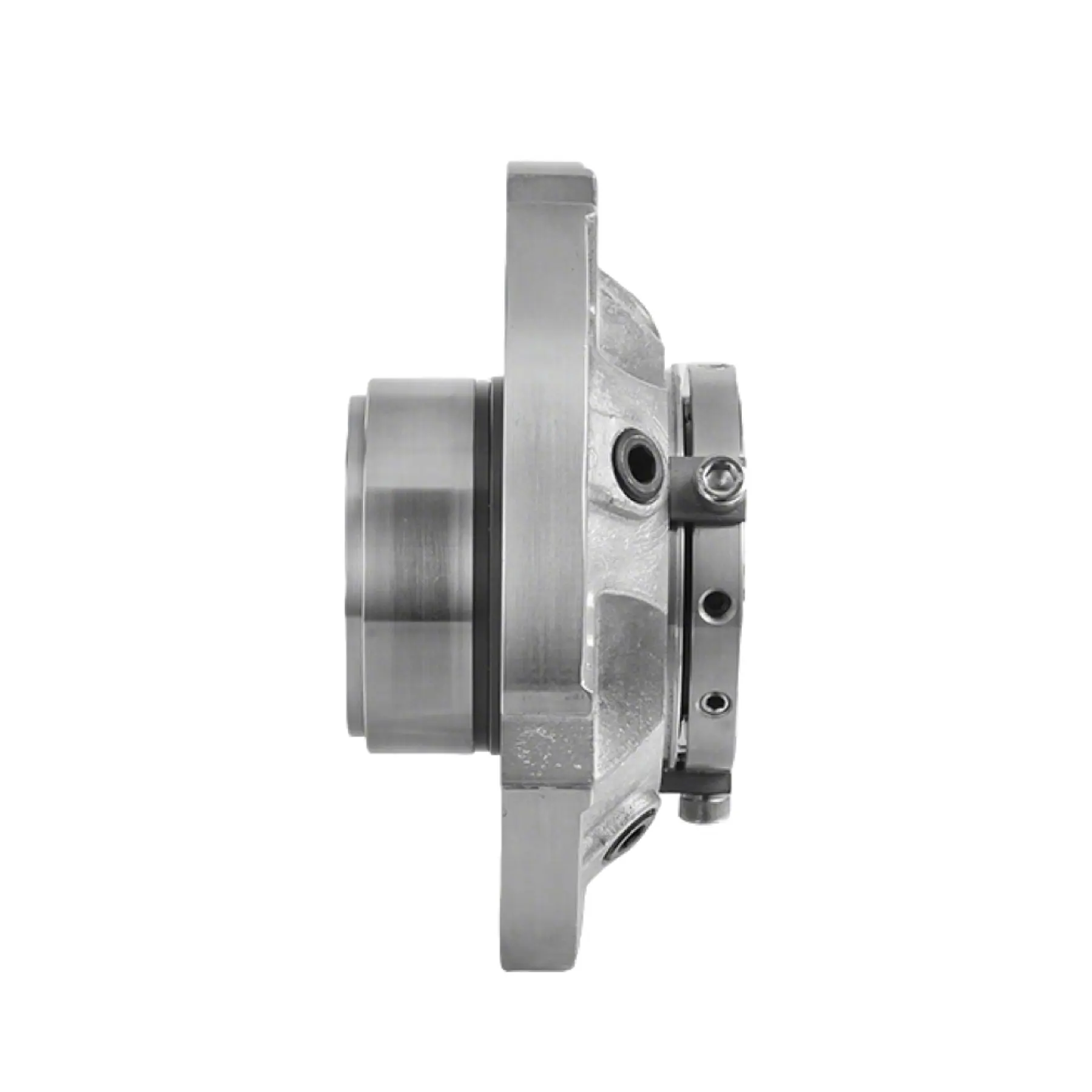
A cartridge seal is a self-contained unit. It integrates all necessary components into a single, pre-assembled package. This design simplifies installation significantly compared to seals where components are assembled individually. Factory technicians meticulously set all critical dimensions, alignments, and clearances during manufacturing. They perform this under controlled conditions, using specialized tools and fixtures. This pre-assembly ensures precise alignment and reduces the chance of installation errors in the field.
Component Seals: Design, Benefits, and Limitations
Component seals offer a traditional approach to sealing, providing flexibility and specific advantages for certain applications. Understanding their construction and operational characteristics helps in making informed decisions.
Component Seal Design and Function
A component seal comprises individual parts assembled directly onto the pump shaft. These seals feature a primary sealing element, often a rotating face and a stationary face, which create the main seal. Secondary seals, such as O-rings or gaskets, prevent fluid escape around these primary faces. A spring or loading mechanism maintains consistent contact pressure between the rotary and stationary faces. This mechanism compensates for wear and shaft movement. Engineers often design these seals with protected springs, locating them away from process fluid to prevent dirt accumulation. This design ensures the springs maintain their ability to respond to movements and keep seal faces closed. Many component seals feature a balanced design, which reduces the seal ring area exposed to hydraulic pressure. This design lowers the net closing force, leading to better lubrication and reduced heat generation. Monolithic seal faces provide a stable fluid film and resist deformation effectively.
Advantages of Component Seals
Component seals offer several benefits. They are often a cost-effective solution, particularly for standard applications. Their simpler design typically involves fewer parts, which can ease assembly and disassembly processes. This simplicity also facilitates maintenance and repairs, as technicians can replace individual components rather than an entire unit.
Disadvantages of Component Seals
Despite their advantages, component seals have limitations. They often require high surface processing for metal seals, leading to complex manufacturing and higher production costs. Temperature fluctuations can cause metal materials to expand and contract, potentially degrading sealing performance. These seals are also unsuitable for use with soft materials like rubber. High-speed motion can cause friction and wear, negatively impacting sealing effectiveness. Traditional mechanical seals are prone to wear over time due to contact between sealing faces. This wear leads to eventual failure, especially in applications with high shaft speeds or abrasive fluids. Single mechanical seals lack a backup system; if the seal fails, no secondary containment exists.
Ideal Applications for Component Seals
Component seals are well-suited for applications where cost-effectiveness is a primary concern and operating conditions are relatively stable. They perform effectively in low-pressure environments and with non-hazardous fluids. Their design flexibility allows for customization in specialized applications where specific material compatibility or unique configurations are necessary.
Cartridge Seals: Design, Benefits, and Limitations
Cartridge Seal Design and Function
A cartridge seal arrives as a complete, pre-assembled unit. This design simplifies installation significantly. All necessary elements for sealing, including gland plates, sleeves, seal faces with secondary sealing elements, and drive mechanisms, are encapsulated within one unit. Seal faces, often made from durable materials like silicon carbide or tungsten carbide, form the primary sealing surfaces. Secondary seals, such as O-rings or bellows, prevent leakage around metal parts and accommodate thermal expansion. Metal components provide structural support and protect the shaft. A gland plate allows for easy bolt-on attachment to the pump housing. This often includes flushing ports for cooling or cleaning. Cartridge seals can be single or double seals. Single seals suit non-hazardous fluids. Double seals offer enhanced safety for hazardous media through redundancy.
Advantages of Cartridge Seals
Cartridge seals offer significant benefits. Their pre-assembled nature reduces human error during installation, enhancing reliability and performance. This self-aligning design prevents misalignment and premature wear. The streamlined installation process minimizes maintenance time and reduces downtime. This leads to a longer service life and fewer replacements. Cartridge seals effectively contain leaks of hazardous fluids and gases. This reduces accident risks and environmental contamination. While initial costs might be higher, their extended service life and reduced maintenance result in lower overall operating costs. They also offer versatility, adapting to diverse operating conditions and equipment types.
Disadvantages of Cartridge Seals
Despite their advantages, cartridge seals have some limitations. They typically have a higher initial cost than component seals. This is due to the added expenses of factory assembly and testing. When a cartridge seal fails, replacing the entire unit becomes necessary. This can be more expensive than replacing individual components in a component seal. Cartridge seals may also offer less flexibility than metal bellows seals in accommodating significant shaft movements. This can restrict their use in applications experiencing high vibrations or substantial thermal cycling.
Ideal Applications for Cartridge Seals
Cartridge seals are ideal for critical applications where minimizing downtime and ensuring high reliability are paramount. They excel in processes involving hazardous, abrasive, or high-value fluids where leakage poses significant risks or costs. Industries such as chemical processing, oil and gas, and pharmaceuticals frequently utilize cartridge seals. Their ease of installation and reduced maintenance requirements make them suitable for facilities prioritizing operational efficiency and long-term cost savings.
Cartridge vs. Component Seals: A Direct Comparison
Choosing between cartridge and component seals involves evaluating several critical factors. These factors include installation, cost, maintenance, flexibility, and reliability. Each seal type presents distinct advantages and disadvantages across these areas.
Installation Ease and Complexity
Installation represents a significant difference between cartridge and component seals. Cartridge seals arrive as pre-assembled units. This design makes their installation straightforward. Technicians simply slide the unit onto the shaft and bolt it into place. This "plug-and-play" nature significantly reduces installation time and the risk of incorrect assembly.
| Feature | Cartridge Seals | Component Seals |
|---|---|---|
| Installation Ease | Easy, pre-assembled | Complex, individual parts assembled on-site |
| Time Required | Saves valuable time | Demands more time |
| Measurements/Adjustments | Eliminated | Requires careful measurements and appropriate tooling |
| Skill Level | Reduces chances of errors | Requires skilled personnel |
| Downtime | Significantly reduced | Can lead to increased downtime |
Component seals, conversely, require technicians to assemble individual parts directly onto the pump shaft. This process demands careful measurement, precise fitting, and often specialized tools. Highly skilled personnel are necessary for proper installation. The complexity of assembling multiple components increases the likelihood of installation errors. These errors can lead to premature seal failure and increased downtime. Cartridge seals inherently simplify the installation process compared to component seals.
Initial Cost vs. Long-Term Value
Initial cost often influences seal selection. Component seals typically have a lower upfront price. This is because manufacturers sell individual parts separately. Cartridge seals, however, usually have a higher initial cost. This higher price reflects the expenses of factory pre-assembly, precision engineering, and testing.
Despite the higher initial cost, cartridge seals often offer greater long-term value. Their reduced installation time translates into less downtime for equipment. This minimizes production losses. The lower risk of installation errors also leads to fewer premature failures. This extends the seal's operational life. Over time, these factors contribute to lower overall operating costs. Component seals, while cheaper initially, can incur higher long-term costs. These costs stem from longer installation times, potential re-installations due to errors, and more frequent maintenance.
Maintenance and Repair Considerations
Maintenance procedures differ significantly between the two seal types. Cartridge seals simplify maintenance. When a cartridge seal fails, technicians typically replace the entire pre-assembled unit. This process is quick and reduces downtime. Some cartridge seals can be refurbished, but replacement is common.
Component seals offer a different approach to repair. Technicians can replace individual components if only one part is damaged. This might reduce repair costs in specific situations. However, the repair process itself is more complex. It requires disassembling the seal, replacing the faulty part, and then reassembling all components precisely. This demands more skill and time. Effective mechanical seal maintenance for component seals often involves a detailed checklist:
- Visual Inspection: Check for leaks, wear, or damage.
- Seal Environment Check: Ensure cleanliness and proper functioning of cooling/flushing systems.
- Alignment and Balance: Confirm correct pump and motor alignment.
- Seal Face Condition: Examine faces for flatness and surface integrity.
- Elastomer Inspection: Check O-rings and gaskets for degradation.
- Lubrication: Verify proper lubrication.
- Pressure and Temperature Checks: Monitor operating conditions.
- Documentation: Record all findings and actions.
For cartridge seals, installation involves selecting the correct seal, cleaning the chamber, carefully sliding the sleeve, and tightening the gland. Technicians then tighten set screws and remove setting clips. This streamlined process reduces the complexity of mechanical seal maintenance.
Flexibility and Customization Options
Both seal types offer customization, but in different ways. Component seals provide high flexibility. Engineers can tailor them to specific equipment dimensions. They can adapt component seals to various operating conditions and performance requirements. This involves assembling the right combination of seal faces, secondary sealing elements, and hardware. This flexibility suits unique requirements, such as non-standard shaft sizes or specialty chemical applications. Component seals are available in a wide range of materials, face combinations, and sizes. This allows adaptation for high temperatures, aggressive chemicals, or abrasive media.
Cartridge seals also offer customization. Manufacturers provide options for material selection, including carbon, ceramic, silicon carbide, stainless steel, and various elastomers. Design features and configurations are also customizable. These include single or double seals, stationary or rotating designs, and balanced or unbalanced options. Flushing and cooling options are available to manage heat. Manufacturers can also customize seal face materials for enhanced performance. Additional features like modular design, FDA compliance, and barrier fluid systems further enhance their adaptability.
Error Margin and Reliability Factors
Cartridge seals inherently offer a lower error margin and higher reliability. Their pre-assembled design eliminates the need for precise on-site measurements and adjustments. This significantly reduces the chances of installation errors. Factory assembly ensures all critical dimensions and alignments are set correctly under controlled conditions. This leads to higher functional security and consistent performance.
| Feature | Component Seal | Cartridge Seal |
|---|---|---|
| Installation | Manual and skill-based | Quick and simple |
| Maintenance | Requires disassembly and reassembly | Pre-assembled unit; easy to replace |
| Downtime | Can be longer | Minimal |
| Error Margin | High risk of misalignment | Factory-aligned, lower error |
| Reliability | Lower due to installation risks | Higher due to pre-assembly and reduced errors |
Component seals have a higher error margin. Their installation relies heavily on the installer's skill and precision. Incorrect assembly, such as improper spring compression or misaligned faces, can lead to premature failure and leakage. The exposed parts of component seals are also more susceptible to damage during transportation or installation. This further increases the risk of issues. The integrated design of cartridge seals reduces the risk of leakage and improves overall seal performance. This makes them a more reliable choice in many industrial applications.
Choosing the Right Seal for Your Application Needs
Selecting the optimal mechanical seal requires a comprehensive evaluation of various factors. These factors directly influence system performance, reliability, and overall operational costs. Engineers must consider application complexity, skill availability, long-term financial implications, and critical safety and environmental standards.
Assessing Application Complexity and Operating Conditions
A thorough assessment of the application's operating conditions forms the foundation for seal selection. Critical operating conditions significantly influence seal performance and longevity. High temperatures degrade seal materials, while low temperatures cause brittleness, both leading to sealing failures. Engineers must select materials suitable for the operating temperature range, such as FKM or PTFE for high temperatures, and NBR or VMQ for low temperatures. High pressures deform seals, causing leakage; therefore, the seal must withstand operating pressure and potential fluctuations. High shaft speeds generate heat, increasing wear and reducing sealing performance. The seal must operate effectively at the application's speed, considering acceleration and deceleration rates that add stress.
Environmental factors like humidity, dust, and chemicals also impact seal performance. Dusty environments require seals with dust lips or labyrinth seals, while chemical exposure necessitates resistant seal materials. Complex equipment conditions, such as fluctuating peripheral speeds and pressure, along with axial and radial shaft movement exceeding allowable tolerances, further complicate selection. Fluid compatibility is essential due to material susceptibility to media. Contact with specific chemicals causes degradation or adverse reactions, leading to premature failure. A thorough assessment of fluid properties, including pH, viscosity, chemical composition, corrosiveness, abrasiveness, toxicity, vapor pressure, and boiling point, is vital for optimal seal material selection. Abrasive fluids accelerate wear, viscous fluids may need specialized designs, and hazardous fluids demand high reliability and tight tolerances for containment.
Evaluating Skill Level and Training Requirements
The technical expertise available for installation and maintenance significantly impacts seal choice. Component seals demand highly skilled personnel for precise assembly, requiring careful measurements and specialized tools. This increases the risk of installation errors if technicians lack adequate training.
Cartridge seals, conversely, simplify the installation process. They arrive as pre-assembled, factory-tested units, eliminating the need for time-consuming and complex assembly or in-field adjustments. This user-friendly design reduces the risk of human error. However, even with simplified designs, successful implementation necessitates the right tools, the right knowledge, and attention to detail to prevent premature failures. Improper installation can still lead to premature failures, leakage, or costly downtime. Professional support from trained professionals is available for guidance and assistance, indicating that a basic level of technical understanding and adherence to proper procedures remains crucial.
Analyzing Long-Term Cost Implications
While initial cost often drives purchasing decisions, a comprehensive analysis of long-term cost implications reveals the true value of a seal. Component seals typically have a lower initial purchase price. However, their installation costs are higher due to complexity, time consumption, and the need for skilled labor. This also increases the risk of improper installation and premature failure.
| Feature | Component Seals | Cartridge Seals |
|---|---|---|
| Initial Cost | Lower initial purchase price. | Higher initial purchase price. |
| Installation Cost | Higher due to complex, time-consuming installation requiring skilled labor and precise measurements. Increased risk of improper installation leading to premature failure. | Lower due to pre-assembled, factory-tested units that simplify installation, reducing labor time and skill requirements. "Plug-and-play" design minimizes installation errors. |
| Maintenance Cost | Higher due to more frequent failures from installation errors or wear, leading to increased downtime, labor for repairs, and replacement parts. | Lower due to robust design and easier, quicker replacement. Reduced frequency of failures means less downtime and lower labor costs over time. |
| Downtime Cost | Higher due to longer installation and repair times, and more frequent failures. | Lower due to quick installation and replacement, and greater reliability. |
| Training Cost | Higher due to the need for extensive training for technicians on proper installation and maintenance procedures. | Lower due to simplified installation and maintenance, requiring less specialized training. |
| Inventory Cost | Potentially lower for individual components, but higher if a wide variety of parts must be stocked for different seal configurations. | Potentially higher for complete cartridge units, but simpler inventory management if standardized across equipment. |
| Operational Efficiency | Lower due to potential for leaks, frequent maintenance, and reduced MTBR (Mean Time Between Repairs). | Higher due to improved reliability, reduced leaks, and extended MTBR, leading to more consistent operation. |
| Total Cost of Ownership (TCO) | Often higher in the long run due to cumulative costs of installation, maintenance, downtime, and potential for product loss. | Often lower in the long run due to savings in installation, maintenance, and downtime, despite higher initial cost. |
| Environmental Impact | Potential for higher environmental impact due to more frequent leaks and product loss. | Reduced environmental impact due to better sealing integrity and less product leakage. |
| Safety | Potential for higher safety risks due to leaks of hazardous materials and more frequent maintenance interventions. | Enhanced safety due to reduced leaks and less frequent need for personnel to interact with equipment for maintenance. |
| Productivity | Lower due to more frequent interruptions for maintenance and repairs. | Higher due to more reliable operation and less unscheduled downtime. |
| Life Expectancy | Generally shorter due to susceptibility to installation errors and wear. | Generally longer due to robust design and protection from external factors. |
| Troubleshooting | More complex due to individual component issues. | Simpler, as the entire unit is replaced. |
| Standardization | Less standardized, requiring specific component selection for each application. | More standardized, allowing for easier interchangeability and inventory management. |
| Risk of Human Error | Higher during installation and repair. | Lower due to pre-assembled nature. |
| Overall Value | Appears cheaper initially, but often proves more expensive over the equipment's lifespan. | Higher initial investment, but delivers greater long-term value through reduced operational costs and improved reliability. |
Cartridge seals, despite their higher initial investment, typically offer a lower Total Cost of Ownership (TCO). They reduce installation costs, maintenance costs, and downtime costs. Their robust design and easier replacement lead to a longer life expectancy and enhanced safety. This results in greater long-term value through reduced operational costs and improved reliability. Effective mechanical seal maintenance practices also contribute significantly to reducing these long-term costs.
Prioritizing Safety and Environmental Factors
Safety and environmental compliance are paramount in seal selection, especially when handling hazardous materials. Mechanical seals, particularly those adhering to API 682 standards, minimize Volatile Organic Compound (VOC) emissions from rotating equipment. These seals contain VOCs within the system, reducing their release into the atmosphere and contributing to improved air quality.
Various regulatory bodies impose stringent requirements on mechanical seals:
- FDA: Focuses on electronic records and validation, outlined in 21 CFR Part 11.
- ISO: Establishes cleanroom classification standards, such as the ISO 14644 Series.
- EMA: Promotes international harmonization through ICH Guidelines.
- OSHA: Ensures worker safety, detailed in 29 CFR 1910.
Mechanical seal compliance necessitates adherence to precise performance specifications. These include material properties, dimensional tolerances, and validation of performance under simulated operating conditions. Testing protocols often involve pressure cycling (e.g., 0.1 to 2.5 bar differential), temperature variations (e.g., -20°C to +80°C), and sustained exposure to process chemicals for at least 1000 hours. Material specifications demand integrity in diverse chemical environments and consistent mechanical properties over extended service periods. Durability requirements typically specify a minimum service life of 5-7 years, and up to 10+ years for critical applications. For pharmaceutical manufacturing, mechanical seals must meet stringent compliance requirements, including FDA validation expectations. This involves Design Qualification (DQ), Installation Qualification (IQ), Operational Qualification (OQ), and Performance Qualification (PQ) phases, each requiring extensive documentation to demonstrate system capability and reliability. Regulations such as API 682 offer guidance for the selection, design, and materials used in mechanical seals.
Optimizing Mechanical Seal Maintenance and Performance
Effective mechanical seal maintenance significantly extends equipment lifespan and ensures operational reliability. Proper practices during installation, diligent troubleshooting, and strategic longevity measures are crucial.
Best Practices for Seal Installation
Proper installation forms the bedrock of reliable seal performance. Technicians must use clean hands or gloves when handling seals, keeping them away from dust, debris, or lint. They should never drop seals; if a seal drops, they must replace it. Always consult manufacturer instructions, as specific steps like removing spacers are crucial to prevent internal component damage. Installers must ensure all parts, tools, and the work area remain spotless to prevent contamination of seal faces. They should examine seal faces, springs, gaskets, and O-rings for any damage or contamination before installation, replacing questionable items. Utilizing specialized jigs and gauges provided by the manufacturer ensures correct positioning and prevents over-tightening. Technicians must apply recommended lubricants to O-rings or elastomers to aid installation, avoiding excessive use that could contaminate seal faces.
Troubleshooting Common Seal Issues
Even with best practices, issues can arise. Common problems include transitioning from sweet crude to sour crude with higher H2S concentrations, which can degrade seal materials. Higher temperature process fluids often exceed the rated capacity of the mechanical seal or its support system, leading to eventual failure. Increased upstream pressure, not properly compensated by barrier fluid pressure in dual mechanical seals, causes process fluid migration and leakage. Conversely, decreased upstream pressure, not properly compensated by buffer fluid pressure, can contaminate the process fluid. Increased particulates in the process fluid also lead to fouling of orifices and valves, causing improper flow through the seal chamber.
Effective Strategies for Seal Longevity
Extending seal lifespan requires a proactive approach to mechanical seal maintenance. Operators must avoid dry running by ensuring liquid is always present between seal faces to cool them. Installing a dry-run monitor helps prevent catastrophic failure. They should also avoid excessive vibration by operating pump systems within their Best Efficiency Point (BEP) to prevent recirculation and cavitation. Correct lubrication, using the appropriate cooling fluid film between seal faces, minimizes wear and friction. Improper installation remains a leading cause of premature failure; therefore, proper alignment and geometry are crucial. Selecting materials like Nitrile, Viton® (FKM), EPDM, or Silicone with properties resistant to specific environmental conditions is crucial for durability. These materials must withstand expected temperature ranges, chemical exposure, and mechanical stress.
Selecting the appropriate seal is paramount for operational efficiency and system reliability. Informed decisions lead to reduced downtime and significant cost savings. The right choice balances upfront costs with long-term performance and maintenance. This ensures optimal system function and extended equipment life.
FAQ
What is the primary benefit of a cartridge seal?
Cartridge seals offer simplified installation. They arrive pre-assembled, reducing human error and ensuring precise alignment. This leads to higher reliability and less downtime for your system.
When should one consider using a component seal?
Consider component seals for applications where initial cost is a major concern. They also provide greater flexibility for customization in unique or non-standard equipment configurations.
Do cartridge seals always have a higher overall cost?
No, not always. While cartridge seals have a higher initial price, their reduced installation time, lower maintenance needs, and extended lifespan often result in a lower Total Cost of Ownership.