How to Choose the Right Elastomer Bellows for Your Needs?
Choosing the right Elastomer Bellows can be a daunting task. With the market growing steadily, the demand for quality has never been higher. According to a recent report by MarketsandMarkets, the global elastomer bellows market is projected to reach $4 billion by 2025. This growth highlights the critical role these components play in various industries.
Dr. James Holloway, a leading expert in elastomer technology, emphasizes, “Choosing the right elastomer bellows depends on the specific application and environmental conditions.” His insight underscores the complexity behind selecting the ideal product. Factors such as temperature resistance, pressure capabilities, and chemical compatibility are crucial to making informed decisions. Many users overlook these details, leading to failures and costly replacements.
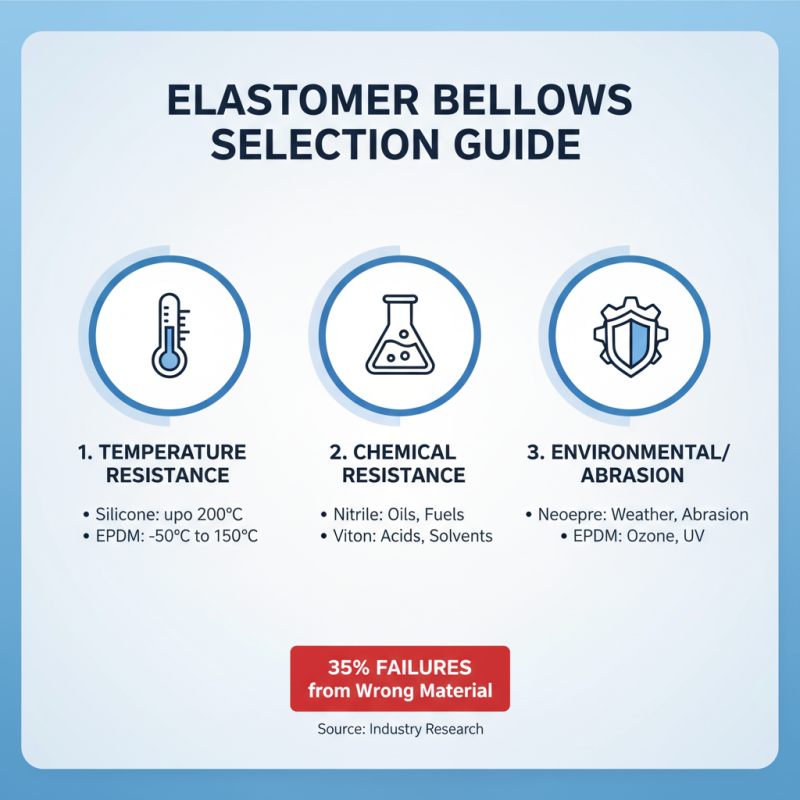
The industry is evolving, but challenges remain. Data shows that 35% of failures in mechanical systems are due to improper component selection. Users often rush through the selection process, ignoring essential specifications. Awareness and education are essential to improving reliability in application usage. With so many options, taking the time to choose the right Elastomer Bellows is not just beneficial—it’s necessary for success.
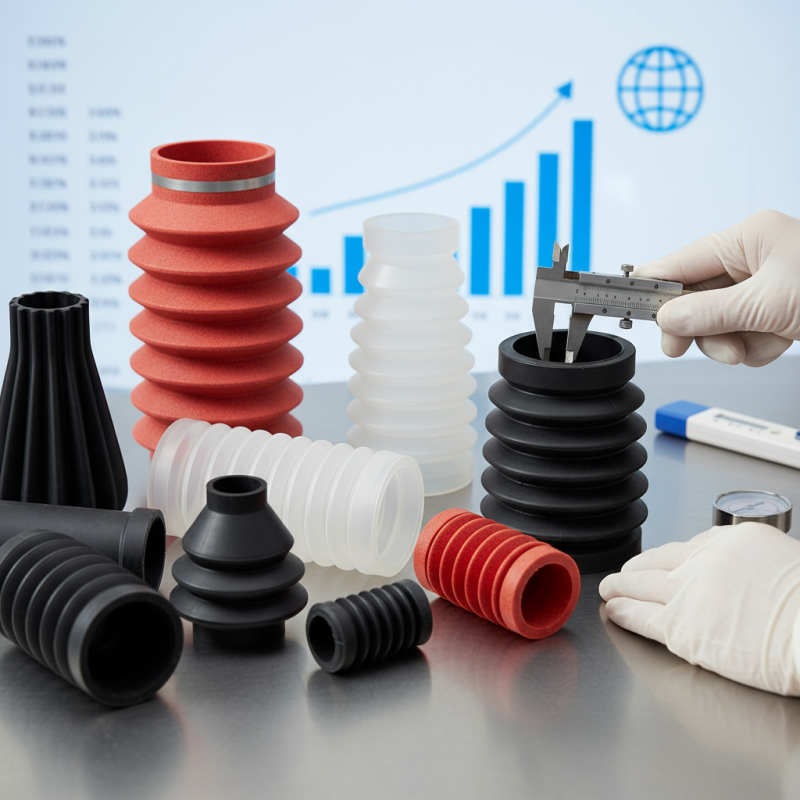
Understanding Elastomer Bellows: Definition and Function
Elastomer bellows are essential components in various industries. They are designed to protect moving parts from dust, moisture, and other contaminants. The flexibility in these bellows allows them to absorb shocks and vibrations. Many sectors, such as automotive and aerospace, rely heavily on these solutions.
According to a recent market report, the global elastomer bellows market is projected to grow significantly, reaching over $1 billion by 2025. This growth reflects the increasing demand for reliable sealing solutions in harsh environments. The materials used in elastomer bellows vary. Commonly, they include rubber and silicone, known for their durability.
While many understanding elastomer bellows emphasize their importance, users often overlook specific requirements. For instance, choosing the right material depends on temperature and chemical exposure. The failure to account for these factors could lead to premature wear. Users should evaluate their needs properly, ensuring that they select bellows that meet their environmental demands. The selection process can be complex and requires careful consideration of various factors.
Understanding Elastomer Bellows: Properties and Applications
Factors to Consider When Choosing Elastomer Bellows
Choosing the right elastomer bellows requires careful consideration of several factors. One key factor is the material. Different elastomers offer varying resistance to temperature, chemicals, and abrasion. For instance, silicone can withstand temperatures up to 200°C, while EPDM is better for ozone resistance. Research shows that nearly 35% of failures in applications are due to inadequate material selection.
Additionally, the application environment plays a crucial role. The presence of chemicals, humidity, or exposure to UV light can compromise bellows integrity. A study indicated that around 50% of elastomer bellow failures occur within the first six months due to harsh conditions. Users should evaluate the operational environment thoroughly.
Lastly, size and shape must be accurate. Inaccurate dimensions can lead to leaks, or mechanical failures. Some applications may require custom designs. Precision in these details can mean the difference between success and failure. Proper inspection processes can help validate these specifications. Attention to these elements can minimize future issues.
Types of Elastomer Materials and Their Applications
Elastomer bellows are critical in many industries. The choice of elastomer material can greatly affect performance. Common materials include neoprene, EPDM, and silicone. Each type has unique properties suited for different applications.
For example, neoprene is often used in automotive and HVAC systems. It's known for its good resistance to oil and weathering. A report from ASTM International shows it performs well in temperature ranges from -40°F to 200°F. EPDM, on the other hand, excels in outdoor applications. It can handle extreme weather conditions and remains flexible at lower temperatures. Industries use EPDM for seals and gaskets.
Silicone is another popular choice. It has superior temperature resistance up to 500°F. This makes it ideal for food processing and pharmaceutical equipment. However, this high performance can come at a cost. Silicone bellows can be more expensive than other materials. Users often weigh cost versus performance. Selecting the right elastomer is not always straightforward. Understanding the specific needs of your application is crucial. This requires careful consideration of environmental factors and mechanical requirements.
Key Performance Characteristics of Elastomer Bellows
Choosing the right elastomer bellows involves focusing on key performance characteristics. These features dictate how well the bellows will perform in different applications. For instance, flexibility is crucial for dynamic movements. A bellows with higher flexibility allows for better adaptability to changing conditions.
Another important characteristic is temperature resistance. The right elastomer can withstand both heat and cold. If the environment varies greatly, consider the material's thermal stability. Additionally, pressure ratings are vital. Ensure that the bellows can handle the specific pressures of your application without deforming.
Durability should not be overlooked. Elastomer bellows often face wear and tear. Choosing materials that resist abrasion and chemical exposure can prolong lifespan. However, sometimes users forget to consider maintenance. Regular inspections are necessary but often neglected, leading to unexpected failures. Balancing all these factors can be challenging. It requires careful thought and a deep understanding of your specific needs.
How to Choose the Right Elastomer Bellows for Your Needs? - Key Performance Characteristics of Elastomer Bellows
| Characteristic |
Description |
Importance |
| Temperature Resistance |
Ability to withstand high and low temperatures without losing integrity. |
Critical for applications with extreme temperature variations. |
| Chemical Resistance |
Resistance to degradation from exposure to various chemicals and fluids. |
Important for environments with corrosive substances. |
| Flexibility |
Ability to bend and move without damage. |
Essential for applications involving movement or vibration. |
| Pressure Tolerance |
Capacity to maintain performance under high pressure conditions. |
Crucial for pressure-sensitive applications. |
| Durability |
Resistance to wear and tear over time. |
Important for long-term reliability and cost-effectiveness. |
| Environmental Stability |
Ability to perform consistently in various environmental conditions. |
Vital for outdoor or variable environments. |
Maintenance Tips for Prolonging the Life of Elastomer Bellows
Proper maintenance of elastomer bellows is crucial for their longevity and efficiency. Start by inspecting them regularly for signs of wear and tear. Look for cracks, deformation, or discoloration. Use a soft cloth to clean the surfaces, avoiding harsh chemicals that could cause damage. Small attention to detail can make a significant difference.
Maintaining optimal working conditions is equally important. Ensure that the bellows are shielded from harsh environmental factors. Excessive heat or UV exposure can lead to deterioration. If your application involves chemicals, verify compatibility. This can prevent premature failure and costly replacements.
Life can be unpredictable. Even with the best maintenance efforts, issues may arise. Regularly check the connections and fittings for leaks. A simple visual inspection can save time and resources. It’s always wise to keep replacement bellows on hand, just in case. Being proactive, rather than reactive, can significantly enhance the lifespan of your elastomer bellows.